










RelatedPosts
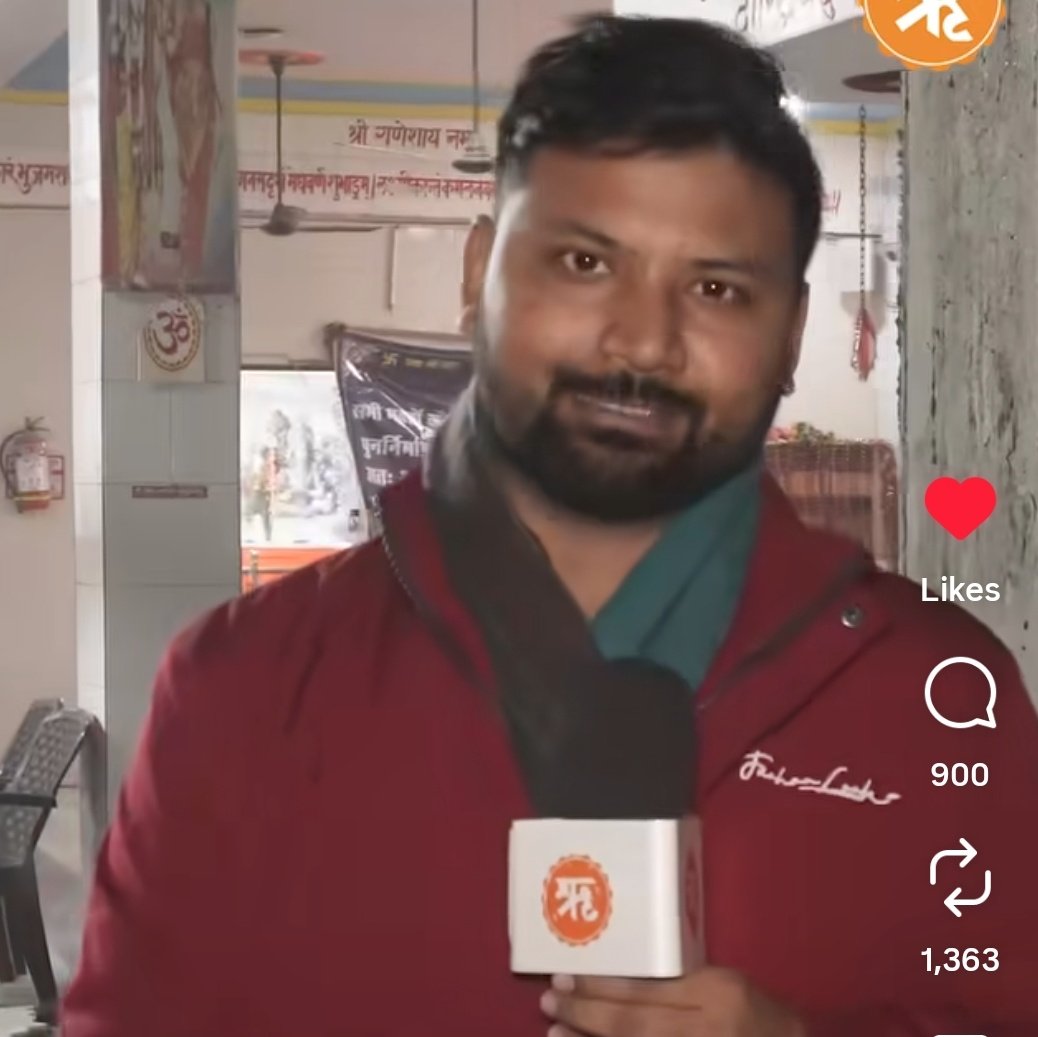
In an age where social media is often flooded with anger, misinformation, and divisive narratives, an unexpected moment of truth has emerged as a powerful counterforce. A young journalist, armed not with slogans or staged outrage but with a simple question and honest observation, has delivered a resounding blow to those who thrive on spreading caste based hatred. His reporting, grounded in reality and lived experience, has shattered the myth of caste exclussion, exposed how far removed propaganda of myth of caste exclusion can be from everyday social practice.
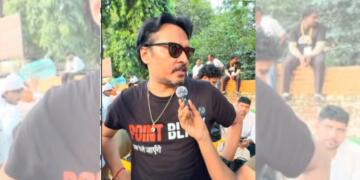
The incident unfolded quietly, without any dramatic build up. The journalist visited a temple along with his friend Ankit Jatav. What followed was not an act of confrontation but a genuine inquiry. Standing before the temple priest, the journalist asked a question that many assume to be central to temple entry debates. He asked whether anyone had inquired about caste before allowing entry and whether his friend’s belonging to the Jatav community posed any problem. The question itself reflected the narrative of myth of caste exclussion often pushed in public discourse, temples routinely discriminate based on caste.
The priest’s response was simple, calm, and deeply revealing. He stated clearly that there was no problem at all. He emphasized that inside the temple, such questions are not asked. According to him, anyone can enter and seek the blessings of God. There was no hesitation, no discomfort, and no hint of myth of caste exclussion in his words. It was a matter of fact response that reflected the everyday functioning of countless places of worship across the country.
What made the moment even more powerful was the spontaneous voice of a Dalit woman standing nearby. She did not speak as an activist or a spokesperson but as someone sharing her lived truth. She said that she had been standing in temples and places of worship all her life. She spoke honestly, stating that she had visited many temples, offered prayers, and performed rituals throughout her life. Never, she said, had any temple ever asked her about her caste or religion. Her words carried the weight of experience rather than ideology, putting a nail to the coffin of myth of caste exclusion.
This brief interaction has since gone viral on social media. Millions have watched it not because it was sensational but because it was authentic. The video struck a nerve precisely because it contradicted a narrative that has been repeatedly amplified for political gain. For years, certain groups have insisted that Indian society and Hindu religious spaces are irredeemably hostile to Dalits and marginalized communities. While historical injustices cannot be denied and must be acknowledged, this viral moment highlighted a crucial truth. Reality on the ground is often far more nuanced and humane than the caricature painted by divisive politics and else it’s a myth of caste exclusion.
The power of this moment lies in its ordinariness. There was no grand speech, no scripted confrontation, and no manufactured outrage. It showed a temple functioning as a spiritual space rather than a social checkpoint. It showed individuals interacting with each other as human beings rather than representatives of rigid identities. In doing so, it exposed how caste based hatred is often kept alive not by daily social practice but by those who benefit from sustaining fear and mistrust.
This is precisely why the video has unsettled proponents of caste politics. Their narratives depend on portraying society as perpetually oppressive and hostile. Such narratives leave little room for positive change or social harmony. When ordinary citizens speak up and share experiences that contradict these claims, the entire edifice of propaganda begins to crumble. The journalist did not deny the existence of caste discrimination. Instead, he challenged the myth of caste exclusion, blanket generalization that discrimination defines every interaction and every institution.
Social media, often criticized for spreading misinformation, played a constructive role in this case. By amplifying an unscripted and truthful exchange, it allowed millions to witness a reality that mainstream debates often ignore. It reminded viewers that lived experiences matter and that voices from the ground deserve attention. The viral spread of the video was not driven by outrage but by relief and affirmation that harmony still exists.
This episode also underscores the responsibility of journalism. True journalism does not impose conclusions but asks questions and listens. By allowing people to speak for themselves, the journalist created space for truth to emerge naturally. In a polarized environment, such reporting bashing the myth of caste exclusion is rare and valuable. It bridges gaps rather than widening them.
Ultimately, this viral moment serves as a reminder that Indian society cannot be reduced to simplistic narratives of hatred. While social reform remains necessary and injustices must be addressed, it is equally important to acknowledge spaces of inclusion and shared humanity. Temples, as shown in this incident, often function as places where devotion transcends social divisions. Recognizing this reality weakens the forces that seek to profit from division.
In exposing the hollowness of caste based propaganda or myth of caste exclusion, this young journalist has not only reported a story but also reaffirmed faith in the inclusive spirit that continues to survive and assert itself in everyday life.