














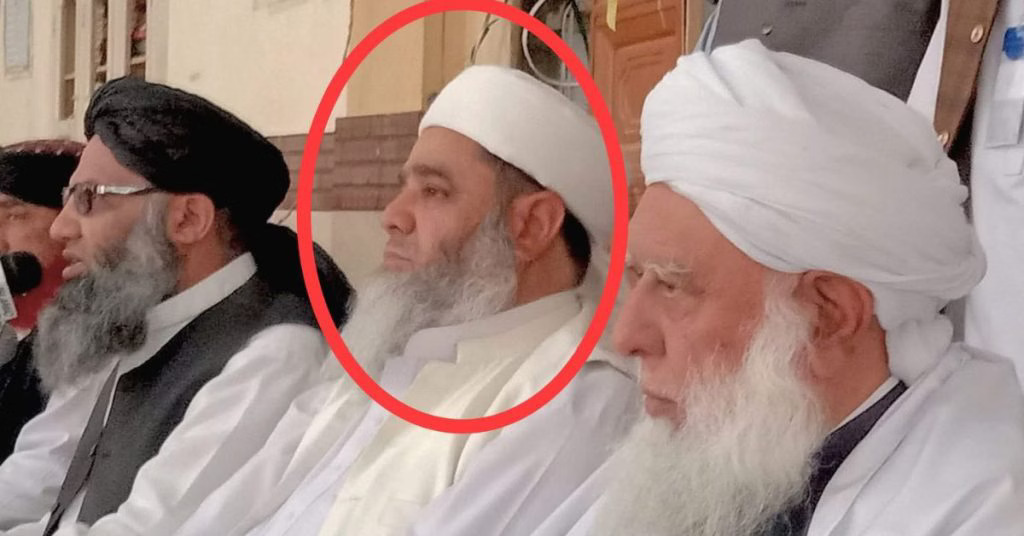
In Pakistan’s complex political and militant landscape, the phrase “unknown gunmen” has become more than just a media cliché—it has evolved into a chilling symbol of silent retribution operating beyond the boundaries of law, accountability, and ideological loyalty. The latest victim of this grim phenomenon is Hafiz Abdul Salam Arif, a high-profile cleric and local leader of the Jamiat Ulema-e-Islam (JUI) from Mandani in Charsadda, who was killed by unidentified assailants. The confirmation came inadvertently from Khadim Ali Khan Yousafzai, an official of the ruling Pakistan Muslim League (N), underlining how even state representatives acknowledge these operations, yet are unable—or unwilling—to name the perpetrators.
This killing is not an isolated case. It fits into a larger pattern where clerics, Islamist political figures, and militant commanders across Pakistan—once considered pivotal in shaping the ideological and operational backbone of religious politics—are increasingly being targeted by shadowy forces. The victims are often individuals holding influence over seminaries, madrassas, militant-linked communities, or Islamist street power. What is remarkable is that these attacks rarely lead to arrests, convictions, or even serious investigative follow-ups. The identity of the attackers remains shrouded in ambiguity, reinforcing the phrase “unknown gunmen” as a unique symbol of Pakistan’s security, political, and ideological contradictions.
A Pattern That Speaks Louder Than Statements
The rise of such strikes coincides with the fragmentation of power within Pakistan’s Islamic political landscape. Groups like JUI, once deeply integrated into both electoral politics and militant networks, now find themselves squeezed between state pressure, rival factions, and internal ideological splits.
While mainstream Islamist leaders publicly maintain their electoral agendas, many of these organizations historically kept back-channel linkages with militant factions—ranging from tribal militias and sectarian outfits to foreign jihadist operations in Afghanistan. With the shifting strategic priorities of Pakistan’s establishment—especially post-2021 after the Taliban takeover in Kabul—the same networks once considered strategic assets are now being recalibrated, contained, or silently dismantled.
The result: targeted eliminations executed with cold precision, leaving no trail.
Why Islamist Leaders Are Becoming Targets
Several forces contribute to this phenomenon:
Factional Rivalries Within Islamist Networks
As groups compete for control of madrassas, political constituencies, and ideological supremacy, internal purges have become increasingly common. Accusations of collaboration, betrayal, or divergence from doctrinal purity often become catalysts for violent retaliation.The State’s Ambiguous Strategic Reorientations
Pakistan’s establishment, historically associated with patronage of certain Islamist actors, has shifted priorities due to international pressure, financial crises, and the changing geopolitical environment. Leaders who once served strategic interests may now be seen as liabilities.The Resurgence of the Tehreek-e-Taliban Pakistan (TTP)
With TTP attacks surging in Khyber Pakhtunkhwa and Balochistan, many clerics and politicians seen as “collaborating with the state” have found themselves at heightened risk.Local Power Struggles in Tribal and Rural Areas
In many regions, authority is enforced not through legal governance but through local militias, armed networks, and tribal power brokers. Here, killings take the shape of dominance and deterrence rather than ideological warfare.