























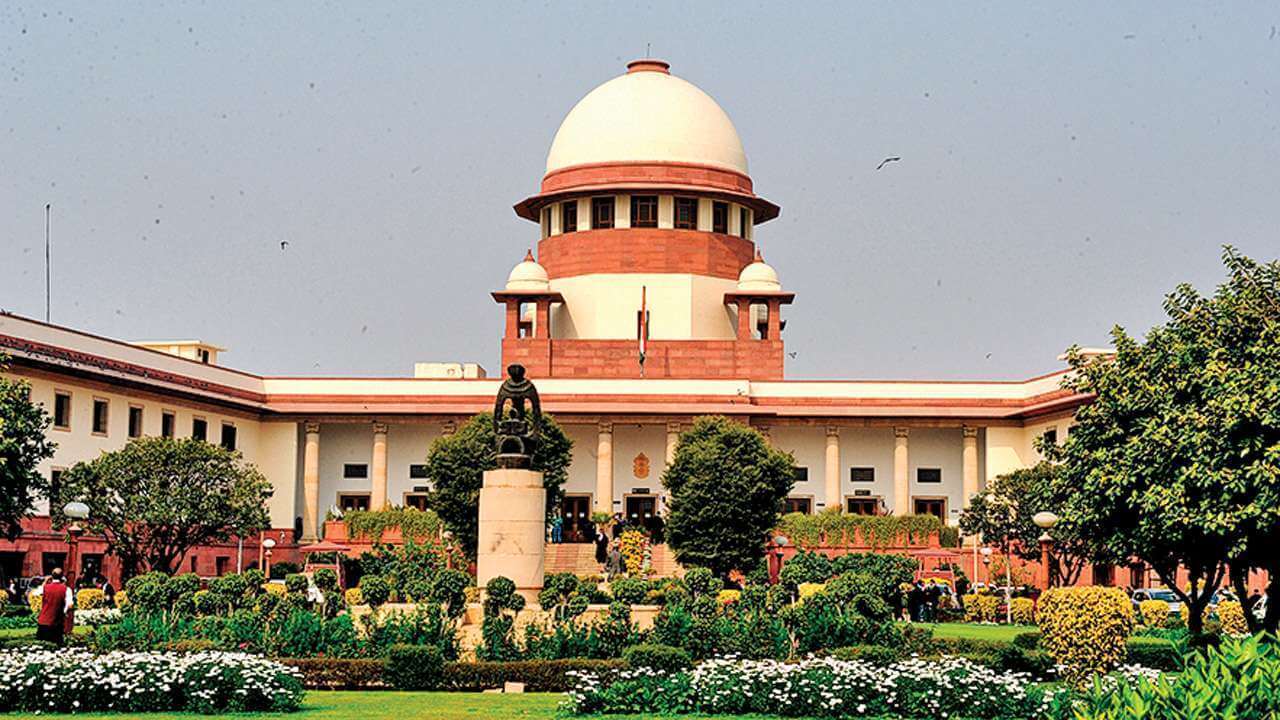
In a landmark opinion delivered on November 20, the Supreme Court held that neither the President nor a Governor can be compelled to follow judicially imposed timelines while deciding whether to grant assent to Bills under Articles 200 and 201 of the Constitution.
Responding to a Presidential reference made by President Droupadi Murmu under Article 143, a five-judge Constitution Bench ruled that courts cannot introduce the concept of “deemed assent”, declaring such a move unconstitutional and a breach of the separation of powers.
Calling deemed assent a “virtual takeover” of executive functions, the Court observed that allowing the judiciary to presume assent after a time period would be “impermissible within the contours of our written Constitution.”
Court: Governors Cannot Sit Indefinitely on Bills
While rejecting fixed timelines, the Bench, comprising CJI BR Gavai, and Justices Surya Kant, Vikram Nath, PS Narasimha and AS Chandurkar—clarified that Governors do not have unfettered discretion to indefinitely delay Bills.
If a Governor’s inaction becomes “prolonged or unexplained” to the extent that it frustrates the legislative process, the Court may exercise limited judicial review, directing the Governor to act within a reasonable time frame. Importantly, the Court stressed it cannot comment on the merits of the Bill itself.
Background: The Tamil Nadu Case & Presidential Reference
The Presidential reference followed a May judgment in the Tamil Nadu Governor case, where a two-judge bench had attempted to set timelines for constitutional authorities while dealing with Bills.
During the hearing, several states—including Tamil Nadu, Kerala, West Bengal and Punjab—argued that the reference itself was unnecessary since the TN judgment had already addressed the issues.
The Bench, however, made it clear that it was not reviewing the TN judgment, but only answering abstract constitutional questions referred by the President.
Union Opposes Timelines; States Support Judicial Intervention
Attorney General R Venkataramani and Solicitor General Tushar Mehta argued strongly against judicially imposed timelines, maintaining that such directions would violate the principle of separation of powers and unjustifiably control the constitutional discretion of Governors and the President.
On the other hand, senior advocates Kapil Sibal, AM Singhvi, KK Venugopal, Gopal Subramanium, and others—representing various states—supported more stringent judicial control over delays by Governors, stressing that such delays undermine the democratic process.
What the Supreme Court Emphasised
- No “deemed assent” can ever be judicially declared.
- No judicially fixed timelines for the President or Governors.
- Governors cannot indefinitely withhold Bills without acting under Article 200.
- Courts can intervene only when delays become unreasonable, to direct a decision, not dictate the outcome.
- Separation of powers must be maintained at all times.
This opinion significantly reshapes the discourse around the relationship between state legislatures, Governors, and the Union executive.
The 14 Constitutional Questions Answered by the Supreme Court
These were the questions posed by President Murmu under Article 143, seeking the Supreme Court’s guidance:
- What options does a Governor have under Article 200 when a Bill is presented?
- Is the Governor bound by ministerial advice while exercising all Article 200 options?
- Is the Governor’s discretion under Article 200 subject to judicial review?
- Does Article 361 bar courts from reviewing the Governor’s actions under Article 200?
- Can courts prescribe timelines for Governors where the Constitution is silent?
- Is the President’s discretion under Article 201 justiciable?
- Can courts impose timelines on the President under Article 201?
- Is the President required to seek Supreme Court’s advice under Article 143 whenever a Governor reserves a Bill?
- Are decisions under Articles 200 and 201 justiciable before a Bill becomes law?
- Can the Supreme Court use Article 142 to substitute decisions of the President or Governor?
- Can a State law come into force without the Governor’s assent under Article 200?
- Must every bench first decide if a matter should go to a Constitution Bench under Article 145(3)?
- Are Article 142 powers limited to procedural law or can they override substantive law?
- Is Article 131 the only method to resolve Union–State disputes?