
Six months after India’s decisive Operation Sindoor, fresh intelligence inputs accessed by a top media house have revealed a sharp escalation in Pakistan-backed terror activity targeting Jammu and Kashmir. The report indicates that terror outfits such as Lashkar-e-Taiba (LeT) and Jaish-e-Mohammed (JeM) are regrouping for a coordinated wave of attacks. These developments come at a time when the Union Territory is witnessing a fragile but significant return to normalcy, with tourism, and development projects showing promising signs of stability.
According to the intelligence dossier, accessed by NDTV, infiltration attempts across the Line of Control (LoC) have increased since September. Pakistan’s Inter-Services Intelligence (ISI) and Special Services Group (SSG) operatives are directly assisting these efforts by providing logistical support, training, and cross-border surveillance. Multiple JeM and LeT cadres have reportedly managed to infiltrate through known routes in Poonch, Rajouri, and Kupwara sectors routes that had seen reduced activity post-Operation Sindoor.
Drones, Reconnaissance, and Renewed Networks
The report highlights that a LeT unit led by terrorist commander Shamsher recently conducted aerial reconnaissance using drones to identify weak spots along the LoC. This suggests that Pakistan’s terror infrastructure is now relying more on unmanned aerial systems for surveillance, weapon drops, and possibly fidayeen-style infiltration.
Intelligence agencies have also confirmed that Pakistan’s Border Action Teams (BATs) a joint formation of ex-SSG commandos and militants have been redeployed across key points in Pakistan-Occupied Kashmir (PoK). These units are known for their cross-border raids and sniper attacks on Indian posts. Their redeployment signals a dangerous revival of Pakistan’s hybrid warfare tactics, blending terrorism with state-backed operations.
Meanwhile, the ISI has reportedly revived the human intelligence network inside Kashmir that had been largely dismantled earlier this year. Through sleeper cells and local sympathizers, LeT operatives are rebuilding local support chains to provide logistics, shelter, and reconnaissance to infiltrating groups.
Intercepted communication and field intelligence suggest that the ISI has been holding high-level meetings in PoK to realign terror strategies after the heavy losses suffered during Operation Sindoor. The October meetings reportedly involved senior members of Hizbul Mujahideen, Jamaat-e-Islami, and representatives from both LeT and JeM.
A key outcome of these meetings was the decision to revive dormant terror cells, provide monthly stipends to ex-commanders, and expand narco-terror networks to finance fresh operations. Drugs and small arms are being smuggled through Punjab and Rajasthan borders routes that mirror earlier infiltration patterns seen during the 1990s insurgency. Security agencies also suspect the use of cross-border tunnels and drones for dropping small arms, grenades, and cash consignments.
High Vigil and Strategic Exercises
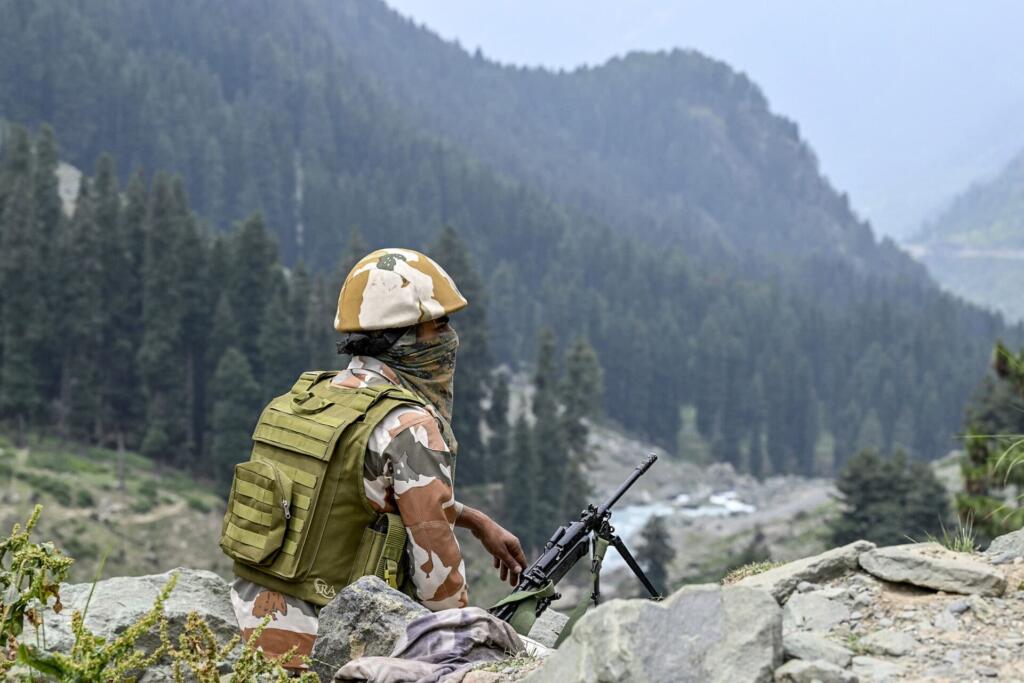
Officials in New Delhi have termed the intelligence inputs a “critical security warning.” The Indian Army’s Northern Command, along with central agencies, has been placed on heightened alert across LoC sectors in Poonch, Baramulla, and Kupwara. The Army’s surveillance grid and counter-infiltration posts have already been strengthened, with continuous night patrols and drone surveillance to detect cross-border movements.
Coinciding with these developments, India is conducting its largest Trishul Tri-Service Exercise along the western frontiers of Gujarat and Rajasthan. The exercise aims to enhance inter-service coordination and readiness, sending a clear message that India is prepared for any escalation.
Defence analysts believe Pakistan’s renewed attempts to “export instability” stem from its deepening domestic crises — economic collapse, political turmoil, and international isolation over its terror links. The escalation, they warn, is Pakistan’s desperate attempt to reassert relevance by targeting Indian security forces and undermining peace in Jammu and Kashmir.
The latest intelligence clearly signals that Pakistan-based terror networks are attempting to reignite cross-border violence to offset their defeats from Operation Sindoor. By reviving old modules and using narco-terror funding, Islamabad appears to be pursuing a reckless strategy of destabilization at a time when Kashmir is inching towards peace.
However, the Indian security establishment is better prepared than ever before. With real-time surveillance, multi-agency coordination, and preemptive counter-terror grids in place, any new infiltration or attack plan is likely to be intercepted swiftly.