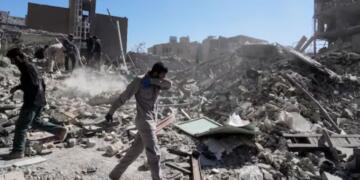

















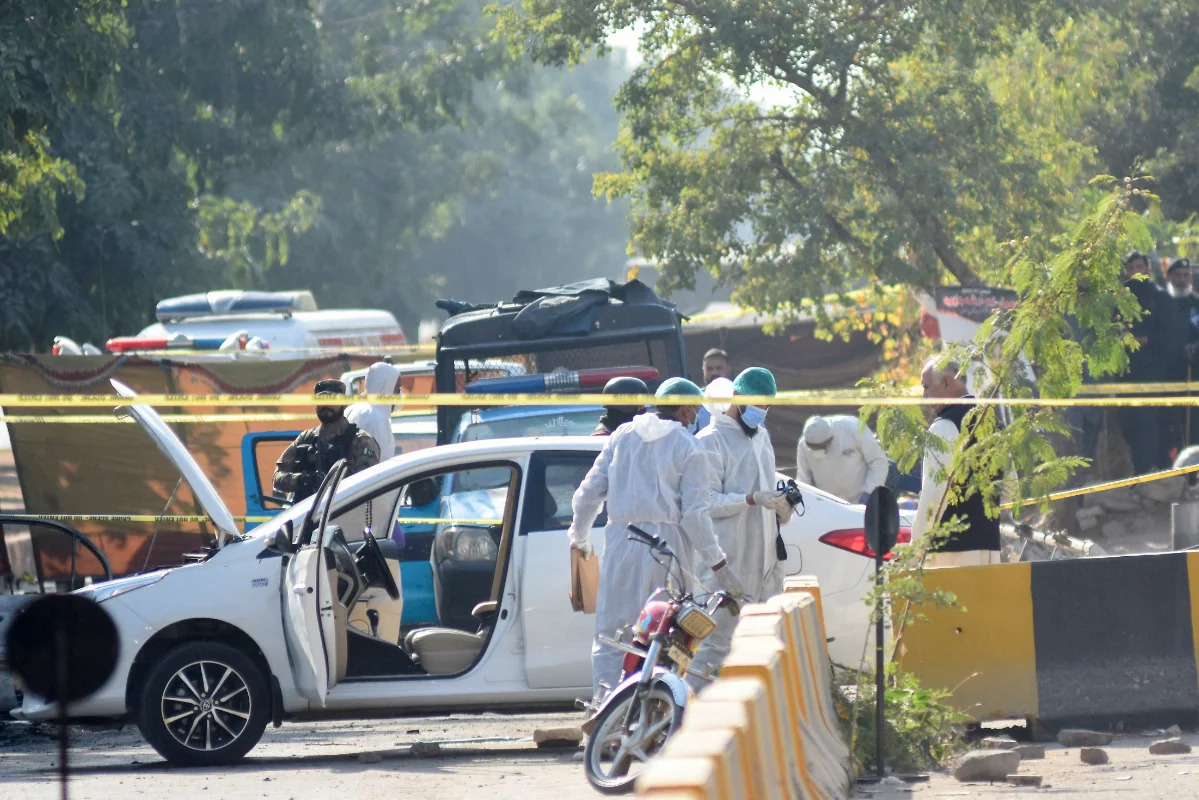
On 11 November 2025, a suicide bombing terror attack outside the court complex in Islamabad’s G-11 area killed at least 12 people and wounded about 27 others. The explosion took place around 12:30 pm local time, and according to local media the blast was “powerful enough to be heard six kilometres away”. (The bomber had apparently attempted to enter the court building on foot, waited 10-15 minutes and then detonated near a police vehicle.).
In the immediate aftermath, Pakistan’s leadership—most notably Prime Minister Shehbaz Sharif—quickly laid blame at the door of neighbouring India, accusing “Indian-sponsored terrorist proxies” of orchestrating the attack. India, for its part, has firmly rejected these accusations as “baseless and unfounded,” describing them as a “predictable tactic” by a “delirious Pakistani leadership” seeking to distract from its internal troubles.
This raises a provocative question: Is the Islamabad blast authentically a terror attack, or is it being used as an eyewash—a diversionary ploy—to shift international opinion and deflect blame away from Pakistan’s domestic vulnerabilities?
Real Terrorist Act or Scripted Distraction?
On the face of it, the details fit a genuine terror attack: a bomber attempts to enter a high-security site, waits, then detonates near law-enforcement vehicles, killing and injuring civilians. The militant group Jamaat‑ul‑Ahrar (a faction of the Tehrik‑e‑Taliban Pakistan) sent messages claiming responsibility of the terror attack, though its commander denied involvement. That suggests a classic insurgent pattern rather than state-fabricated staging.
At the same time, the haste with which Pakistan’s top leadership pinned the attack on India—with no publicly disclosed evidence—raises suspicion. India’s Foreign Ministry called the claim “an obviously delirious Pakistani leadership … a predictable tactic … to deflect attention from the ongoing military-inspired constitutional subversion and power-grab in the country.” The timing is also notable: for Pakistan, blaming an external enemy can serve to rally domestic support, shift scrutiny away from economic and political issues, and re-energise its security establishment.
Additionally, there is a pattern: previous incidents of terror attack in Pakistan have similarly been followed by swift accusations against India, often without transparent evidence. For example, earlier in June 2025, Pakistan attempted to link an attack in Waziristan to India; India rejected the claim as “deserving of contempt.”
Thus one might argue: while the attack itself appears real and tragic, its exploitation in the diplomatic narrative functions partly as a diversion.
Domestic Context: Why the Diversion Might Be Necessary
Pakistan currently faces several internal sources of stress: political-constitutional debates, military influence in governance, economic difficulties, and security challenges. Faced with such pressures, attributing blame externally—notably to India—serves multiple purposes:
It shifts public attention away from domestic shortcomings to the ‘enemy outside’.
It enables the Pakistani security and political establishment to present a united “external threat” narrative.
It strengthens internal cohesion at a time when the military-civilian relationship and institutional legitimacy are under strain.
Given India’s categorical rejection of the allegations, the lack of transparent evidence shared by Islamabad, and the rapidity of the blame game, the diversion hypothesis gains plausibility.
The International Implications
From an international-opinion perspective, the terror attack or Pakistan’s framing of the blast as Indian-backed state terrorism aims to rally sympathy, shift attention to India’s role as alleged “destabiliser,” and perhaps deter India (and its allies) from pressuring Pakistan on other fronts (Afghanistan, terrorism financing, the border). Indeed, India’s official response warns that the international community “will not be misled by Pakistan’s desperate diversionary ploys.”
If this is a diversion tactic, it indicates a significant risk: real domestic security threats will get wrapped into external blame narratives, complicating accountability and eroding trust. For India and other neighbours, responding credibly requires insisting on shared investigations, transparent evidence sharing, and refusing to become enmeshed in narrative traps.
Conclusion: Mixed Reality, Clear Strategy
In conclusion, the terror attack in Islamabad was most likely a genuine suicide bombing—and therefore a tragic terrorist incident. But equally likely is that the manner in which the attack has been leveraged by Pakistan’s leadership for externalising blame, shifting attention, and rallying domestic narratives amounts to an eyewash of sorts—a strategic diversion rather than purely an act of insurgent violence.
The dual nature is important: recognising the real victims and security challenge, while also critically examining the externalised narrative that follows. International observers, regional policymakers and domestic civil societies must distinguish the attack from the story told about it. Only by doing so can the underlying security issues—militancy, cross-border proxies, internal institutional stress—be addressed, rather than simply packaged as blame against another state.
In short: yes, it seems entirely plausible that part of the incident’s purpose is to distract international opinion and forestall culpability. At the same time, we must not dismiss the lethality and real danger of the terror attack itself. Acknowledging both ensures a more honest and actionable engagement with the region’s long-term security and diplomatic challenges.