
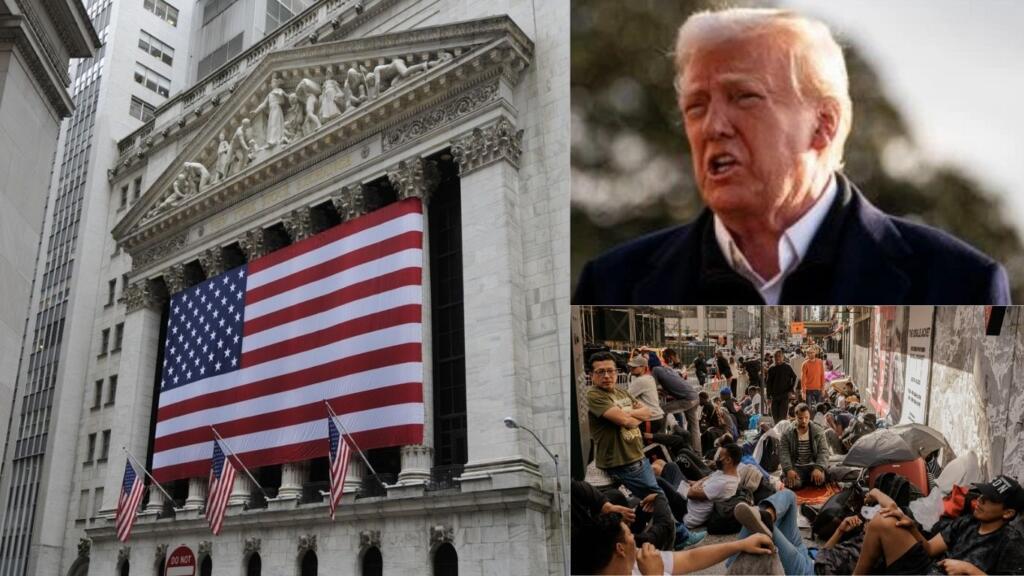
By doing certain activities, the US administration seems more focused on pleasing its local Republican voter base rather than addressing long-term economic realities. But in trying to appear “tough” on immigration, America risks distancing itself from the global talent pool that has been the backbone of its innovation story. After imposing a $100,000 H-1B visa fee, the latest rule on work permits further tightens the screws on foreign workers especially Indians. What appears to be a populist attempt to win votes could, in the long run, harm the very economy the US claims to protect. In a multipolar world, talent will find other destinations.
A New Rule with Far-Reaching Impact
The US Department of Homeland Security (DHS) has announced a new interim rule that ends the automatic renewal of Employment Authorisation Documents (EAD) for migrants. Effective October 30, 2025, this decision will affect thousands of foreign workers, including a large number of Indians employed across the technology, healthcare, and research sectors.
According to the DHS statement, “Aliens who file to renew their EAD on or after October 30 will no longer receive an automatic extension.” However, existing EADs that were automatically extended before this date will remain valid. The US government says the move is part of its broader effort to increase vetting and screening processes to “protect public safety and national security.”
Under the Biden administration, workers were allowed to continue employment for up to 540 days after expiry if they had applied for renewal in time. The Trump administration has now overturned that rule, citing concerns over lax verification and potential fraud.
The New Vetting Argument
US Citizenship and Immigration Services (USCIS) officials claim that the change is intended to reduce fraud and identify individuals with “potentially harmful intent.” USCIS Director Joseph Edlow described the new rule as a “common-sense measure,” adding that “working in the US is a privilege, not a right.”
In practical terms, this means migrant workers must now plan their renewals meticulously. USCIS recommends filing a renewal application at least 180 days before expiration to avoid gaps in employment. A delay, even by a few days, could lead to a temporary lapse in work authorization effectively putting thousands of families at risk of job loss and legal uncertainty.
The DHS statement also mentioned limited exceptions for instance, those covered under Temporary Protected Status (TPS) or special federal notices but for the majority of workers, this rule is a significant blow.
Targeting Migrant Talent, Especially Indians
The latest decision comes just weeks after the US announced a $100,000 H-1B visa fee, aimed at ensuring that only “very highly skilled” workers enter the country. The Trump administration argued that this would prevent the replacement of American workers by cheaper foreign labor. However, the move has been widely criticized by industry experts who say it effectively prices out startups and mid-sized firms that depend on global talent, particularly from India.
India has long been a major contributor to the US tech ecosystem. From Silicon Valley engineers to research scientists, Indian professionals form a crucial part of America’s knowledge economy. Restrictive rules like these could drive skilled professionals toward alternative destinations such as Canada, the UK, Australia, or even India’s own growing innovation hubs.
In another related move, Florida Governor Ron DeSantis directed universities to prioritize hiring American citizens over foreign workers. This echoes the protectionist tone of Washington’s policies, suggesting that anti-immigrant sentiment is gaining further political ground across US institutions.
A Short-Term Political Move, a Long-Term Economic Mistake
While the administration defends its decision as a national security measure, many analysts view it as an attempt to woo conservative voters. The pattern has become clear every few weeks, a new visa or immigration policy surfaces, targeting migrants while claiming to safeguard American jobs.
But the broader reality is stark, the US economy has long relied on foreign talent to power its innovation engine. From leading AI research to healthcare systems and engineering breakthroughs, immigrants have played a defining role in America’s success. By creating barriers, Washington risks alienating precisely those who have helped make it a global leader.
Moreover, in today’s multipolar world, talent mobility is real. Nations like India are developing robust technology ecosystems, while others like the UAE and Singapore are offering attractive work environments for skilled professionals. Restrictive policies might please short-term political constituencies, but they weaken America’s long-term competitiveness.
The US may believe that stricter visa and work rules strengthen its internal labor market, but this is an illusion. By building bureaucratic walls around its talent pool, it is slowly cutting itself off from the very source of its innovation. Populism may win votes, but it loses vision.
As the world transitions into a multipolar order, countries that welcome talent will define the next century. India, with its expanding tech economy and demographic strength, stands to gain where the US is choosing to lose. The end of automatic work permit renewals might just be another headline today but in hindsight, it could mark the beginning of America’s self-inflicted talent drain.