






















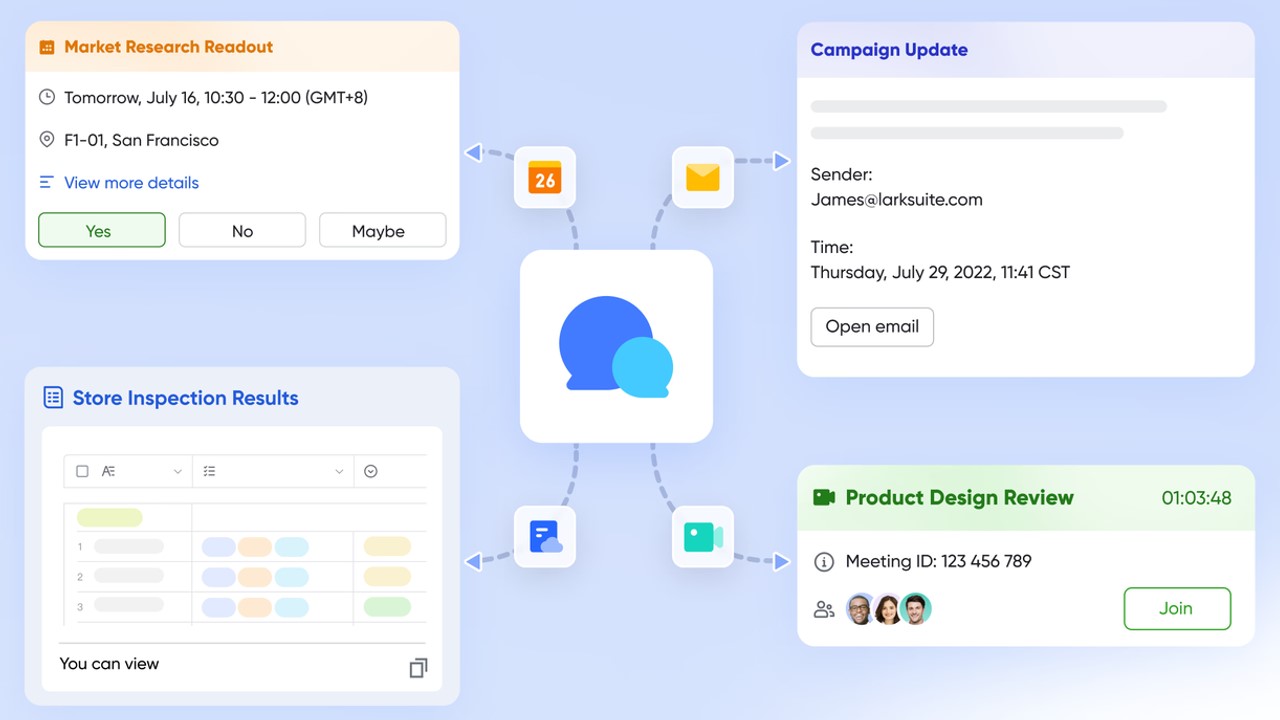
Mergers and growth can help a business, but they can also make things more difficult. Organizations need to bring together different cultures, processes, and systems while still satisfying the needs of their clientele. You could lose time, money, or talent if you make mistakes during this move. Companies that do well in these scenarios are the ones that let everyone work together and see what’s going on in all aspects of the business. They don’t have to deal with a lot of various technologies that don’t work together. Instead, they employ project management tools that combine procedures, data, and communication. These platforms make it easy to grow by getting rid of the fear of change.
Lark Messenger: creating one voice across merging teams
When two companies work together, they may not be able to talk to each other as well. It’s hard to make one voice for the whole corporation when there are so many styles, platforms, and channels. Lark Messenger makes it simple for groups to work together in one spot. Putting conversations into organized channels makes sure that everyone hears the same thing. This helps people trust each other and reduces down on confusion.
How Messenger lets people understand each other:
- Project Channels for teams that work together: HR, IT, and finance each have their own spaces where they may work together and still remain open.
- Clear threaded conversations: You don’t have to explain things over and over again since questions and decisions stay related to their context.
- Pinned updates to show what’s most important: Leaders can place vital news at the top of channels so that everyone sees it.
- Video or phone calls right away: Quick escalation turns probable problems into speedy fixes, which keeps things going.
Messenger lets everyone have a digital voice, which helps teams that are merging go from “us and them” to a cohesive, coordinated culture.
Lark Calendar: aligning critical milestones
When it comes to mergers and expansions, timing is everything. Teams need to remember the timeframes imposed by regulators, the time it takes to onboard new clients, the duties they have to clients, and their own ambitions. Lark Calendar is the only place you need to go to find out the truth and make sure you don’t miss a deadline. It’s easy to adjust schedules when priorities change because they may.
How Calendar helps things go more smoothly:
- Automatic time zone conversion: When teams can see achievements in their local time zone, it is easier to expand globally.
- Checking other availability: By showing a person’s availability (Busy, Awaiting, Maybe), it helps large, cross-functional groups find meeting times efficiently.
- Shared calendars for visibility: Leaders may see both operational commitments and integration milestones.
- Real-time updates: Changes in one calendar instantly reflect across teams, avoiding miscommunication.
Calendar helps organizations keep track of time, but it also helps them maintain track of momentum by making sure everyone knows about crucial deadlines.
Lark Docs: creating shared knowledge bases
People don’t share information, which is why mergers usually fail. Teams copy documents or use old ones, which makes it challenging to keep things moving in the right direction. Lark Docs fixes this by letting individuals work on living documents together in real time, where policies, plans, and reports are all changed at the same time.
How Docs helps you perform less work:
- Real-time co-editing: A lot of individuals can work on the same approach at the same time, which saves days of going back and forth.
- Commenting in context: Teams can raise questions right on the paper, which keeps everything orderly.
- History of versions: It is still clear who is in charge, and it demonstrates how integration goals changed over time.
- Templates for things that happen over and over again: Making copies of onboarding checklists, expansion playbooks, and transition roadmaps is easy.
Docs makes sure that everyone is using the same, most up-to-date information by making a single place for all of it to live and evolve over time.
Lark Approval: structuring complex processes
It’s a significant matter to get permission for mergers and expansions. It could be new contracts with suppliers, approvals for compliance, or financial allocations. Approval chains that are done by hand could take longer and make it less likely that people will follow the rules. Lark Approval makes this easy by automating and keeping track of all requests through a set protocol. Automated workflow speeds up processes, yet there is still oversight.
How Approval makes decisions faster:
- Changeable approval chains: The processes meet the demands of each department, from hiring new personnel to checking finances.
- Real-time tracking: Requesters may see exactly where approvals are, which cuts down on unnecessary follow-up.
- Approvals on the go: Leaders may sign off immediately, even when they’re on the road during times of growth.
- Reminders that happen on their own: Remind management before requests come in to keep things from becoming stuck.
Approval makes it simpler to make tough choices by making them easier to see coming. This helps make sure that initiatives stay on pace and follow the guidelines.
Lark Meetings: driving action from alignment sessions
M&A and expansion initiatives need regular meetings to keep everyone on the same page, but too often, the results are forgotten after the meetings. Lark Meetings makes sure that conversations lead to actions, which means that results are part of wider workflows.
How meetings help people finish their work:
- Shared agendas: Everyone is prepared, which keeps the talks on track.
- Collaborative notes in Docs: Outcomes are documented in real time, accessible to all.
- Action items for tasks: Everyone is given their next steps before the meeting ends, which makes them accountable.
- Recordings and transcripts: Team members who weren’t there can catch up right away without any problems or delays.
Meetings don’t waste time; they help things go forward by speeding up integration and growth.
Lark Base: structuring complex operations
Structured data is the most important part of a successful M&A. Contracts, employment data, customer portfolios, and supply chains must all come together without any duplicates. Lark Base is a core system that simplifies this difficult task. Each team has its own opinions, but they all use the same organized data. This makes it less likely that they will make mistakes or disagree.
How Base aims to get bigger:
- Centralized data management: All of the supplier lists, client records, and HR files are kept in one place.
- Views that can be changed: All three departments—finance, HR, and operations—see the same data in the way that works best for them.
- Cross-linked records: Tasks, approvals, and milestones that are important to contracts are connected directly to them.
- Scalable structure: Base may add more workflows as expansions grow without making things more complicated.
Base takes enormous, complicated integration challenges and puts them into solutions that are easy to grasp and work.
Conclusion
Mergers and expansions are dangerous things to do. For an organization to be successful, project management software needs to be able to bring together people, processes, and data without slowing down. Luckily in Lark, everyone can talk to each other using Messenger, Calendar makes sure everyone is on the same page, Docs makes sure everyone has the same information, Approval keeps things moving, Meetings turn alignment into action, and Base manages complexity.
These parts work together to give businesses the connected base they need to turn disruptive change into a chance to grow. Companies that use linked platforms don’t simply survive mergers and acquisitions; they also get the most out of them, decrease their risks, and obtain results faster.