








TFIPOST हिन्दी
TFIPOST Global
Tfipost.com
Tfipost.com
No Result
View All Result
  • Premium
  • Politics
    • All
    • Analysis
    • Opinions
    • Trending
    Leftists Approach NHRC Action In Faisal Case

    Leftists Approach NHRC Action In Faisal Case

    Claude AI Misused in Alarming Houthi Missile Development Bid

    Claude AI Misused in Alarming Houthi Missile Development Bid

    Hindu Monk Faces Brutal Persecution in Bangladesh

    Hindu Monk Faces Brutal Persecution in Bangladesh

    BRICS

    The 18th BRICS Summit: India’s Chairship, Themes and Key Issues

    • Analysis
    • Opinions
    • Trending
  • Economy
    • All
    • Business
    • Economy1
    • Finance
    Money Back Plan for Parents: A Smart Way to Plan for Your Child’s Future

    Money Back Plan for Parents: A Smart Way to Plan for Your Child’s Future

    Need a bank account today? Open one online in minutes

    Need a bank account today? Open one online in minutes

    Do You Still Need Term Insurance If You Have ₹50 Lakh Employer Cover?

    Do You Still Need Term Insurance If You Have ₹50 Lakh Employer Cover?

    What the UAE’s 2026 Corporate Tax Rules Actually Mean for a Free Zone Company

    What the UAE’s 2026 Corporate Tax Rules Actually Mean for a Free Zone Company

    • Business
    • Finance
  • Defense
    • All
    • Defence
    • Strategy
    • Weaponry
    The Missing Layer: How Russia’s Pantsir-S1M Would Plug India’s S-400 Gap

    The Missing Layer: How Russia’s Pantsir-S1M Would Plug India’s S-400 Gap

    Russia’s UAC Showcases Homegrown Airliners, Signs Deals for 85 Il-114 Aircraft at Innoprom.India

    Armenian Military Delegation Visits Indian Air Force Station, Boosting Bilateral Defence Ties

    Indian Navy Warship Reaches Malaysia for Joint Exercise with Royal Malaysian Navy

    Indian Navy Warship Reaches Malaysia for Joint Exercise with Royal Malaysian Navy

    “Won’t Let Our Soil Be Used Against India”: Sri Lankan President Assures Rajnath Singh As Colombo Signs Three Defence Pacts

    “Won’t Let Our Soil Be Used Against India”: Sri Lankan President Assures Rajnath Singh As Colombo Signs Three Defence Pacts

    • Defence
    • Strategy
    • Weaponry
  • Geopolitics
    • All
    • Africa
    • Americas
    • Asia Pacific
    • Europe
    • South Asia
    • West Asia
    First Visit, Loaded Agenda: Pezeshkian Lands in Delhi Seeking India’s Help on the War

    First Visit, Loaded Agenda: Pezeshkian Lands in Delhi Seeking India’s Help on the War

    Xi Jinping to make historic return to India for BRICS Summit, first visit in nearly seven years

    Xi Jinping to make historic return to India for BRICS Summit, first visit in nearly seven years

    Putin lands in New Delhi ahead of BRICS Summit, set to join Modi at INNOPROM

    Putin lands in New Delhi ahead of BRICS Summit, set to join Modi at INNOPROM

    India Condemns Houthi Attacks On Saudi Arabia, Calls Them “Unacceptable” Threat To Regional Security

    • Africa
    • Americas
    • Asia Pacific
    • Europe
    • South Asia
    • West Asia
  • Knowledge
    • All
    • Culture
    • Education
    • History
    • Indology
    Young Indian Gen Z exploring Sanatan Dharma through smartphones, social media and the Bhagavad Gita

    Ancient Roots, Digital Minds: The Rise of Sanatani Gen Z

    Break into QA Jobs Faster with Automation Testing Course from StarAgile

    Break into QA Jobs Faster with Automation Testing Course from StarAgile

    Which JEE Online Coaching Is Best for JEE Mains 2027?

    Which JEE Online Coaching Is Best for JEE Mains 2027?

    “Bond of trust, unbreakable”: Modi’s Raksha Bandhan wishes — and the legends behind the festival

    “Bond of trust, unbreakable”: Modi’s Raksha Bandhan wishes — and the legends behind the festival

    • Culture
    • History
    • Indology
  • Law
  • Lounge
    • All
    • Books
    • Cinema
    • Entertainment
    • Food
    • Games
    • Health
    • Lifestyle
    • Satire
    • Sports
    • technology
    • Travel
    How Sports Betting Changed My Understanding of Risk in Indian Politics

    How Sports Betting Changed My Understanding of Risk in Indian Politics

    How Mobile Proxies Engine Global Media Monitoring and International OSINT Pipelines

    How Mobile Proxies Engine Global Media Monitoring and International OSINT Pipelines

    Digital Sovereignty and Telecommunications Privacy: Safeguarding Personal Identifiers in Modern Geopolitics

    Digital Sovereignty and Telecommunications Privacy: Safeguarding Personal Identifiers in Modern Geopolitics

    Why Sports Betting Exploded Among Cricket Fans in India

    Why Sports Betting Exploded Among Cricket Fans in India

    • Books
    • Cinema
    • Food
    • Health
    • Sports
    • technology
    • Travel
    • Satire
Tfipost.com
  • Premium
  • Politics
    • All
    • Analysis
    • Opinions
    • Trending
    Leftists Approach NHRC Action In Faisal Case

    Leftists Approach NHRC Action In Faisal Case

    Claude AI Misused in Alarming Houthi Missile Development Bid

    Claude AI Misused in Alarming Houthi Missile Development Bid

    Hindu Monk Faces Brutal Persecution in Bangladesh

    Hindu Monk Faces Brutal Persecution in Bangladesh

    BRICS

    The 18th BRICS Summit: India’s Chairship, Themes and Key Issues

    • Analysis
    • Opinions
    • Trending
  • Economy
    • All
    • Business
    • Economy1
    • Finance
    Money Back Plan for Parents: A Smart Way to Plan for Your Child’s Future

    Money Back Plan for Parents: A Smart Way to Plan for Your Child’s Future

    Need a bank account today? Open one online in minutes

    Need a bank account today? Open one online in minutes

    Do You Still Need Term Insurance If You Have ₹50 Lakh Employer Cover?

    Do You Still Need Term Insurance If You Have ₹50 Lakh Employer Cover?

    What the UAE’s 2026 Corporate Tax Rules Actually Mean for a Free Zone Company

    What the UAE’s 2026 Corporate Tax Rules Actually Mean for a Free Zone Company

    • Business
    • Finance
  • Defense
    • All
    • Defence
    • Strategy
    • Weaponry
    The Missing Layer: How Russia’s Pantsir-S1M Would Plug India’s S-400 Gap

    The Missing Layer: How Russia’s Pantsir-S1M Would Plug India’s S-400 Gap

    Russia’s UAC Showcases Homegrown Airliners, Signs Deals for 85 Il-114 Aircraft at Innoprom.India

    Armenian Military Delegation Visits Indian Air Force Station, Boosting Bilateral Defence Ties

    Indian Navy Warship Reaches Malaysia for Joint Exercise with Royal Malaysian Navy

    Indian Navy Warship Reaches Malaysia for Joint Exercise with Royal Malaysian Navy

    “Won’t Let Our Soil Be Used Against India”: Sri Lankan President Assures Rajnath Singh As Colombo Signs Three Defence Pacts

    “Won’t Let Our Soil Be Used Against India”: Sri Lankan President Assures Rajnath Singh As Colombo Signs Three Defence Pacts

    • Defence
    • Strategy
    • Weaponry
  • Geopolitics
    • All
    • Africa
    • Americas
    • Asia Pacific
    • Europe
    • South Asia
    • West Asia
    First Visit, Loaded Agenda: Pezeshkian Lands in Delhi Seeking India’s Help on the War

    First Visit, Loaded Agenda: Pezeshkian Lands in Delhi Seeking India’s Help on the War

    Xi Jinping to make historic return to India for BRICS Summit, first visit in nearly seven years

    Xi Jinping to make historic return to India for BRICS Summit, first visit in nearly seven years

    Putin lands in New Delhi ahead of BRICS Summit, set to join Modi at INNOPROM

    Putin lands in New Delhi ahead of BRICS Summit, set to join Modi at INNOPROM

    India Condemns Houthi Attacks On Saudi Arabia, Calls Them “Unacceptable” Threat To Regional Security

    • Africa
    • Americas
    • Asia Pacific
    • Europe
    • South Asia
    • West Asia
  • Knowledge
    • All
    • Culture
    • Education
    • History
    • Indology
    Young Indian Gen Z exploring Sanatan Dharma through smartphones, social media and the Bhagavad Gita

    Ancient Roots, Digital Minds: The Rise of Sanatani Gen Z

    Break into QA Jobs Faster with Automation Testing Course from StarAgile

    Break into QA Jobs Faster with Automation Testing Course from StarAgile

    Which JEE Online Coaching Is Best for JEE Mains 2027?

    Which JEE Online Coaching Is Best for JEE Mains 2027?

    “Bond of trust, unbreakable”: Modi’s Raksha Bandhan wishes — and the legends behind the festival

    “Bond of trust, unbreakable”: Modi’s Raksha Bandhan wishes — and the legends behind the festival

    • Culture
    • History
    • Indology
  • Law
  • Lounge
    • All
    • Books
    • Cinema
    • Entertainment
    • Food
    • Games
    • Health
    • Lifestyle
    • Satire
    • Sports
    • technology
    • Travel
    How Sports Betting Changed My Understanding of Risk in Indian Politics

    How Sports Betting Changed My Understanding of Risk in Indian Politics

    How Mobile Proxies Engine Global Media Monitoring and International OSINT Pipelines

    How Mobile Proxies Engine Global Media Monitoring and International OSINT Pipelines

    Digital Sovereignty and Telecommunications Privacy: Safeguarding Personal Identifiers in Modern Geopolitics

    Digital Sovereignty and Telecommunications Privacy: Safeguarding Personal Identifiers in Modern Geopolitics

    Why Sports Betting Exploded Among Cricket Fans in India

    Why Sports Betting Exploded Among Cricket Fans in India

    • Books
    • Cinema
    • Food
    • Health
    • Sports
    • technology
    • Travel
    • Satire
No Result
View All Result
Tfipost.com
Tfipost.com
No Result
View All Result
  • Premium
  • Politics
  • Economy
  • Defense
  • Geopolitics
  • Knowledge
  • Law
  • Lounge

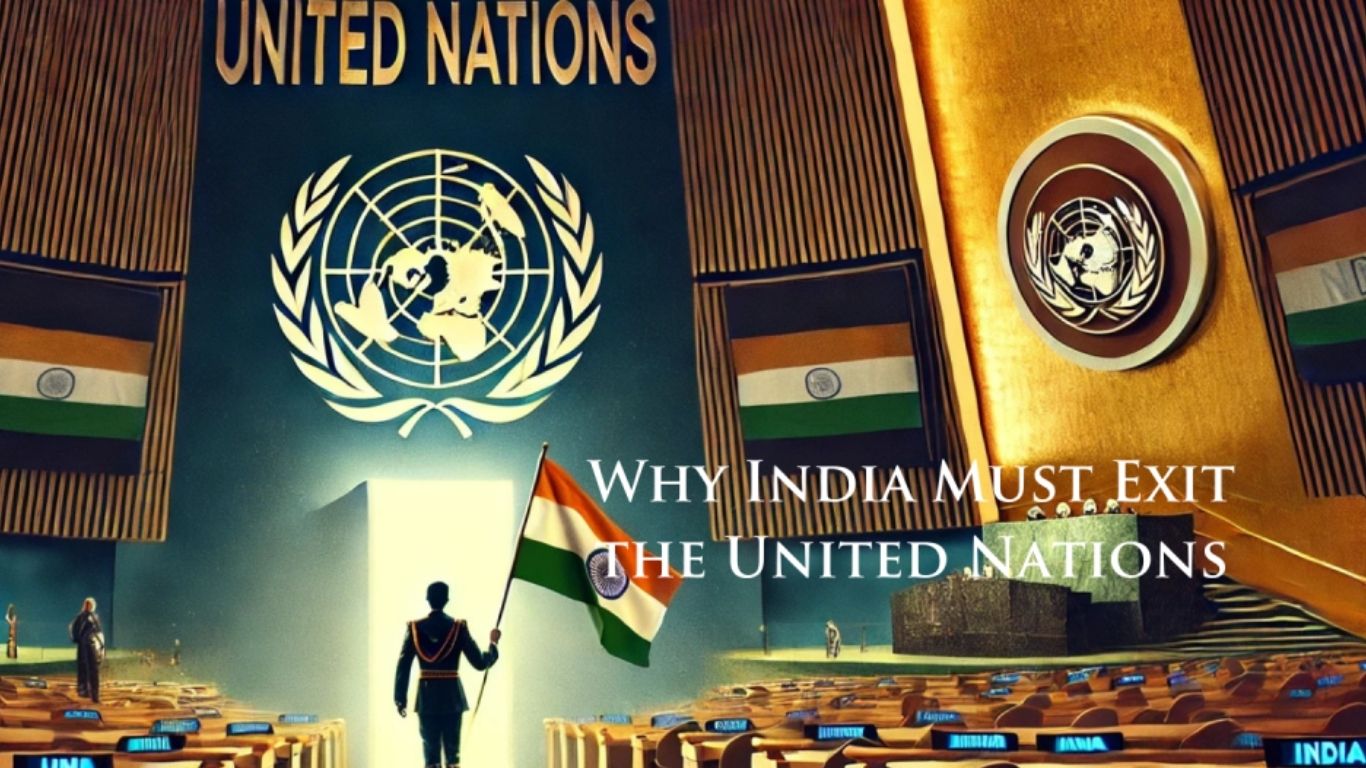
Should India Quit the United Nations?

India's exit from the United Nations would be a civilizational revolt against a colonial-era system designed to exploit the Global South

The Thoughtful Indian by The Thoughtful Indian
4 October 2025
in Analysis
Should India Quit the United Nations?
Share on FacebookShare on X

India’s exit from the United Nations would be a civilizational revolt against a colonial-era system designed to exploit the Global South. It would expose Western hypocrisy, collapse outdated power structures, and trigger a multipolar world led by self-respecting nations. India’s departure would inspire others to break free from UN-backed dependency, dismantle exploitative institutions, and accelerate a new, fairer global order rooted in sovereignty, equity, and civilizational pride.

India Quitting the United Nations: A Civilizational Shift in Global Power

The idea of India walking out of the United Nations (UN) might seem radical to some, even shocking. But in a world undergoing tectonic shifts in power, influence, and identity, it may soon become not only feasible but necessary. The traditional argument that India would lose out by quitting the UN is fundamentally rooted in colonial-era thinking: a mindset of dependency, appeasement, and false validation by powers that once ruled and now seek to dominate through institutions. It’s time to flip this narrative and focus on the gains—strategic, psychological, geopolitical, and civilizational—that India and the broader Global South would reap.

RelatedPosts

First Visit, Loaded Agenda: Pezeshkian Lands in Delhi Seeking India’s Help on the War

The Missing Layer: How Russia’s Pantsir-S1M Would Plug India’s S-400 Gap

Russia’s UAC Showcases Homegrown Airliners, Signs Deals for 85 Il-114 Aircraft at Innoprom.India

Load More

1. Dismantling a Colonial Structure

The United Nations is not just a post-war framework—it is, at its core, a colonial-era institution designed to maintain the global hierarchy established by the victors of World War II. The broader network of global governance—through mechanisms such as the Bretton Woods system, WTO, IMF, World Bank, WHO, ICSID, ISDS, and ICJ—further entrenches this design. These institutions often serve as instruments for the continuation of colonial influence in economic, legal, and political spheres under the guise of neutrality and multilateralism.

India’s departure would:

  • Break these chains of modern colonialism disguised as global cooperation.
  • Set a powerful precedent for others in the Global South to critically assess and exit systems built to exploit them.
  • Strip the remaining colonial-era European powers of their last avenues for extracting strategic and economic advantage from the developing world.

2. Breaking Free from Post-War Shackles

India’s exit would be a sovereign rejection of a framework that no longer reflects the geopolitical and economic realities of the 21st century. It would mark the end of India’s participation in institutions that refuse to evolve beyond outdated power structures.

India would gain:

  • Unfiltered foreign policy sovereignty.
  • Full control of its diplomatic narrative.
  • Redirection of resources from ineffective UN bodies to more relevant regional and bilateral mechanisms.

3. Reclaiming Civilizational Identity and Leadership

India is not merely a modern state—it is an ancient civilization. Exiting the UN would empower India to reclaim its unique ethos and propose new models of governance based on dharmic principles, sustainability, and decentralization.

This shift would:

  • Reassert India’s pluralistic approach to development.
  • Promote civilizational leadership instead of post-colonial subservience.
  • Offer alternatives to hegemonic Western paradigms.

4. Rejection Breeds Awakening: UNSC and G7 Exclusions

India’s exclusion from the UNSC, G7 and other ‘global organisations’ is deliberate, not accidental. Despite its economic size, population, geographical landmass, democratic values, and contributions to UN led peacekeeping, it remains sidelined. Meanwhile, weaker and stagnant economies hold permanent influence in global decision making and directing the affairs of the Global South.

India’s expanding industrial strength, rising defense capabilities, and globally respected, skilled diaspora warrant overdue recognition. But with the UN and its affiliated bodies consistently denying India its rightful place, a strategic exit becomes not only justified but necessary—striking at the legitimacy of these biased institutions and inspiring other nations to question and reject their imposed hierarchies.

5. Empowering the Global South

India’s bold departure would galvanize the Global South. Many nations feel trapped in an international structure that governs all aspects of their economy, politics, and society while keeping them artificially underdeveloped and dependent.

These nations:

  • Suffer under exploitative trade and regulatory frameworks.
  • Watch their natural resources extracted without justice.
  • See their populations treated as labor reservoirs or crisis fodder by Global North powers.

India’s move would inspire them to resist this order and embrace new self-sustaining partnerships.

6. Strengthening BRICS and Alternative Alliances

BRICS, SCO, and similar alliances are rising in legitimacy. India’s leadership within these will grow stronger post-UN.

India’s exit would:

  • Drive BRICS toward becoming a real institutional alternative.
  • Encourage the creation of new development banks, arbitration forums, and trade pacts.
  • Empower collaborative models that respect sovereignty.

7. UN’s Legitimacy Crisis and Reputational Loss

Without India, the United Nations cannot claim to represent the world. Its refusal to reform and admit emerging powers into core decision-making will appear even more unjust.

Immediate fallout:

  • Loss of credibility in the Global South.
  • Public exposure of hypocrisy in peace, rights, and development discourse.
  • A cascade of smaller nations reconsidering their membership.

8. Accelerating Global Multipolarity

India’s move would fast-track the demise of the unipolar or Western-centric global order. Multipolarity is already emerging; this act would make it irreversible.

Benefits:

  • Stronger regional institutions.
  • New global rules based on mutual respect.
  • Diverse diplomatic leadership replacing monopoly.

9. Ending the Political Dominance of Declining Powers

The same countries that ruled by force now rule by bureaucracy. Their dominance through IMF loans, UNSC vetoes, and United Nations-funded narratives is disproportionate.

India’s rejection would:

  • Reveal these powers as paper tigers.
  • Eliminate their veto-like influence over Global South affairs.
  • Enable a shift from privilege to merit.

10. Dismantling the Moral Superiority Complex

Western institutions often preach selectively. They ignore their own wars, invasions, and human rights violations while targeting emerging nations.

India’s exit would:

  • Shatter this moral hypocrisy.
  • Normalize independent development and cultural pride.
  • Showcase India as a power that helps without seeking control.

11. Weakening the Global Institutional Complex

The UN’s departure will destabilize related bodies: WTO, WHO, FAO, IMF, and others.

Effects:

  • Mass disillusionment in Global South nations.
  • Rise of alternative institutions.
  • A push to audit and expose decades of manipulation.

12. Economic and Trade Realignments

India’s economy is now global and resilient. It does not depend on UN-linked trade systems.

By quitting, India could:

  • Promote rupee-based trade.
  • Establish South-South digital currencies.
  • Secure bilateral and regional deals based on fairness.

13. Western Reaction: Bluff Without Power

India’s exit will provoke a predictable but increasingly ineffective reaction from Western powers. Their dominance is built on narratives and legacy systems, not real strength anymore.

Media Smear Campaigns: Western media will attack India with accusations of authoritarianism or democratic erosion. Funded NGOs will amplify internal dissent. However, such narrative warfare is losing its potency in a more decentralized media landscape.

Economic Retaliation Attempts: Tariffs, sanctions, and investment threats will likely follow. But India is already diversifying trade, expanding bilateral agreements, and building alternatives like BRICS banking and currency systems. Western economic tools no longer inspire fear.

Military Posturing: Direct military pressure is unlikely. European defense is weak, and the U.S. is internally fractured and overcommitted. Any pressure would be symbolic or cyber in nature—but India’s defense self-reliance makes even these efforts risky.

Control via Proxies: Multinationals and NGOs will be deployed to control sectors indirectly—from agriculture and education to health and digital spaces. India must counter this through regulatory nationalism and sovereign economic frameworks.

Diplomatic Isolation Efforts: India might face exclusion from legacy institutions like G7 or elite Western forums. But their relevance is fading. India can lead South-South platforms with far more global resonance.

Reality Check for the West:

  • Europe is aging, stagnating, and divided.
  • The U.S. faces a cultural, economic, and political decline.
  • Canada, Australia, and New Zealand hold negligible influence and rely on Global South trade.

The social cohesion of these nations is also deteriorating: family structures are collapsing, identity politics fragment populations, and productive workforces are shrinking.

Meanwhile, their economies remain dependent on the very Global South they try to dictate to—for raw materials, human capital, consumer markets, and growth.

14. Potential Setbacks and Realignment Needs

No transformation comes without friction. Some initial setbacks may include:

  • Disruption in multilateral aid channels (though many were symbolic).
  • Temporary diplomatic turbulence in UN-centric forums.
  • Negative propaganda pushed by former colonial powers and aligned media.

To address these, India must:

  • Set up its own Global Development Council to coordinate aid and partnerships.
  • Launch a New Arbitration Forum for South-South trade and disputes.
  • Create a Global South Charter that enshrines equity, non-intervention, and cultural dignity.

Estimated reorganization timeframe: 3–7 years.

During this period, India would:

  • Reorganize its multilateral diplomacy.
  • Shift funding from UN bodies to indigenous and regional institutions.
  • Expand its embassies’ capacity for economic diplomacy.

Final Reflections: A Civilizational Realignment

India leaving the UN is not about isolation—it is about independence, justice, and leadership. It is a statement that India will no longer lend credibility to systems designed to suppress its potential. It is a spark that may ignite a movement across the Global South.

Such a move would:

  • Reclaim India’s rightful civilizational leadership.
  • Free dozens of nations from the grip of old-world control mechanisms.
  • Accelerate the formation of a more ethical, representative, and multipolar world.

If India walks out, it walks not into solitude—but into history as a liberator. The world won’t end. It will begin again—with fairer rules, fresh alliances, and freer nations.
Tags: Civilizational ShiftGlobal PowerIndiaUnited NationsUNSC Permanent seat
ShareTweetSend
Previous Post

Why Are Kashmir’s So-Called Leaders Omar Abdullah, Mehbooba Mufti etc., Silent on Pakistan’s Brutality in PoK?

Next Post

Zubeen Garg Death Mystery Deepens: How Allegations of Poisoning, Negligence and Cover-Up Surface?

Related Posts

Can PM Modi’s Free Coaching Push Disrupt India’s Multi-Billion-Rupee Exam Economy?
Analysis

Can PM Modi’s Free Coaching Push Disrupt India’s Multi-Billion-Rupee Exam Economy?

15 August 2026

In India, cracking a government job or a major entrance examination is no longer just about studying hard and...

Unsung South Indian Freedom Fighters Remembered on 79th Independence Day
Analysis

Independence Day: Remembering South India’s Unsung Freedom Warriors

15 August 2026

India’s independence was won through the sacrifices of countless men and women, many of whom remain unknown to the...

The picture shows the CRPF’s Tiranga Yatra rally held at Dal Lake.
Analysis

Seven years since Article 370: what has changed in Jammu and Kashmir, and what has not

5 August 2026

Tuesday marks seven years since the Indian government revoked Jammu and Kashmir's special constitutional status under Article 370, splitting...

Load More

Leave a Reply Cancel reply

Your email address will not be published. Required fields are marked *

I agree to the Terms of use and Privacy Policy.
This site is protected by reCAPTCHA and the Google Privacy Policy and Terms of Service apply.

Currently Playing

₹2 Crore Film, ₹143 Crore Hit: The ‘Hanuman Ansh’ Box Office Shock

₹2 Crore Film, ₹143 Crore Hit: The ‘Hanuman Ansh’ Box Office Shock

00:02:46

Who Is Major Rishabh Sambhyal? The Army Officer Who Became a Social Media Sensation

00:03:34

The Missing 54: What Happened to India’s Soldiers After the 1965 & 1971 Wars | POW | Indo-Pak

00:04:43

J-20 vs India: How Super Sukhoi, Rafale & AMCA Could Counter China’s Stealth Fleet | IAF | HAL

00:03:32

QRSAM to Akash NG: India’s Massive Push to Build 2,000 Indigenous Air Defence Missiles | DRDO| IAF

00:04:05
Facebook Twitter Instagram Youtube
tfipostTfipost.com
Right Wing | News Analysis | Indian Opinion
  • About us
  • Contact Us
  • Careers
  • Brand Partnerships
  • Terms of use
  • Privacy Policy
  • Sitemap

©2026 TFI Media Private Limited

No Result
View All Result
  • Premium
  • Politics
    • Analysis
    • Opinions
    • Trending
  • Economy
    • Business
    • Finance
  • Defense
    • Defence
    • Strategy
    • Weaponry
  • Geopolitics
    • Africa
    • Americas
    • Asia Pacific
    • Europe
    • South Asia
    • West Asia
  • Knowledge
    • Culture
    • History
    • Indology
  • Law
  • Lounge
    • Books
    • Cinema
    • Food
    • Health
    • Sports
    • technology
    • Travel
    • Satire
TFIPOST हिन्दी
TFIPOST Global

©2026 TFI Media Private Limited