



















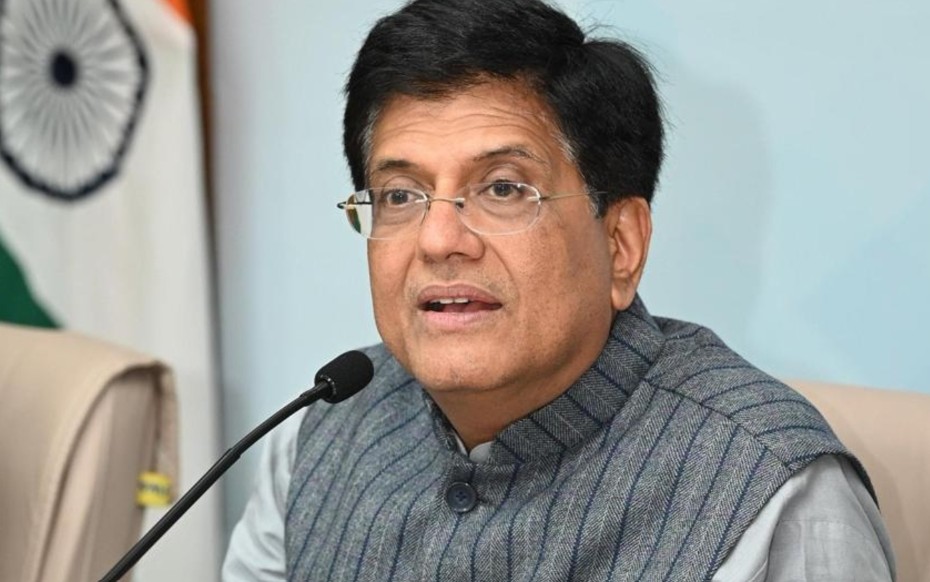
Union Minister of Commerce and Industry Piyush Goyal reaffirmed that India will not allow the United States to rush or pressure it into signing a bilateral trade pact, insisting that the nation will ensure any agreement serves its long-term interests
Speaking at the Berlin Global Dialogue on Friday, the Union Minister declared that “India doesn’t do deals with a gun on the head.” He underscored that New Delhi will not accept any trade deal dictated by artificial deadlines or coercive tactics.
“We are in active dialogue with the US, but we do not do deals in a hurry and we do not do deals with deadlines or with a gun to our head,” Goyal said.
The minister emphasised that officials are carefully shaping the contours of the proposed Bilateral Trade Agreement (BTA) to safeguard the interests of India’s farmers, fishermen, and Micro, Small and Medium Enterprises (MSMEs).
He stressed that nations must build trade pacts as “long-term instruments based on trust and lasting relationships,” rather than use them as short-term fixes to tariff disputes.
Goyal’s comments come at a sensitive time, with India-US trade negotiations said to be inching towards closure.
According to senior government officials, negotiators from both sides have begun working on the language of the final text, though a formal announcement will require “political convergence” between New Delhi and Washington.
The talks have been clouded by tensions over the US’s 50 per cent cumulative tariff on certain Indian exports—sanctions Washington partly attributes to India’s continued purchase of Russian crude oil.
India, however, has repeatedly denounced these duties as “unfair, unjustified, and unreasonable.” Despite the friction, Goyal maintained that the discussions are taking place in a “very cordial atmosphere.”
A high-level Indian delegation led by the Commerce Secretary recently concluded the fifth round of talks in Washington. Both sides had initially aimed to finalise the first tranche of the agreement by fall 2025.
The proposed pact seeks to expand bilateral trade—currently valued at around $131.84 billion for FY 2024–25—to $500 billion by 2030.
While officials familiar with the negotiations suggest the deal is “very near” completion, Goyal’s Berlin address made one thing clear: India will not compromise its sovereignty or long-term economic vision for the sake of expediency.
“India will look at the long-term implications and how it secures the national interest for a country with a young, aspirational population,” Goyal said, firmly setting the tone for the final leg of the talks.