


















In a major step towards strengthening India’s long-range precision strike and air dominance capabilities, the Defence Research and Development Organisation (DRDO) and the armed forces are preparing for the induction of next-generation BrahMos and Astra missiles. The 800-km extended range BrahMos, which will more than double the existing missile’s strike capability, is likely to be ready for induction by 2027. Meanwhile, production of over 200-km range Astra air-to-air missiles is expected to commence in 2026-27, significantly boosting the Indian Air Force’s beyond-visual-range warfare strength.
Extended-Range BrahMos Ready for Testing
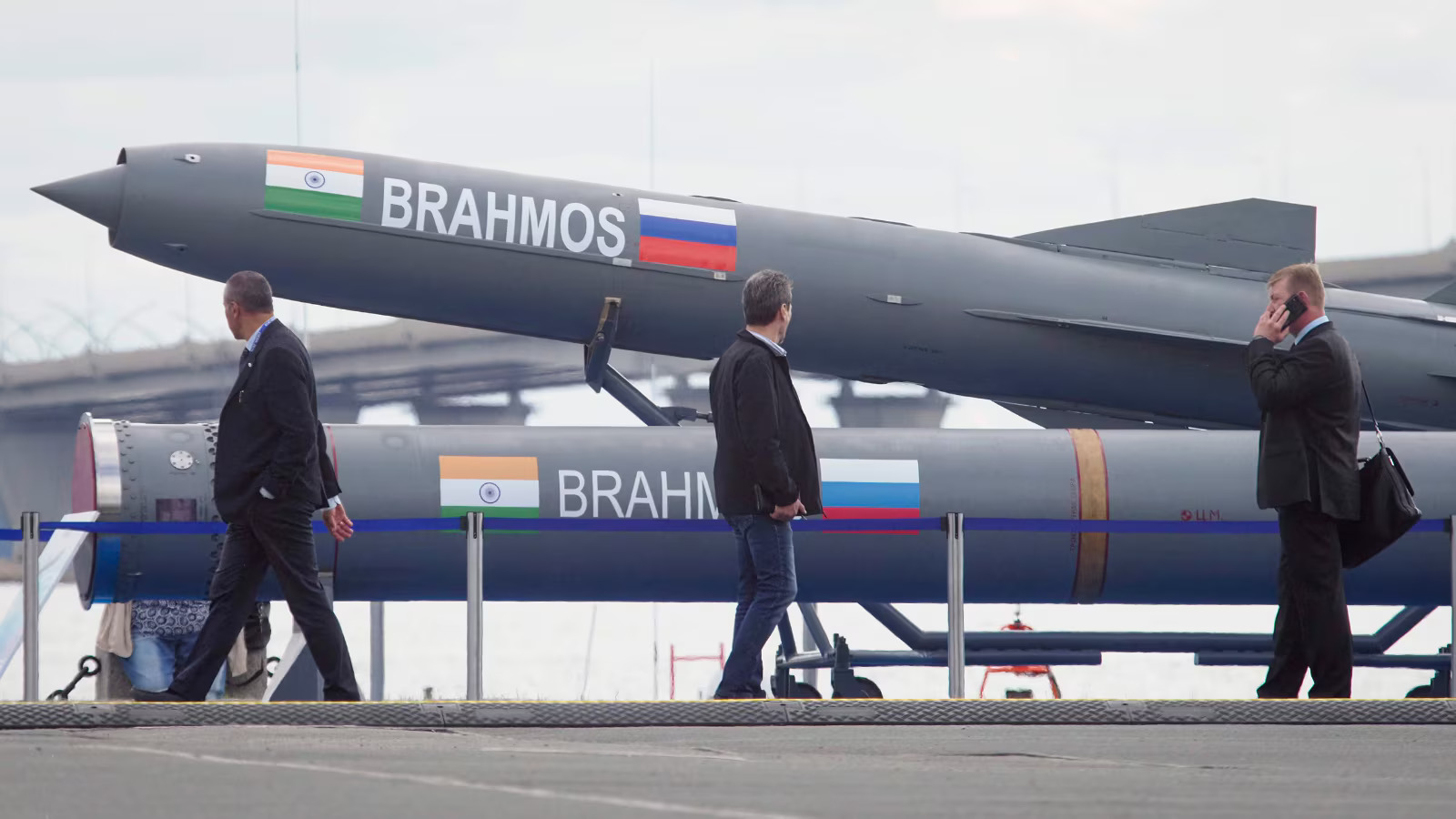
The 800-km version of the BrahMos missile, powered by a modified ramjet engine, is undergoing a series of final validation trials to ensure high precision, resilience, and jamming resistance. The missile integrates a combination of internal Inertial Navigation System (INS) and external global satellite systems to enhance targeting accuracy. According to defence sources cited by TOI, “The 800-km BrahMos is more or less developed, and only a few tests remain to validate its upgraded navigation and propulsion systems.”
Currently, the Indian armed forces operate BrahMos missiles with a range of 450 km. These supersonic missiles, capable of flying at speeds close to Mach 2.8, were successfully deployed during Operation Sindoor in May 2025, when Sukhoi-30MKI fighter jets carried out precision strikes deep inside Pakistan. With the success of these missions, the extended-range version is expected to further enhance India’s deterrence capabilities against adversaries.
Navy officials have confirmed that the new 800-km BrahMos can be integrated into existing warship launchers with minimal changes to the fire-control software and user interface. Since the basic missile and launcher architecture will remain the same, both the Army and Navy will induct the 800-km variant first, while the air-launched version will follow slightly later.
Astra Missiles to Strengthen Air Combat Superiority
Parallel to the BrahMos developments, DRDO is also enhancing the range and propulsion systems of Astra beyond-visual-range air-to-air missiles (BVRAAMs). The Astra Mark-2 variant, now being tested, is expected to achieve a range of over 200 km, up from the earlier 160 km. The propulsion system is being upgraded to provide higher thrust and longer burn duration, with trajectory-shaping techniques improving interception accuracy.
“The production of Astra Mark-2 can begin within six months if the current trials succeed,” a senior official said to TOI. The Indian Air Force has already placed an order for an initial 700 Astra Mark-2 missiles for its Sukhoi-30MKI and Tejas fighter jets, while over 280 Astra Mark-1 missiles with 100 km range are already being inducted.
Work has also begun on the Astra Mark-3 variant, which will feature a solid-fuel ducted ramjet (SFDR) engine to extend its range to about 350 km. This advanced missile is expected to become operational within three years, providing India with a potent response to long-range enemy missiles like the Chinese-origin PL-15 carried by Pakistan’s J-10 fighter jets.
Expanding the Integrated Rocket Force Vision
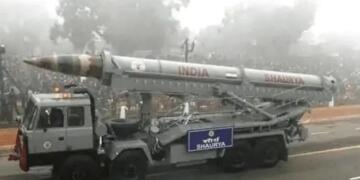
The land-based 800-km BrahMos variant will eventually form part of India’s proposed Integrated Rocket Force (IRF) a new branch envisioned to consolidate conventional missile capabilities across services. Alongside BrahMos, the IRF will include Pralay ballistic missiles with 400-km range and the long-range Land Attack Cruise Missiles (LACMs) derived from the Nirbhay system, capable of striking targets up to 1,000 km away.
The BrahMos missile system has already become a central element of India’s conventional deterrence posture. The cumulative value of defence contracts with BrahMos Aerospace, the Indo-Russian joint venture, has surpassed ₹58,000 crore. In March 2024, the Defence Ministry signed its largest-ever ₹19,519 crore deal for over 220 BrahMos missiles for the Navy. Nearly 20 frontline warships including advanced destroyers and frigates are currently equipped with vertical-launch BrahMos systems.
Following Operation Sindoor, the Defence Acquisition Council, chaired by Defence Minister Rajnath Singh, gave preliminary approval for the IAF to procure an additional 110 air-launched BrahMos missiles worth around ₹10,800 crore.
With the upcoming induction of extended-range BrahMos and Astra missiles, India’s defence architecture is poised for a technological leap. Together, these systems will enhance precision strike capability, strengthen aerial superiority, and solidify India’s position as a major defence power capable of meeting any challenge across its borders.