


















RelatedPosts
India is a land where relationships are woven into the very fabric of culture, and each festival celebrates love, family, and togetherness in unique ways. Among the many festivals that highlight the sacredness of family ties, Bhai Dooj holds a special place in the hearts of millions. Celebrated just two days after Deepawali, this festival reaffirms the pure, selfless, and protective bond between brothers and sisters. In 2025, Bhai Dooj will be celebrated on October 23, bringing families together once again to honor this timeless relationship that combines affection, trust, and spiritual blessings.
Also known by various regional names such as Bhaiya Dooj in North India, Bhau Beej in Maharashtra, and Bhatru Dwitiya in South India, the festival falls on the second day (Dwitiya) of the bright fortnight (Shukla Paksha) in the Hindu lunar month of Kartik. The term itself is symbolic “Bhai” means brother and “Dooj” refers to the second day after the new moon. Thus, Bhai Dooj literally means “the second day dedicated to brothers.”
Much like Raksha Bandhan, Bhai Dooj celebrates the sacred emotional connection between siblings. However, while Raksha Bandhan centers around the sister tying a rakhi as a symbol of protection, Bhai Dooj focuses on the sister applying a tilak on her brother’s forehead, offering prayers for his long life and prosperity. In return, the brother pledges to protect his sister and often gives her gifts as a token of gratitude and love.
The Sacred Legends Behind Bhai Dooj
Every Indian festival is deeply rooted in spiritual stories that reflect the moral and emotional values of Indian culture. Bhai Dooj is no exception. The origin of this festival is linked to two ancient Hindu legends that beautifully illustrate the significance of the tilak ritual.
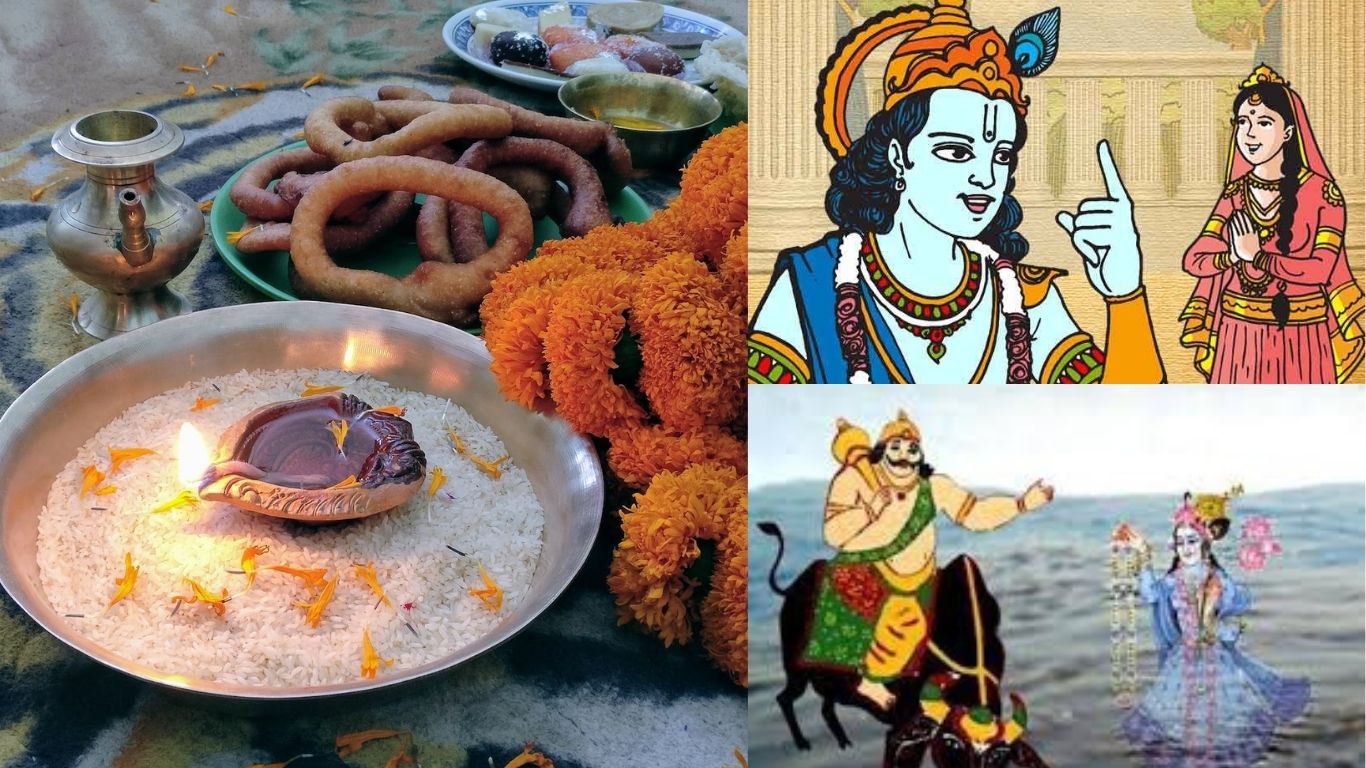
One of the most well-known legends is that of Yamraj, the God of Death, and his sister Yamuna. According to Hindu mythology, Yamuna, the river goddess, often invited her brother Yamraj to visit her home. However, due to his divine duties, he could not oblige for a long time. Finally, on the second day of the bright fortnight in the month of Kartik, Yamraj visited Yamuna’s home. Overjoyed, Yamuna welcomed her brother with immense love and respect. She performed a tilak ceremony, applied a vermilion mark on his forehead, lit a diya, and performed aarti while praying for his long life and well-being.
Deeply moved by her affection, Yamraj declared that any brother who visits his sister on this day and receives a tilak from her would be blessed with long life, happiness, and prosperity. Thus, Bhai Dooj came to be celebrated as a symbol of love and protection between siblings. This legend is why Yamraj and Yamuna are worshipped first during Bhai Dooj ceremonies, as their divine bond forms the foundation of the festival.
Another legend connects Bhai Dooj to Lord Krishna and his sister Subhadra. After Lord Krishna defeated the demon Narakasura, he returned home triumphantly. His sister Subhadra welcomed him with sweets, flowers, and affection. She applied a tilak of sandalwood and vermilion on his forehead as a gesture of love and protection, and performed aarti to ward off evil energies from his path. Since that day, this act of marking the brother’s forehead with a sacred tilak became a powerful ritual symbolizing the sister’s prayers for her brother’s safety and success.
Both these stories one rooted in divine affection, the other in victorious return capture the emotional essence of Bhai Dooj. The tilak is not just a mark of ritual but a symbol of blessing, protection, and goodwill, representing the purest expression of sibling love.
On the morning of October 23, 2025, homes across India will come alive with festive warmth. Sisters will prepare for the puja, decorating their homes with flowers, diyas, and colorful rangolis. The day usually begins with the worship of Lord Ganesha for auspicious beginnings, followed by prayers to Yamraj and Yamuna.
As per tradition, the brother sits on a wooden stool or peeta, while his sister prepares a thali containing vermilion (kumkum), sandalwood paste (chandan), rice grains (akshata), sweets, and a lit diya. She applies the tilak on her brother’s forehead, ties a sacred thread around his wrist, and performs aarti, praying for his happiness, long life, and protection from evil.
In return, the brother blesses his sister and offers her gifts or money as a token of love and appreciation. Families share festive meals, exchange sweets, and spend the day reminiscing childhood memories. Traditional dishes such as puri, halwa, kheer, and laddoos are commonly prepared in many homes.
Across India, Bhai Dooj is celebrated with regional variations. In Maharashtra and Goa, it is called Bhau Beej, where sisters invite their brothers home and apply tilak in a similar ceremony. In West Bengal, it is observed as Bhai Phonta, marked by special rituals and elaborate feasts. In the southern states, the festival is known as Bhatru Dwitiya, emphasizing the emotional connection between siblings through traditional customs and prayers.
The tilak applied on a brother’s forehead is not merely decorative it carries profound spiritual and emotional symbolism. In Hindu tradition, the forehead is believed to be the seat of the Ajna Chakra, or the “third eye,” representing wisdom and divine intuition. The application of tilak on this spot is said to invoke spiritual energy, protection, and blessings.
When a sister applies the tilak, she silently prays for her brother’s long life, health, and safety. The aarti she performs is symbolic of light conquering darkness, while the diya signifies purity and positivity in their relationship. The exchange of gifts represents not material value, but emotional gratitudea reaffirmation of the bond of care and responsibility.
The ritual teaches brothers and sisters the values of affection, respect, forgiveness, and gratitude, serving as a reminder that their relationship is not just by blood, but by emotional and moral strength.
In today’s fast-paced world, where families are often separated by distance and time, Bhai Dooj continues to serve as a powerful emotional bridge. Even when siblings cannot meet physically, the spirit of the festival endures through digital gestures like video calls, online gifts, and virtual tilak ceremonies.
Yet, the heart of Bhai Dooj remains unchanged—it is a celebration of the sister’s unconditional love and the brother’s promise of protection. The story behind the tilak on the brother’s forehead is not just a ritualistic act, but a symbol of divine blessing and emotional assurance that transcends generations.
As India celebrates Bhai Dooj each year, the sacred red mark on the brother’s forehead continues to embody a message that is eternal—that love, prayer, and familial bonds are the greatest protection of all.