


















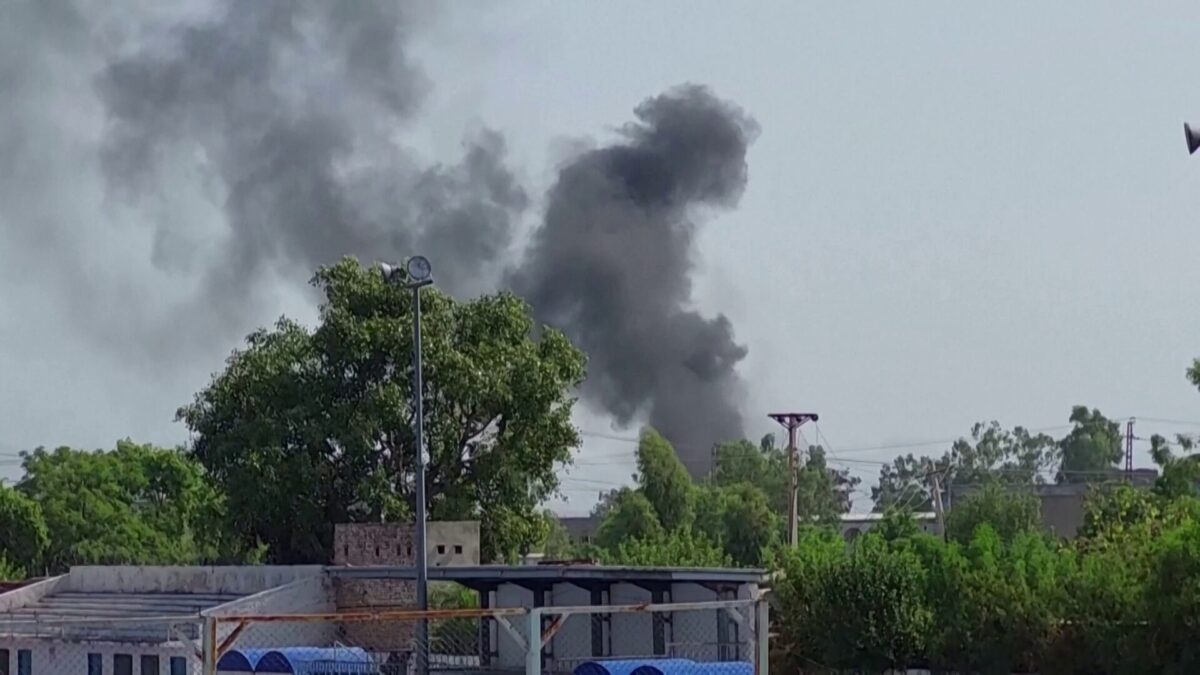
Pakistan on Wednesday carried out a series of airstrikes targeting Afghanistan’s Spin Boldak city near the Chaman border crossing, escalating the already volatile tensions between the two nations. Local sources reported that at least three Afghan-Taliban posts were struck by drones and aerial bombardment. The strikes resulted in the deaths of at least four Pakistani security personnel, leaving four others injured, while nearly ten civilians were rushed to hospitals in Chaman.
A video from Spin Boldak showed thick plumes of black smoke billowing into the sky after the attack. The strikes came following a weekend of deadly cross-border clashes that have left hundreds stranded and disrupted trade routes. The latest round of violence began on the night of October 11, when Afghan forces launched multiple strikes on Pakistani military positions, accusing Islamabad of repeated incursions into Afghan territory.
According to The Associated Press, Afghan officials claimed to have killed 58 Pakistani soldiers during the confrontation, while Pakistan’s military reported losing 23 soldiers but claimed to have killed over 200 “Taliban and affiliated terrorists” in its retaliatory action.
Afghanistan Shuts Border Crossings Amid Crisis
In the aftermath of the escalation, Afghanistan’s border police spokesperson Abidullah Uqab announced that all crossings with Pakistan were shut for trade and movement of people. The crucial southwestern Chaman crossing was temporarily reopened to allow about 1,500 stranded Afghan nationals to return home on foot.
Tensions have surged since last week when the Taliban government in Kabul accused Pakistan of conducting airstrikes in the Afghan capital and in parts of eastern Afghanistan. Islamabad, however, denied the accusations, stating that its operations only targeted militant hideouts threatening Pakistan’s internal security.
The two countries have a long and bitter history of skirmishes along the 2,600-kilometre Durand Line. Yet, the latest wave of violence has been among the deadliest, underscoring the fragile relationship between Islamabad and Kabul since the Taliban’s takeover of Afghanistan in 2021. Pakistan has persistently accused the Taliban regime of sheltering members of the banned Tehreek-e-Taliban Pakistan (TTP), a group responsible for numerous attacks inside Pakistan a claim Afghanistan continues to deny.
Taliban Retaliates, Pakistan Cites “Fitna al-Khawarij” Threat
Following Wednesday’s airstrikes, Taliban spokesman Zabihullah Mujahid condemned Pakistan’s actions, stating, “Unfortunately, early this morning, Pakistani forces once again launched attacks on Afghanistan with light and heavy weapons in Spin Boldak district of Kandahar, resulting in the martyrdom of 12 civilians and injury of more than 100. Afghan forces were forced to retaliate.”
Meanwhile, Pakistani media reported that the clashes in Kurram district of Khyber Pakhtunkhwa involved the Afghan Taliban and militants of the banned TTP, whom Islamabad refers to as “Fitna al-Khawarij.” The Pakistani Army claimed to have responded “with full force and intensity,” killing a key commander of the group and inflicting heavy damage on Taliban positions, including the destruction of one tank.
The Pakistani Foreign Office said Foreign Secretary Ambassador Amna Baloch briefed resident ambassadors in Islamabad, asserting Pakistan’s “legitimate security concerns” and its “unwavering resolve to protect territorial integrity and national security.”
Blame Game Deepens Between Islamabad and Kabul
Over the weekend, Pakistan’s Inter-Services Public Relations (ISPR) claimed that Taliban forces had launched unprovoked attacks on Pakistani border posts, killing 23 troops. In retaliation, Pakistan said it neutralised more than 200 militants, including affiliated groups, in a large-scale counteroffensive. Kabul, however, maintained that the attacks were retaliatory measures in response to Pakistani airstrikes inside Afghan territory last week.
While Islamabad has avoided directly confirming the airstrikes, it reiterated calls for Kabul to prevent the TTP from using Afghan soil to launch cross-border operations. Pakistan’s security establishment has repeatedly accused the Taliban regime of providing safe havens to these militants, a charge that has widened the rift between the two Islamic nations.
A Dangerous Cycle of Retaliation
The escalating violence along the Pakistan-Afghanistan border underscores a dangerous cycle of mutual accusations and retaliatory attacks that threaten to destabilize the entire region. Both sides blame each other for harbouring militants and violating territorial sovereignty, while civilians continue to bear the brunt of the conflict.
Islamabad’s narrative of fighting “Fitna al-Khawarij” and Kabul’s retaliatory stance signal that neither side is willing to step back. Without credible dialogue and cross-border coordination, the situation risks spiralling into a prolonged conflict that could further undermine regional stability. The ongoing crisis once again exposes the fragile balance between Pakistan’s security ambitions and Afghanistan’s assertion of sovereignty a fault line that could ignite wider instability if left unchecked.