
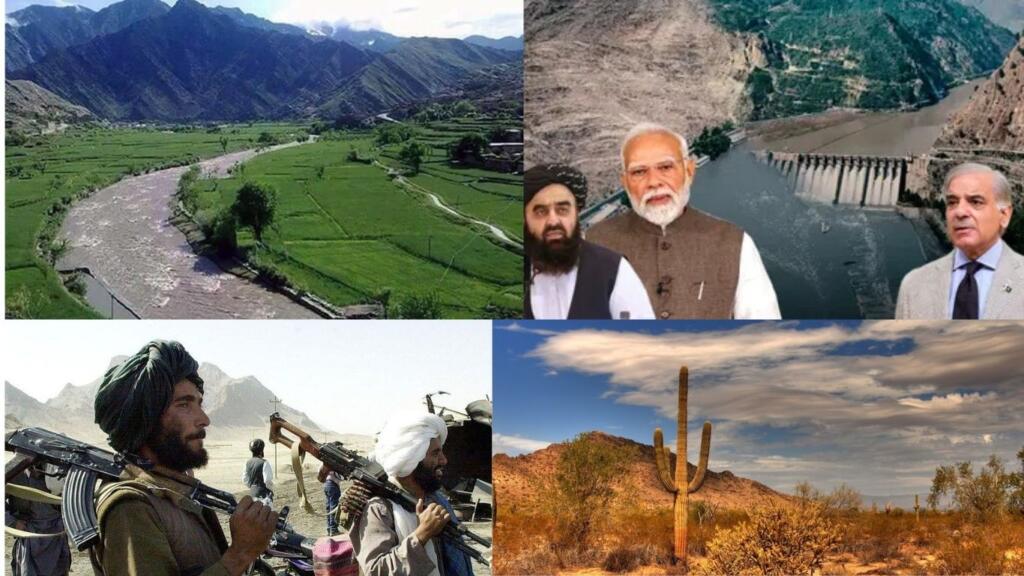
Afghanistan’s Taliban government has announced an ambitious plan to construct a series of dams on the Kunar River, a move that could have far-reaching consequences for Pakistan’s already strained water and energy security. The Taliban’s announcement comes on the heels of India’s decision in April to suspend the Indus Waters Treaty with Pakistan following the Pahalgam terror attack, which killed 26 civilians.
The announcement signals Kabul’s determination to assert what it calls “water sovereignty,” a stance that also risks deepening tensions in an already volatile region.
According to Afghanistan’s Ministry of Information, Taliban Supreme Leader Mawlawi Hibatullah Akhundzada has ordered the Ministry of Water and Energy to begin dam construction on the Kunar River “as fast as possible” and award contracts to domestic firms.
“The directive reflects Afghanistan’s right to manage its natural resources for the benefit of its people,” Deputy Minister of Information Muhajer Farahi said in a post on X.
The decision comes just weeks after deadly clashes along the Durand Line between Afghan and Pakistani border forces, which left several dead and heightened diplomatic friction. Relations between the two countries have deteriorated sharply in recent months, with Islamabad accusing Kabul of harboring Tehrik-i-Taliban Pakistan (TTP) militants responsible for attacks inside Pakistan.
The Kunar River which is known as the Chitral in Pakistan originates from the Chiantar glacier near the Chitral border. It flows into Afghanistan at Arandu before merging with the Kabul River in Nangarhar Province, which eventually joins the Indus River near Attock in Pakistan. This network is vital for irrigation, hydropower, and drinking water across Pakistan’s Khyber Pakhtunkhwa and Punjab provinces.
Any reduction in flow from Afghanistan could therefore have cascading effects across Pakistan’s agricultural and energy sectors.
If Kabul proceeds, Pakistan could face a dual squeeze on its rivers from India in the east and Afghanistan in the west.
Along with India suspending the Indus Waters Treaty, Kabul’s latest move compounds Pakistan’s woes, potentially encircling it in a “water chokehold” at a time of mounting internal economic and energy pressures.
After coming to power in 2021, the Taliban has repeatedly framed control over natural resources, especially water, as central to national sovereignty. But their latest initiative threatens to unsettle an already delicate balance. Afghanistan and Pakistan have no formal water-sharing agreement, despite the transboundary nature of the Kunar and Kabul river systems. Previous efforts to establish a joint water commission have stalled amid mistrust and conflict.
With both India and Afghanistan taking assertive steps over shared rivers, Islamabad faces an increasingly precarious future in managing its water security. As the Taliban accelerates construction plans, the Kunar River may soon become not just a symbol of Afghanistan’s independence but the next flashpoint in South Asia’s escalating hydro-politics.