















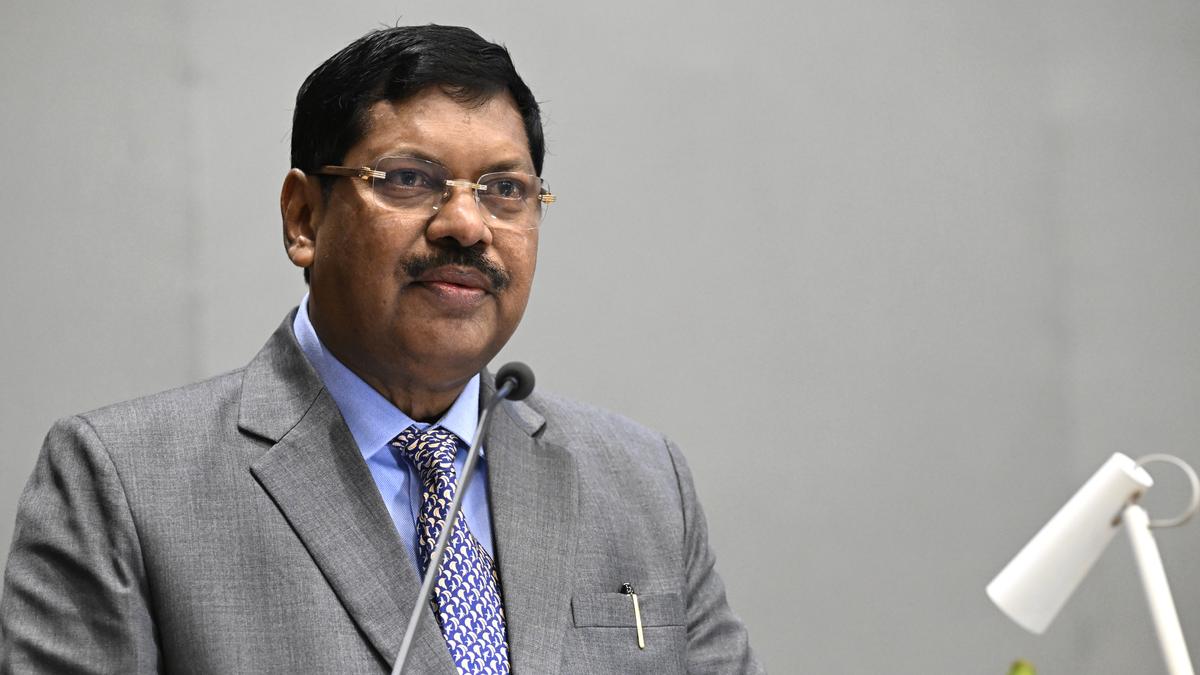
In a dramatic escalation of tensions within the Supreme Court of India, a advocate attempted to hurl a shoe at Chief Justice B. R. Gavai on October 6, 2025. The act, viewed by many as symbolic rather than lethal, was an apparent act of protest against remarks made earlier by the Chief Justice on Sanatan Dharma, which critics say demeaned Hindu religious sentiment. The episode has reignited debates over judicial restraint, respect for faith, and the boundaries of dissent.
The Incident in the Courtroom
During the morning session in Court No. 1, as matters were being heard before the bench led by CJI Gavai, an elderly advocate — identified as Rakesh Kishore — rose from within the courtroom and attempted to throw a shoe at the bench. Security personnel intervened swiftly, preventing the object from reaching the Chief Justice. As he was being escorted out, the advocate exclaimed, “Sanatan ka apmaan nahi sahenge” — “We will not tolerate the insult to Sanatan Dharma.”
Unfazed by the disruption, CJI Gavai instructed that proceedings continue, observing calmly that “these things do not affect me.” The courtroom resumed its business as usual, though the underlying fault lines the incident exposed have sent shockwaves through legal and public discourse.
What Sparked the Protest? The “Deity” Remark
The protest cannot be divorced from the backdrop of a controversial comment made by CJI Gavai a few weeks ago. In a public interest litigation pertaining to the reconstruction of a damaged Lord Vishnu idol in Khajuraho, Madhya Pradesh, the petitioner’s counsel had sought judicial intervention for restoring the idol. In response, the Chief Justice is reported to have said, “Go and ask the deity himself to do something now.”
That remark triggered a wave of backlash, particularly among those who viewed it as dismissive of religious devotion and insensitive to Hindu Dharma. Critics argued that the hyperbole, though perhaps meant figuratively, breached the boundary of judicial neutrality by appearing to trivialize religious belief.
Responding to the uproar, CJI Gavai sought to clarify that his comments had been misrepresented on social media, and stressed that he respects all religions. But for many observers, the damage had already been done: the shoe-throwing incident indicates that the hurt went beyond mere social media scorn into active protest on the court floor.
Assessing the Claims of Insult to Dharma
To evaluate whether Chief Justice Gavai’s remark truly insulted Hindu Dharma (Sanatan Dharma) is to navigate a fine line between freedom of speech, judicial candor, and religious sentiment.
- Figurative vs Literal: Some defenders argue that the “ask the deity” comment was a metaphorical way of pointing out the limits of legal remedy in matters of faith and divine agency. In that reading, the remark lacked malice or intent to demean.
- Judicial Impartiality: Critics, however, counter that a judge — especially the Chief Justice — must exercise heightened care. Even a rhetorical flourish must not be perceived as diminishing religious devotion or alienating believers. A slip in tone may taint public trust.
- Perception and Sensitivity: In a multifaith, highly religious society, symbolic statements carry weight. For many Hindus, the idea of “asking the deity” rather than the court may evoke disdain or ridicule. Whether intended or not, the remark entered a zone of interpretive risk.
- Legal Boundaries vs Offense: Legally, the comment may not cross permissible bounds of expression. But public perception depends on deeper cultural understanding. The protester’s act suggests that for some, the comment was far more than mere judicial slang — it was a perceived affront to sacred belief.
Thus, while the Chief Justice’s defenders emphasize intention and metaphor, the protest signals that the boundary between judicial discretion and religious offense remains fragile.
Implications: Dissent, Decorum, and Institutional Trust
This incident is not merely theatrical — it cuts to foundational issues of India’s legal and religious landscape.
- Courtroom security and decorum: The fact that an individual could carry a proximity card (often issued to lawyers or court staff) into the courtroom and mount such a protest raises serious questions about security protocols.
- Freedom of dissent vs contempt: The shoe-throwing is widely condemned as an extreme breach of courtroom decorum. The Supreme Court Advocates-on-Record Association called it antithetical to legal dignity and demanded action against the perpetrator. Yet it also raises the tension between passionate protest and maintaining the institutional sanctity of the judiciary.
- Reputational risk to the Supreme Court: Repeated controversies around judicial remarks and public reactions threaten to erode public confidence in the judiciary’s neutrality. If religious communities feel alienated or slighted, trust in legal remedy could diminish.
- Judicial speech norms: Going forward, judges (especially of higher courts) may need to walk a tighter line in choosing expressions around religious and cultural topics. Even offhand remarks can become flashpoints in the digital-age climate.
- Public discourse on religious respect: The episode underscores how heightened sensitivities around faith impose higher burdens on public figures — including judges — to choose their words wisely in a pluralistic society.
Conclusion
The shoe-throwing incident in the Supreme Court was more than a sensational act: it was a forceful expression of how some perceived a judicial comment to have crossed a sacred line. While Chief Justice Gavai maintained composure and professed respect for all faiths, the protest was a cue that, in highly charged religious contexts, symbolism holds deep potency.
Whether the remark was truly an insult to Sanatan Dharma is open to interpretation. What is not ambiguous, however, is that judges must remain hypervigilant about how even rhetorical devices may be received. In a democracy grounded in religious diversity, the costs of misinterpretation can be high — for the institution, for public trust, and for social harmony.