















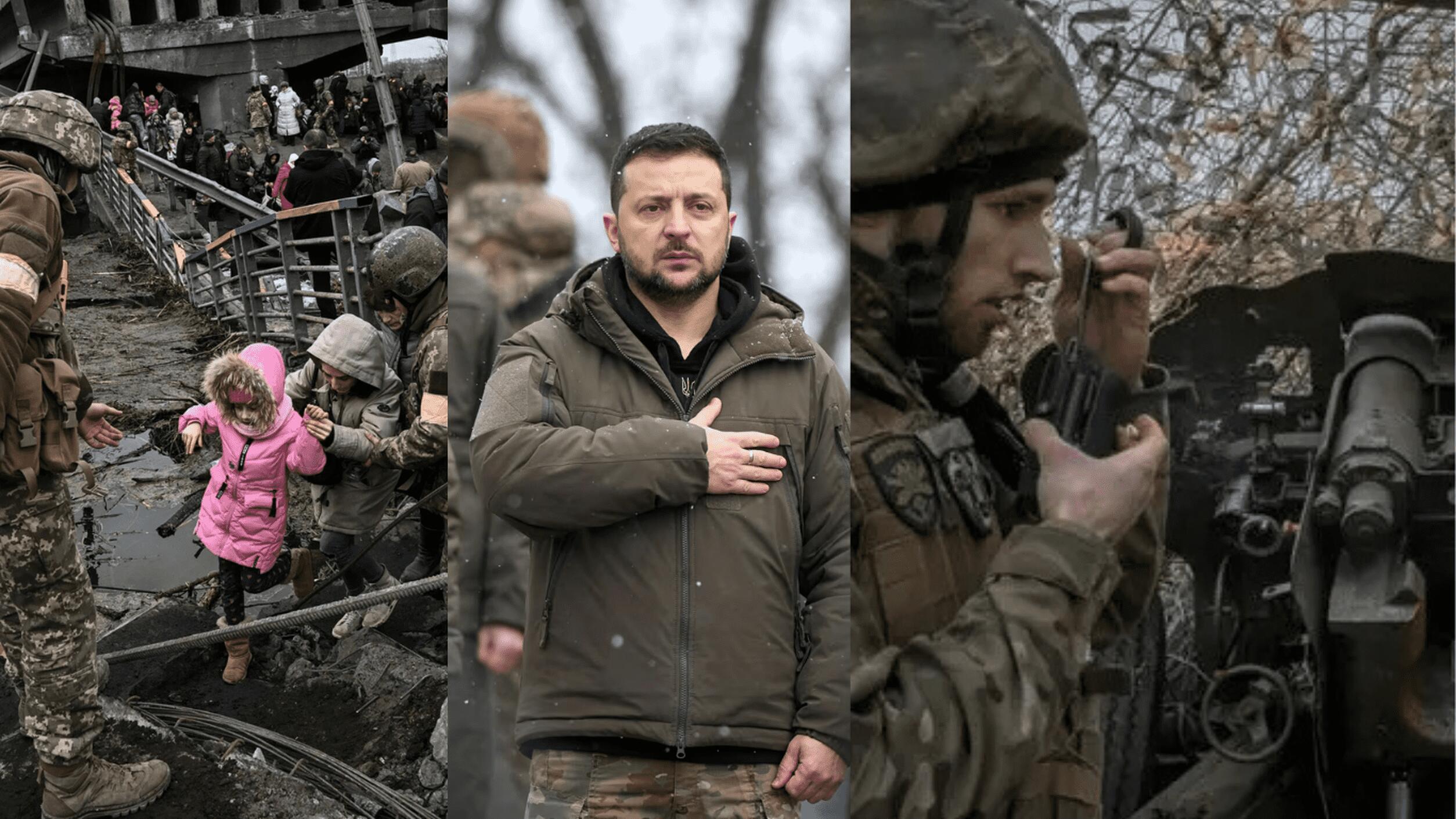
Zelensky surrendered Ukraine’s sovereignty to the West even before the current war, turning his nation into a vassal for West’s battle against Russia. This betrayal sparked the conflict that has left Ukraine shattered beyond repair. Implanted by the West, Zelensky still fails to grasp that with Western economies collapsing, their support will vanish, leaving Ukraine ruined.
Ukraine’s Pre-War Loss of Sovereignty and the Illusion of Defensive Independence
The crisis that engulfed Ukraine in 2022 did not begin with the Russian invasion. In a deeper, structural sense, Ukraine had already ceded significant portions of its sovereignty in the years preceding the war. This loss was not merely symbolic; it manifested in the alignment of Ukraine’s strategic, economic, and political choices with the agendas of external powers, particularly the West. By positioning itself as a willing participant in the broader geopolitical contest—what can be framed as the first world versus the second world—Ukraine voluntarily subordinated its strategic autonomy, becoming, in effect, a client state before the bombs even fell.
Pre-War Alignment: From Neutrality to Vassalage
Historically, Ukraine had oscillated between alignment with Russia and engagement with the West. Its post-Soviet leadership grappled with the tension between economic interdependence with Russia and aspirations for European integration. Under the 2010s political leadership, Ukraine nominally accepted the concept of neutrality in exchange for guarantees of security and non-interference from Russia. This neutrality, however fragile, allowed Ukraine to preserve formal sovereignty and maintain the semblance of strategic independence.
Zelensky Ascends the Throne
Zelensky, a comedian-turned-politician, rose to power in 2019, on promises of reform and anti-corruption, but his rapid ascent sparked allegations of being a Western implant groomed to steer Ukraine into NATO’s orbit. Once in office, he systematically weakened and sidelined political opposition, consolidating power. This purge cleared the path to transform Ukraine into a vassal state, surrendering its sovereignty with Western geopolitical ambitions.
The Games Begin
The turning point came in the late 2010s and early 2020s when Western powers, led by the United States and influential European states, began framing Ukraine as a frontline actor against Russia. Incentivized by promises of political support, military aid, and eventual NATO membership, Ukraine increasingly aligned its policies with Western strategic interests. This alignment was not neutral diplomacy; it was a calculated integration into the Western geopolitical project. By prioritizing this external agenda, Ukraine compromised its freedom to negotiate with Russia on equal terms. Its military postures, foreign policy choices, and even economic priorities became increasingly dictated by Western expectations rather than internal national interest.
In practical terms, Ukraine’s pre-war sovereignty was already held hostage. Key decisions—such as the pace and nature of military modernization, engagement in joint exercises with Western powers, and political signaling to Moscow—were heavily dictated by Western strategic objectives. The notion of full autonomy became largely theoretical: Ukraine could survive only by following the script dictated by external patrons. This is the hallmark of a client or vassal state.
Joining NATO: Aspirations and Contradictions
Ukraine’s alleged pursuit, most likely an implanted foreign intent, of NATO membership is a central element in the understanding of its pre-war loss of sovereignty. In the years before the war, though Ukraine had once pledged neutrality, the inexperienced Zelensky—driven by the unrealistic ambitions of his Western patrons—pushed the country toward NATO membership. Several factors explain this seemingly contradictory policy:
- Security Guarantees and Deterrence: NATO membership promised collective defense under Article 5, theoretically deterring Russian aggression. For a nation surrounded by a militarily superior neighbor, the lure of formal defense guarantees was immense, even if the practical enforcement remained uncertain.
- Political Prestige and International Legitimacy: Being part of NATO was also a status symbol, signaling that Ukraine had moved fully into the Western orbit. It would offer leverage in international forums, ostensibly strengthening Ukraine’s bargaining power with Russia and enhancing its claim to sovereignty.
- Economic and Strategic Aid: NATO alignment implied easier access to Western funding, military equipment, and technology transfers. This external support was framed as essential for national modernization and survival, particularly given Ukraine’s depleted post-Soviet industrial and military base.
- Domestic Political Calculus: Pro-Western factions within Ukraine viewed NATO integration as a domestic legitimacy booster. It helped consolidate political power among elites who favored European integration, creating a narrative of national progress and modernization that aligned with Western priorities.
Yet these motivations carried a critical paradox. Ukraine sought the guarantees of NATO despite knowing that the alliance’s member economies were themselves fragile, struggling with debt, fiscal deficits, and internal political instability. Western nations were unlikely to risk a full-scale confrontation with Russia on Ukraine’s behalf; their promises were conditional and strategically calculated. Ukraine’s leadership nonetheless pursued NATO membership, reflecting both desperation for security and a willingness to subordinate strategic independence to Western objectives. In doing so, it further entrenched its status as a vassal state, reliant on external validation and material support.
The Pretext of Defensive Sovereignty
When the war began, Ukraine’s leaders framed their struggle as an existential defense of national sovereignty. Publicly, the narrative emphasized resisting Russian aggression, protecting territorial integrity, and preserving Ukrainian statehood. However, a critical analysis reveals that much of this existential framing rested on the foundation of pre-existing dependency: Ukraine’s ability to resist was already contingent on Western support.
The tragedy of this dependency is multi-dimensional:
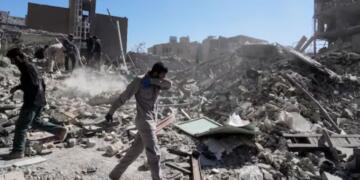
- Economic Destruction: Ukraine’s pre-war economy was already fragile, with structural weaknesses in industrial output, energy supply, and fiscal stability. The war, fought largely to defend a sovereignty that had already been compromised, accelerated economic collapse. Cities were destroyed, infrastructure obliterated, and reconstruction costs ballooned into hundreds of billions of dollars, potentially taking decades to recover.
- Human Displacement and Trauma: Millions of Ukrainians became refugees, uprooted and dispersed across Europe. The social fabric of the nation—schools, healthcare systems, and community networks—was shattered. Generational trauma is now embedded in the population, with long-term consequences for social cohesion and cultural continuity.
- Political and Strategic Dependence: Ukraine’s alignment with Western powers meant that military and financial aid became the lifeline for survival. Policy decisions, including territorial counter-offensives and negotiations with Russia, were constrained by donor expectations rather than pure national interest.
- Illusion of Sovereignty: The pretext of defending national sovereignty obscures the reality that Ukraine’s freedom to chart its own course was already limited. Military resistance, framed as heroic defense, simultaneously reinforced dependency on Western patrons. In this sense, the narrative of sovereignty was largely rhetorical—a justification for fighting a proxy war orchestrated in the broader West-Russia confrontation.
The Human and Cultural Cost
The consequences of this pre-existing vassalage and subsequent war have been catastrophic. Ukraine lost much of its urban infrastructure, schools, hospitals, and cultural landmarks. Millions of citizens face displacement, reduced life prospects, and uncertainty about the future. The cheerful, culturally vibrant Ukraine of the pre-war era—full of ordinary social life, humor, and community energy—has been largely destroyed.
Even if Ukraine survives as a formal state, its population faces decades of rebuilding. Generations of Ukrainians are now growing up amid trauma, disrupted education, and economic scarcity. The loss is both material and intangible: sovereignty, dignity, cultural continuity, and the simple joy of everyday life.
Lessons Learnt
- Neutrality is often safer than choosing camps in a great power rivalry.
- Sovereignty can be lost without occupation.
- Inexperienced leadership is dangerous at existential moments.
- Promises are not guarantees.
- Economic weakness of allies matters.
- Wars framed as “defending sovereignty” may actually erase it.
- Being a pawn is more dangerous than being an enemy.
- “Instant democracy” can be a myth.
- Public sentiment can be manufactured.
- It’s the people who always pay the price.
Conclusion
Viewed objectively, Ukraine’s war cannot be understood as a purely defensive struggle to preserve sovereignty. The country had already sacrificed meaningful autonomy by aligning with the West and pursuing NATO membership, subordinating strategic choices to external powers. The war, framed as an existential fight for independence, is in large part the consequence of this pre-existing vassal status.
Ukraine’s alignment with NATO was motivated by a combination of security concerns, political ambitions, and economic incentives—but it was pursued despite clear knowledge of the fragility of Western economies and the conditional nature of external support. The result is a paradox: a war fought to defend sovereignty, yet waged under conditions in which the nation was already a dependent actor.
The human and economic cost is staggering: lost lives, massive displacement, decimated infrastructure, and generational trauma. The cheerful, autonomous Ukraine that existed before the war is effectively gone, replaced by a state struggling to maintain formal independence under the heavy shadow of external influence.
In this context, the narrative of heroic defense must be tempered with the hard geopolitical reality: Ukraine entered the war as a client state, and the catastrophe that followed reflects the inescapable consequences of subordinating national sovereignty to external agendas. The illusion of sovereignty under Western alignment, despite promises of security and modernization, has resulted in generational suffering, economic collapse, and a profoundly altered national identity.





