
















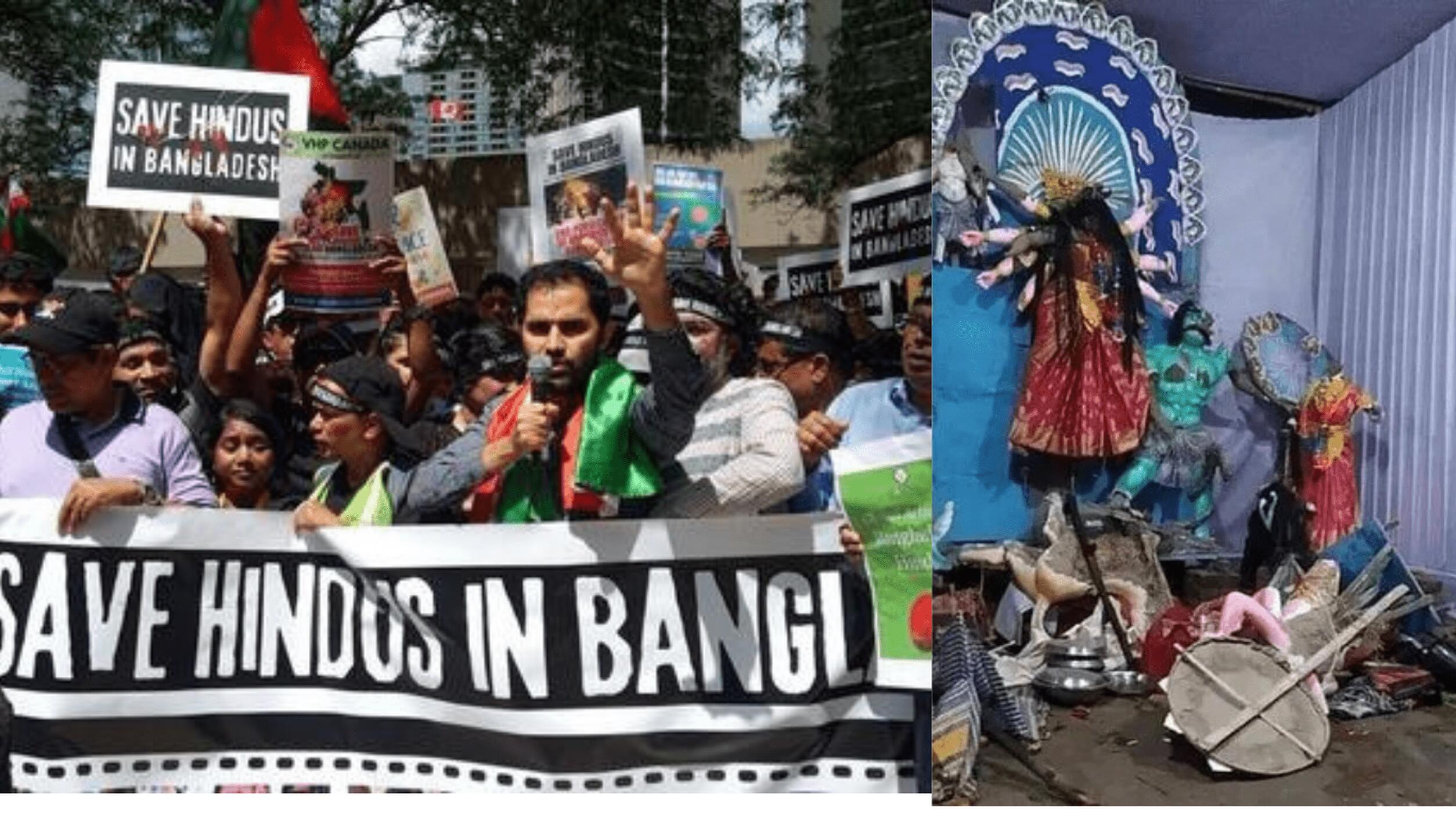
On 14 August 2024, mobs in Khulna looted and set fire to the home of a Hindu businessman, leaving his family homeless and several neighbouring shops destroyed. Sadly, it was not an isolated attack. In the weeks that followed Sheikh Hasina’s ouster, more than a thousand minority homes and businesses were targeted across 49 districts, alongside dozens of temples and monasteries. Worse still, what might once have been dismissed as sporadic communal flare-ups has, since August, hardened into a pattern of organised violence. In the days following the change of power in Bangladesh, between August 5–20, 2024, 1,068 Hindu-owned homes and businesses were reportedly attacked, alongside 22 houses of worship. Of those properties, only 506 belonged to Awami League supporters. This brought to light a clear communal dimension that went beyond political affiliation.
Since August 4 last year, Bangladesh has seen a sharp rise in attacks on minority communities. There were 2,442 incidents of violence targeting religious and ethnic minorities between August 2024 and June 2025, according to the Bangladesh Hindu Buddhist Christian Unity Council. Apart from vandalism of places of worship, forced evictions, and property seizures, these communities were also subjected to heinous crimes like rape and murder.
In fact, speaking out against the interim government, the rights groups in Bangladesh even accused the administration, led by Nobel Peace Prize laureate Muhammad Yunus, of ignoring a disturbing surge in violence against religious minorities and shielding perpetrators from justice.
However, Bangladeshi leadership has kept mum regarding the singling out of minorities and the crimes committed. Officially, the government and police describe most of these incidents as “politically motivated” and refrain from accepting that they are communal. Of the 1,769 incidents flagged, 1,234 were deemed political, and only a total of 20 were accepted as communal. Moreover, the authorities claimed that a total of 161 were unsubstantiated.
Media coverage highlights the human toll, too. Between protests and widespread unrest, more than 1,000 people were killed and countless were injured in the chaos that followed August’s upheaval.
Amid police limitations and security gaps, mob violence surged. As per news reports published in August noted 637 lynchings were noted in one year, signalling the broader collapse of institutional control.
Pre-Crisis Baseline
As a matter of fact, before August 2024, attacks on minorities, while tragic, were fewer and less widespread. Arab News reported around 118 attacks, peaking in August 2024’s wave. Those numbers, from hundreds a year to thousands in weeks, speak for themselves—a factor that has raised alarm among minorities.
Government responses
The interim government has repeatedly stressed its “zero tolerance” policy on communal violence. It launched a WhatsApp hotline for complaints and promised swift action.
Rights groups, however, say the gap between promises and practice remains wide. The Unity Council has accused the administration of using state institutions to suppress minorities rather than protect them.
The numbers tell their own story. The Unity Council documented more than 2,000 attacks on minorities, yet only 115 FIRs were registered. About 100 arrests followed, but there is little public information about whether these arrests led to charge-sheets or prosecutions. That lack of transparency leaves open the question of whether justice is being delivered—or whether the process is being used as a substitute for real accountability.
A more effective approach would be to make outcomes visible and measurable. District-level dashboards could track every complaint from the moment it is filed to the stage it reaches in court. Victims would gain protection, not further silencing, and political spin could be separated from the lived realities of communal violence. Without such transparency, fear will continue to outweigh faith in the system.
Minority persecution in Bangladesh is not a new phenomenon. Hindus, Christians, Buddhists, Ahmadis and Adivasis have all faced waves of violence and discrimination over the years. But the political upheaval of August 2024 triggered a sharp escalation. Rights groups counted thousands of cases of arson, vandalism, killings and sexual violence in just weeks. Only a fraction were followed by FIRs or arrests.
Under the interim government led by Muhammad Yunus, pledges of protection have not translated into results. Officials often downplay the violence, while mob attacks, weak policing and sluggish investigations continue. Civil society monitors and international observers argue that this gap between the scale of violence and the record of justice shows how badly the situation has spun out of control. At a moment when persecution has widened, accountability remains as elusive as ever.
(Aritra Banerjee is a Defence, Foreign Affairs & Aerospace Journalist, Co-Author of the book ‘The Indian Navy @75: Reminiscing the Voyage’ and was the Co-Founder of Mission Victory India (MVI), a new-age military reforms think-tank. He has worked in TV, Print and Digital media, and has been a columnist writing on strategic affairs for national and international publications. His reporting career has seen him covering major Security and Aviation events in Europe and travelling across Kashmir conflict zones. Twitter: @Aritrabanned)