
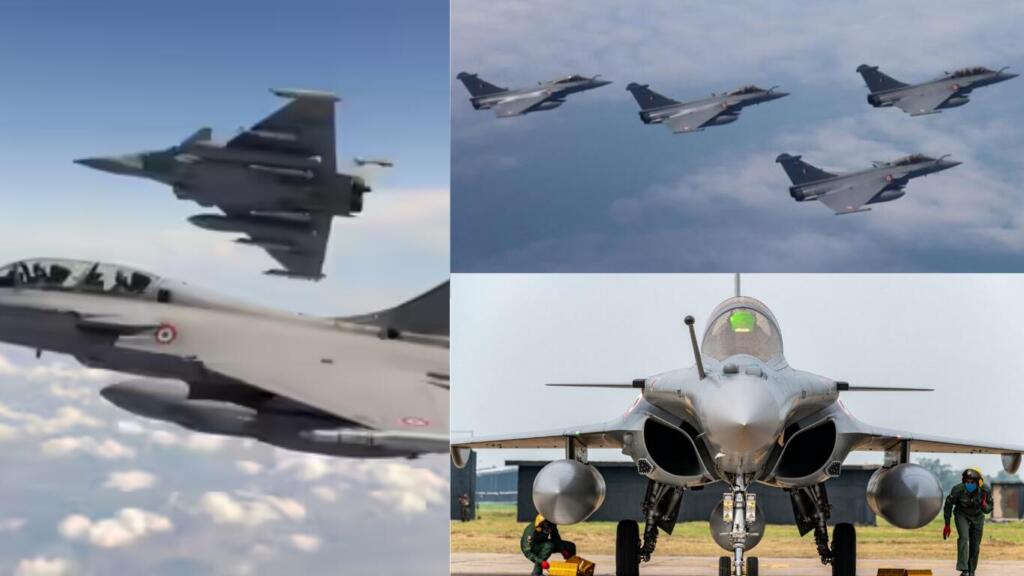
India is set to witness its biggest-ever defence acquisition, one that could transform the Indian Air Force into a future-ready force. The Ministry of Defence has received a formal proposal from the Indian Air Force for the procurement of 114 Rafale fighter jets under the “Make in India” initiative. Valued at over ₹2 lakh crore, this deal is not just about numbers; it is about strengthening India’s aerial supremacy, boosting indigenous defence manufacturing, and ensuring preparedness against emerging threats in the Indo-Pacific and beyond. With over 60 percent indigenous content, the project will also cement India’s self-reliance in defence production. At a time when adversaries like China and Pakistan are expanding their air power, this acquisition signals India’s firm commitment to staying ahead in aerial warfare and securing its skies for decades to come.
The Biggest Defence Deal in Indian History
The proposal for 114 Rafale jets, prepared by the Indian Air Force, has been submitted to the Defence Ministry and is currently under scrutiny by its different wings, including Defence Finance. Once cleared, it will move to the Defence Procurement Board (DPB) headed by the Defence Secretary, and later to the Defence Acquisition Council for final approval. If signed, this ₹2 lakh crore project will be the largest defence deal ever undertaken by the Indian government, surpassing all previous procurement records.
This deal will increase the Rafale fleet in India’s defence forces to 176, including the 36 already operational with the IAF and the 26 ordered by the Indian Navy under earlier agreements. Such numbers reflect the importance of the Rafale platform in India’s long-term aerial defence strategy.
Combat-Proven in Real Operations
The Rafale’s operational performance has already proven its worth in Indian conditions. Most notably, during Operation Sindoor, the French-origin fighter showcased its superiority against Pakistan and China, effectively neutralising the advanced Chinese PL-15 air-to-air missiles with its cutting-edge Spectra Electronic Warfare Suite. The aircraft also demonstrated the ability to strike both military installations and terrorist hideouts inside Pakistan using the Scalp air-to-ground missile system.
The proposed “Make in India” variants are expected to include upgrades, with longer-range air-to-ground missiles, further strengthening India’s strike capabilities. This positions the Rafale not only as a defensive shield but also as a strategic offensive platform in the region.
Boost to Indigenous Defence Manufacturing
A defining feature of this procurement will be its indigenous content, estimated at over 60 percent. French aerospace giant Dassault Aviation plans to partner with Indian firms like Tata to ensure local assembly and production. Additionally, Dassault is preparing to establish a Maintenance, Repair, and Overhaul (MRO) facility in Hyderabad for the Rafale’s M-88 engines, which will drastically improve the sustainability of operations.
This collaboration will not only bring cutting-edge technology into India but also generate employment and provide a strong push to the Modi government’s Atmanirbhar Bharat vision in the defence sector.
Strengthening India’s Fighter Jet Force Structure
The IAF’s future fleet will primarily revolve around three main pillars: the Russian Su-30 MKI, the Rafale, and indigenous fighter projects like Tejas. Alongside the Rafale acquisition, India has already ordered 180 LCA Tejas Mark 1A jets and plans to induct its own fifth-generation fighter aircraft AMCA after 2035. Together, these platforms will ensure that India retains a qualitative edge over its adversaries, even as they expand their own inventories.
A Defining Leap for India’s Air Power
The proposal for 114 Made in India Rafale jets marks a defining leap for India’s defence preparedness and its ambition to emerge as a global power in aerospace manufacturing. With unmatched combat performance, deep indigenous integration, and strategic industrial partnerships, the Rafale acquisition is set to become more than just a procurement it will be a national milestone in both security and self-reliance. As threats intensify in the region, this step ensures that India remains future-ready and capable of dominating the skies with indigenous strength and global technology.