
















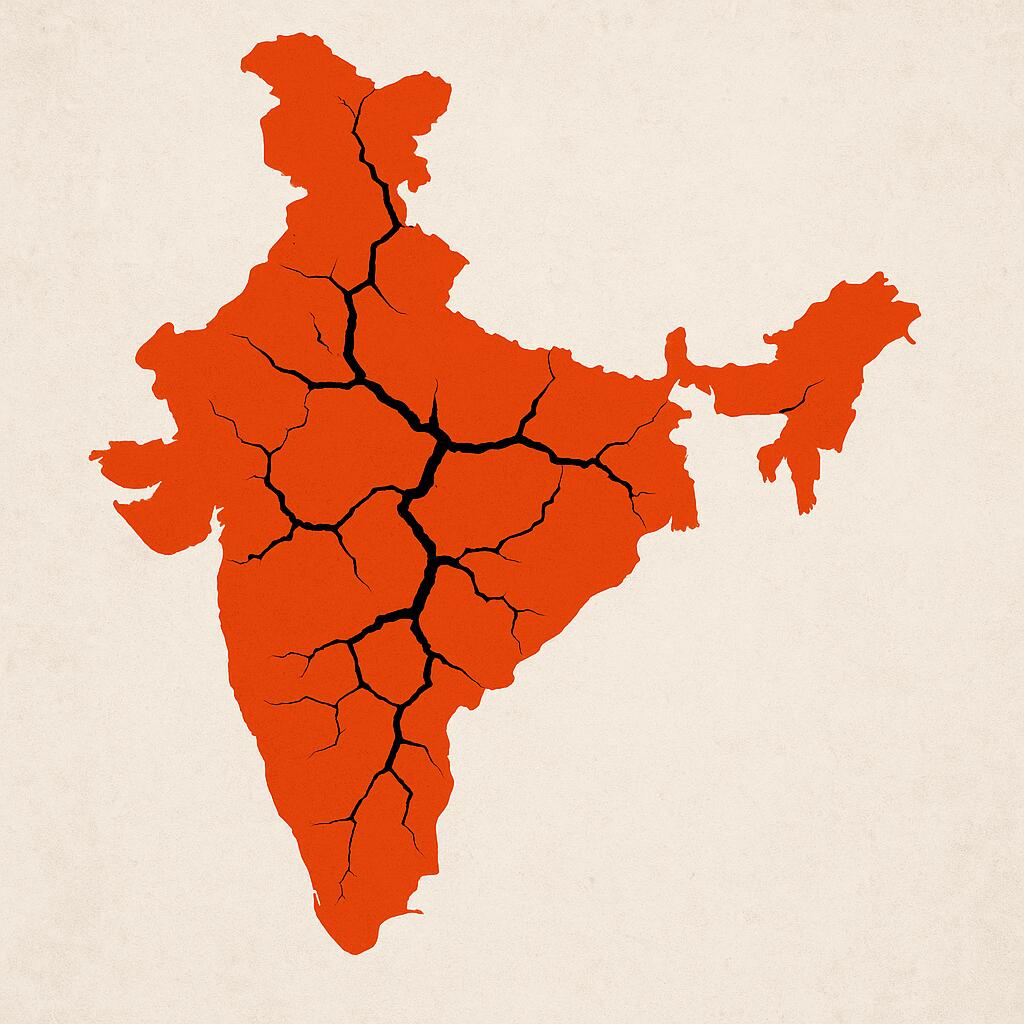
Recent incidents across different parts of India have raised alarm bells about the re-emergence of Tukde Tukde Gang. The sight of a vehicle in Bengaluru carrying a T-shirt with the Azad Kashmir flag, the raising of ‘Azadi’ slogans at the Parade Ground in Dehradun, and the eruption of violent protests in Ladakh may appear at first as scattered events. Yet, when viewed together, they reflect a troubling pattern that Indians cannot afford to ignore. These events are not isolated, they are linked by a common thread of separatist propaganda and divisive politics, signaling the revival of what has come to be known as the Tukde Tukde Gang.
Azad Kashmir Symbolism in Bengaluru
The first incident comes from Bengaluru, Karnataka’s bustling IT hub and a city that symbolizes India’s global aspirations. A vehicle was recently seen displaying a T-shirt with the Azad Kashmir flag. This is no trivial matter. The Azad Kashmir flag is not just a piece of cloth, it represents a propaganda tool pushed by separatist groups backed by Pakistan to question India’s sovereignty over Jammu and Kashmir. For such symbolism to appear in the heart of India’s technology capital is a calculated attempt to normalize separatist narratives and test how far they can push the limits of expression under the guise of freedom. This act was not only provocative but also a subtle endorsement of anti-India agendas operating in the region.
Vehicle number KA41EZ6614, displaying a Pakistan flag on a Kashmir T-shirt. This clearly reflects separatist and anti-national intent. Such a person must be arrested and thoroughly interrogated. @BlrCityPolice @blrcitytraffic https://t.co/Fss6F4GbdB
— Girish Bharadwaj (@Girishvhp) September 24, 2025
The Echo of Azadi in Dehradun
Shortly after, another disturbing report came from Uttarakhand. At the Parade Ground in Dehradun, the slogan of Azadi was raised during a gathering. For many, this may sound like an innocuous call for freedom. But history has taught us otherwise. The word Azadi has been weaponized in the past, particularly during the dark days of the Hindu genocide in Kashmir when Kashmiri Pandits were forced to flee their homes. The same slogan was used by mobs to justify killings, rapes, and forced displacement. To hear this slogan resurface in Dehradun, a peaceful city known for its institutions and as a hub for India’s armed forces, is deeply worrying. It suggests that separatist rhetoric is no longer confined to Kashmir or metropolitan campuses, it is seeping into states with no direct connection to the Kashmir issue.
Naxalbad and anti-Hindu ‘Azadi’ slogans have reached #Uttarakhand.
‘Azadi’ slogan was heard in Dehradun Parade Ground. The State Government must deal with this strongly.
Let’s remind you, this ‘Azadi’ slogan was heard during Hindu genocide of Kashmir. pic.twitter.com/vr9UNoDb6X
— Hindu Voice (@HinduVoice_in) September 25, 2025
Violent Protests in Ladakh
The third incident comes from Ladakh, a region of immense strategic importance. Once known for its serenity and resilience, Ladakh has seen violent protests in recent weeks. The reasons cited range from administrative demands to local grievances, but the intensity and suddenness of the unrest suggest external influence and organized attempts to destabilize the region. This is not the first time Ladakh has been targeted. Since the abrogation of Article 370 in 2019 and the creation of Ladakh as a Union Territory, vested interests both internal and external have sought to project it as a site of discontent. The recent protests fit neatly into this pattern, raising questions about whether they are being amplified to undermine India’s strategic resolve.
Individually, these incidents may appear unrelated. A flag in Bengaluru, a slogan in Dehradun, protests in Ladakh, each could be dismissed as an isolated expression of dissent. But taken together, they reveal a coordinated narrative, a deliberate attempt to reignite separatist sentiments (Tukde Tukde Gang), challenge India’s unity, and embolden anti-national forces.
This is the playbook of the Tukde Tukde Gang, a term that has come to describe those who thrive on weakening India from within. Whether it was the infamous Bharat tere tukde honge chants in Delhi’s campuses or the hijacking of protests against laws like the CAA, the tactics remain the same. Use symbols, slogans, and selective grievances to spread distrust in the Indian state, all while hiding behind the shield of free expression.
The Azad Kashmir flag in Bengaluru ties directly to Pakistan’s propaganda machinery. The Azadi slogan in Dehradun echoes the same separatist rhetoric once used to justify ethnic cleansing in Kashmir. The violent protests in Ladakh align with the long-standing goal of projecting instability in India’s border regions. When the dots are connected, they form a clear picture of a network of forces, ideological, political, and sometimes external, that share one goal, fragmenting India.
For ordinary Indians, these developments are a reminder that unity cannot be taken for granted. Our nation has faced challenges from colonial powers, partition, insurgencies, and cross-border terrorism. Yet, we have endured because of our resilience and collective will. Today, the threat does not come only from across the border but from within, in the form of narratives and propaganda designed to erode confidence in India’s sovereignty.
Governments in Karnataka, Uttarakhand, and Ladakh must act swiftly to ensure that these incidents are not brushed aside. Symbols and slogans may seem harmless at first, but they carry dangerous potential when used to normalize separatism. Citizens too must recognize the stakes. Every Indian has a role in rejecting divisive propaganda and reaffirming faith in the unity of the nation.
The recent incidents across Bengaluru, Dehradun, and Ladakh should serve as a timely warning. The threat of division is real, and the only antidote is national vigilance. India’s unity has survived greater storms, and it will survive this one too, but only if every citizen understands the danger, connects the dots, and stands firm against those who wish to break India into pieces.