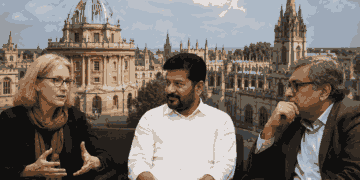

















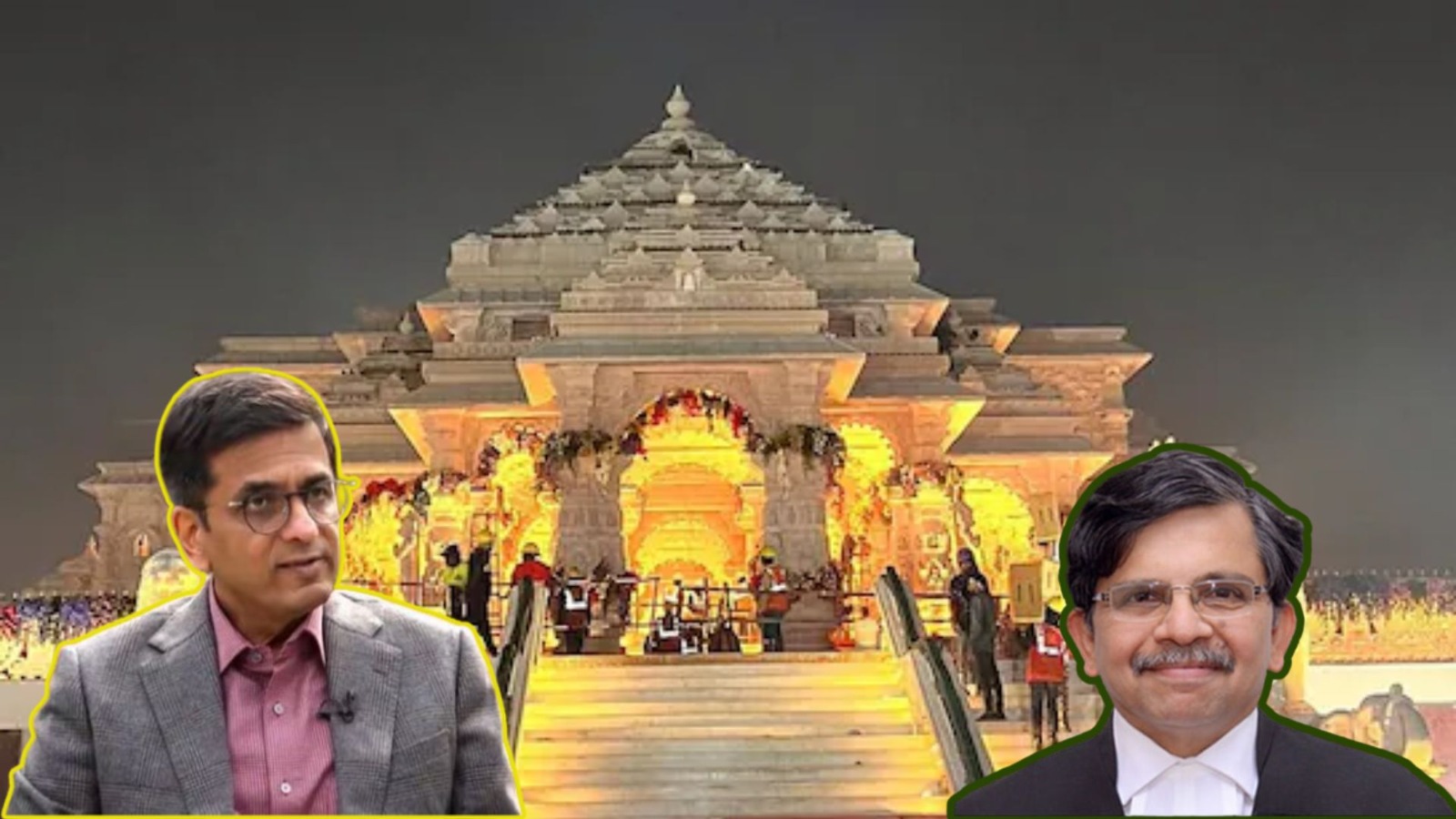
A fresh controversy has erupted within India’s legal fraternity after former Chief Justice of India (CJI) D.Y. Chandrachud strongly criticized retired Justice S. Muralidhar for his recent remarks questioning the legitimacy of the Ayodhya verdict delivered by the Supreme Court in November 2019. The flashpoint came at the Second A.G. Noorani Memorial Lecture, held at the India Islamic Cultural Centre, where Justice Muralidhar accused the apex court of displaying “unforgivable institutional amnesia” in its handling of the Babri Masjid demolition case. He pointed out the Court’s failure to act on a contempt petition against then Uttar Pradesh Chief Minister Kalyan Singh, despite his open defiance of the court’s orders in 1992.
Muralidhar’s Critique of the Ayodhya Judgment In his speech, Justice Muralidhar went further, questioning the very foundations of the Ayodhya verdict. He argued that none of the original litigants had sought the construction of a temple in their petitions, yet the Supreme Court exercised its extraordinary powers under Article 142 to direct the government to build one. According to him, this amounted to the Court stepping outside its jurisdiction. Muralidhar also attacked the “authorless” nature of the verdict. Traditionally, judgments are authored by specific judges, but in this case, the bench chose to present it anonymously to signal unity. Casting doubt on the process, he implied that such an approach diluted accountability. Perhaps most provocatively, Muralidhar cited reports that Justice Chandrachud had claimed to have “consulted the deity” before delivering the judgment. He warned that judges making personal religious declarations risked undermining both judicial neutrality and public confidence in constitutional values.
Chandrachud’s Strong Rebuttal Responding in a 3.5-hour interview with Lallantop, former CJI Chandrachud dismissed Muralidhar’s comments as misinformed and politically colored. He accused his former colleague of seeking the role of a “Samaj Sudharak” (social reformer) after retirement, rather than speaking with the precision expected of a jurist. “I can say with great confidence that Justice Muralidhar has not read that judgment,” Chandrachud asserted. He defended the decision to issue the verdict as an “authorless judgment,” explaining that the five-judge bench including Justice Abdul Nazeer wanted to project judicial unity on an issue that had divided Indian society for over a century. He further clarified that mediation had been attempted but failed to yield consensus. The final verdict, he said, was based entirely on law and evidence, not personal faith or religious consultation. By branding Muralidhar’s critiques as uninformed, Chandrachud sought to reinforce the credibility of the Court’s role in resolving the long-standing dispute. A Debate on Judicial Neutrality The exchange between the two judges reflects a deeper debate within India’s judiciary.
On one hand, Muralidhar’s criticisms echo concerns raised by sections of civil society about whether the Ayodhya verdict compromised secular constitutional principles. On the other, Chandrachud’s defense underscores the Court’s attempt to balance law, evidence, and national reconciliation in one of the most sensitive cases in independent India. While the Supreme Court’s unanimous ruling in favor of the Ram temple was hailed by many as closing a painful chapter of history, it continues to attract scrutiny from those who see it as blurring the lines between faith and law. The sharp words exchanged by two senior figures of the judiciary highlight the enduring fault lines around the Ayodhya dispute, and the challenge of safeguarding constitutional neutrality in matters deeply intertwined with religion.