
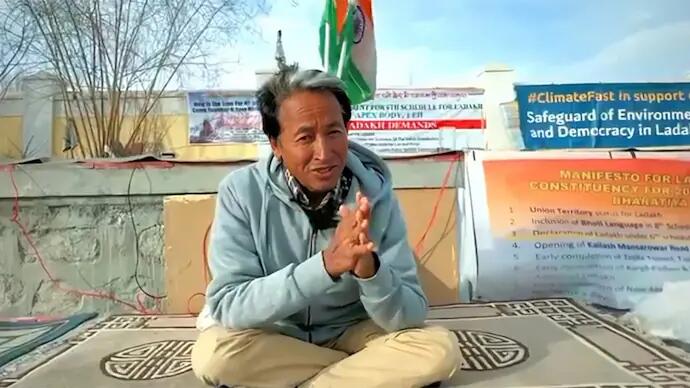
The Ministry of Home Affairs (MHA) on September 25 cancelled the Foreign Contribution Regulation Act (FCRA) licence of two Ladakh-based organisations — Students’ Educational and Cultural Movement of Ladakh (SECMOL) and Himalayan Institute of Alternatives Ladakh (HIAL). Both were founded by educationist-activist Sonam Wangchuk. The government cited repeated violations of FCRA Sections 17 and 18, discrepancies in financial reporting, and the use of foreign donations for activities deemed “against national interest.” The decision comes at a time when Ladakh has been witnessing violent protests over statehood and Sixth Schedule inclusion.
Alleged Financial Irregularities Under Probe
The cancellation order followed months of scrutiny by the Central Bureau of Investigation (CBI), which has been examining the accounts of SECMOL and HIAL since mid-2025. Investigators have flagged multiple transactions, including a transfer of ₹4.93 lakh from Sweden, allegedly used to fund studies on sovereignty and migration — areas the MHA said were beyond the permissible scope of foreign contributions.
Officials also pointed to earlier irregularities, such as depositing ₹3.5 lakh from the sale of an old bus into the FCRA account, and a ₹3.35 lakh “personal donation” by Wangchuk that was not reflected in official records. While Wangchuk maintains that these funds were legitimate payments for knowledge-sharing with international institutions, the MHA argues they constitute clear breaches of FCRA guidelines.
Escalating Political Tensions in Ladakh
The crackdown comes against the backdrop of mounting unrest in the Union Territory. On September 24, large-scale demonstrations in Leh and Kargil demanding statehood and Sixth Schedule protections turned violent. Four people were killed, BJP offices were torched, and security forces resorted to firing and tear gas to disperse the crowds.
The Centre has directly accused Wangchuk of inciting violence, citing his repeated calls for “Arab Spring-style” and “Gen-Z” movements. His indefinite hunger strike since September 10, initially projected as a peaceful protest, has now become a rallying point for agitated youth. Wangchuk, however, denies instigating violence and blames “six years of unemployment and unmet promises” for the anger on Ladakh’s streets.
Government Response and Outreach
The Home Ministry emphasised that despite the violence, the Centre remains committed to dialogue and development in Ladakh. Officials noted that through the High-Powered Committee (HPC), regular discussions have been held with the Apex Body Leh (ABL) and Kargil Democratic Alliance (KDA). Concrete steps already taken include:
-
Raising Scheduled Tribe reservations from 45% to 84%
-
Granting 33% reservation for women in local councils
-
Declaring Bhoti and Purgi as official languages
-
Approving 1,800 new government jobs
The next HPC meeting is scheduled for October 6. The MHA, however, accused Wangchuk of “sabotaging dialogue” by taking protests to the streets instead of engaging through institutional channels.
A Test of Governance and Activism
The cancellation of SECMOL and HIAL’s FCRA licences signals the Centre’s zero-tolerance policy towards financial irregularities and foreign funding misuse. It also reflects the government’s firm stance that agitation should not derail ongoing negotiations for Ladakh’s future. While Wangchuk frames his struggle as a fight for local rights, the Centre views his activism as crossing into political provocation and foreign-backed influence.
The outcome of the October 6 talks will likely determine whether Ladakh’s discontent can be channelled back into dialogue or whether the standoff between the government and Wangchuk will harden further. At stake is not only the development trajectory of Ladakh but also the credibility of democratic processes in balancing activism with accountability.