


















TFIPOST हिन्दी
TFIPOST Global
Tfipost.com
Tfipost.com
No Result
View All Result
  • Premium
  • Politics
    • All
    • Analysis
    • Opinions
    • Trending
    594 km of speed, scale and connectivity; the Ganga Expressway opens a new development corridor across Uttar Pradesh.

    Modi Opens 594-Km Ganga Expressway, Unveils Uttar Pradesh’s New High-Speed Growth Corridor

    Panihati erupts as Ratna Debnath’s justice campaign runs into poll-day turbulence.

    Bengal Erupts as RG Kar Victim’s Mother Faces Gherao, EVM Row Sparks Fresh Poll Storm

    Where Tough Policing Meets Political Panic

    ‘Singham’ Targeted? PIL Against Ajay Pal Sharma Sparks Pushback Debate Over Poll Enforcement

    From pilgrimage to metros, now without the wait

    From Kashi to Mumbai and Ayodhya to Pune: Modi Expands Rail Network with New Amrit Bharat Express Services

    • Analysis
    • Opinions
    • Trending
  • Economy
    • All
    • Business
    • Economy1
    • Finance
    India–New Zealand FTA signed in New Delhi, marking a “once in a lifetime” moment in trade ties.

    India, New Zealand Seal Fast-Tracked Trade Pact to Expand Duty-Free Access, Jobs and $5 Billion Trade Target

    Ahmadis in Pakistan: From Faith to Marginalisation Under Law and Society

    Ahmadis in Pakistan: From Faith to Marginalisation Under Law and Society

    Open Demat Account with Zero Annual Maintenance Charges What to Look For

    Open Demat Account with Zero Annual Maintenance Charges What to Look For

    Blood in the Meadows: How the Pahalgam Terror Attack Exposed Calculated Targeting of Civilians in Kashmir

    Blood in the Meadows: How the Pahalgam Terror Attack Exposed Calculated Targeting of Civilians in Kashmir

    • Business
    • Finance
  • Defense
    • All
    • Defence
    • Strategy
    • Weaponry
    Why is Making a Jet Engine so Hard | The failure of Kaveri

    Why is Making a Jet Engine so Hard | The failure of Kaveri

    Rajnath Singh at SCO, reaffirming India’s zero-tolerance stand on terrorism.

    “No More Double Standards”: Rajnath Singh’s SCO Message Rewrites India’s Terror Response Playbook

    Recovered arms and arrests have intensified scrutiny on a suspected cross-border terror network.

    Pakistan’s Proxy War Faces a Setback as Delhi Terror Plot is Crushed, 18 Weapons Seized

    The scars of Pahalgam endure, even as the nation moves forward

    Pahalgam Anniversary: Modi Signals Firm National Stand as India Reasserts Anti-Terror Resolve

    • Defence
    • Strategy
    • Weaponry
  • Geopolitics
    • All
    • Africa
    • Americas
    • Asia Pacific
    • Europe
    • South Asia
    • West Asia
    Karachi Pact 1949: How Pakistan Cemented Control Over Gilgit-Baltistan Without Its People’s Consent

    Karachi Pact 1949: How Pakistan Cemented Control Over Gilgit-Baltistan Without Its People’s Consent

    When law becomes an instrument of exclusion, persecution moves far beyond the courtroom.

    Ahmadis in Pakistan: From Faith to Marginalisation Under Law and Society

    When uranium becomes strategy, India moves first.

    India’s $4 Billion Uranium Coup with Kazakhstan Rewrites the Global Nuclear Balance

    “Fixing the World”: What a Century of Big Ideas Reveals About Us

    “Fixing the World”: What a Century of Big Ideas Reveals About Us

    • Africa
    • Americas
    • Asia Pacific
    • Europe
    • South Asia
    • West Asia
  • Knowledge
    • All
    • Culture
    • Education
    • History
    • Indology
    Chants of ‘Jai Badri Vishal’ Echo as Badrinath Portals Open; All Four Dhams Now Accessible to Pilgrims

    Chants of ‘Jai Badri Vishal’ Echo as Badrinath Portals Open; All Four Dhams Now Accessible to Pilgrims

    Kedarnath Dham Portals Open for Devotees After 181 Days Amid Vedic Chants, Traditional Rituals

    Kedarnath Dham Portals Open for Devotees After 181 Days Amid Vedic Chants, Traditional Rituals

    Sardar Patel and Amit Shah

    Sardar Patel’s 1947 Blueprint on Minority Quotas Resurfaces as Reservation Debate Returns to Centre Stage

    The 1973 Constitution and ‘Bhutto’ the Man Who Made It: What Pakistan Owes and What It Destroyed

    The 1973 Constitution and ‘Bhutto’ the Man Who Made It: What Pakistan Owes and What It Destroyed

    • Culture
    • History
    • Indology
  • Law
  • Lounge
    • All
    • Books
    • Cinema
    • Entertainment
    • Food
    • Games
    • Health
    • Lifestyle
    • Satire
    • Sports
    • technology
    • Travel
    594 km of speed, scale and connectivity; the Ganga Expressway opens a new development corridor across Uttar Pradesh.

    Modi Opens 594-Km Ganga Expressway, Unveils Uttar Pradesh’s New High-Speed Growth Corridor

    When regulation meets the algorithm

    India Tightens Digital Control as Online Blocking Orders Surge to 24,300 Amid AI Deepfake Trend

    Digital Data Collection In India

    India’s Data Reset Begins: Census 2027 to Become First Fully Digital Population Count

    5 Facilities in Bengaluru Specializing in Mental Health Treatment for Those with Cancer

    5 Facilities in Bengaluru Specializing in Mental Health Treatment for Those with Cancer

    • Books
    • Cinema
    • Food
    • Health
    • Sports
    • technology
    • Travel
    • Satire
Tfipost.com
  • Premium
  • Politics
    • All
    • Analysis
    • Opinions
    • Trending
    594 km of speed, scale and connectivity; the Ganga Expressway opens a new development corridor across Uttar Pradesh.

    Modi Opens 594-Km Ganga Expressway, Unveils Uttar Pradesh’s New High-Speed Growth Corridor

    Panihati erupts as Ratna Debnath’s justice campaign runs into poll-day turbulence.

    Bengal Erupts as RG Kar Victim’s Mother Faces Gherao, EVM Row Sparks Fresh Poll Storm

    Where Tough Policing Meets Political Panic

    ‘Singham’ Targeted? PIL Against Ajay Pal Sharma Sparks Pushback Debate Over Poll Enforcement

    From pilgrimage to metros, now without the wait

    From Kashi to Mumbai and Ayodhya to Pune: Modi Expands Rail Network with New Amrit Bharat Express Services

    • Analysis
    • Opinions
    • Trending
  • Economy
    • All
    • Business
    • Economy1
    • Finance
    India–New Zealand FTA signed in New Delhi, marking a “once in a lifetime” moment in trade ties.

    India, New Zealand Seal Fast-Tracked Trade Pact to Expand Duty-Free Access, Jobs and $5 Billion Trade Target

    Ahmadis in Pakistan: From Faith to Marginalisation Under Law and Society

    Ahmadis in Pakistan: From Faith to Marginalisation Under Law and Society

    Open Demat Account with Zero Annual Maintenance Charges What to Look For

    Open Demat Account with Zero Annual Maintenance Charges What to Look For

    Blood in the Meadows: How the Pahalgam Terror Attack Exposed Calculated Targeting of Civilians in Kashmir

    Blood in the Meadows: How the Pahalgam Terror Attack Exposed Calculated Targeting of Civilians in Kashmir

    • Business
    • Finance
  • Defense
    • All
    • Defence
    • Strategy
    • Weaponry
    Why is Making a Jet Engine so Hard | The failure of Kaveri

    Why is Making a Jet Engine so Hard | The failure of Kaveri

    Rajnath Singh at SCO, reaffirming India’s zero-tolerance stand on terrorism.

    “No More Double Standards”: Rajnath Singh’s SCO Message Rewrites India’s Terror Response Playbook

    Recovered arms and arrests have intensified scrutiny on a suspected cross-border terror network.

    Pakistan’s Proxy War Faces a Setback as Delhi Terror Plot is Crushed, 18 Weapons Seized

    The scars of Pahalgam endure, even as the nation moves forward

    Pahalgam Anniversary: Modi Signals Firm National Stand as India Reasserts Anti-Terror Resolve

    • Defence
    • Strategy
    • Weaponry
  • Geopolitics
    • All
    • Africa
    • Americas
    • Asia Pacific
    • Europe
    • South Asia
    • West Asia
    Karachi Pact 1949: How Pakistan Cemented Control Over Gilgit-Baltistan Without Its People’s Consent

    Karachi Pact 1949: How Pakistan Cemented Control Over Gilgit-Baltistan Without Its People’s Consent

    When law becomes an instrument of exclusion, persecution moves far beyond the courtroom.

    Ahmadis in Pakistan: From Faith to Marginalisation Under Law and Society

    When uranium becomes strategy, India moves first.

    India’s $4 Billion Uranium Coup with Kazakhstan Rewrites the Global Nuclear Balance

    “Fixing the World”: What a Century of Big Ideas Reveals About Us

    “Fixing the World”: What a Century of Big Ideas Reveals About Us

    • Africa
    • Americas
    • Asia Pacific
    • Europe
    • South Asia
    • West Asia
  • Knowledge
    • All
    • Culture
    • Education
    • History
    • Indology
    Chants of ‘Jai Badri Vishal’ Echo as Badrinath Portals Open; All Four Dhams Now Accessible to Pilgrims

    Chants of ‘Jai Badri Vishal’ Echo as Badrinath Portals Open; All Four Dhams Now Accessible to Pilgrims

    Kedarnath Dham Portals Open for Devotees After 181 Days Amid Vedic Chants, Traditional Rituals

    Kedarnath Dham Portals Open for Devotees After 181 Days Amid Vedic Chants, Traditional Rituals

    Sardar Patel and Amit Shah

    Sardar Patel’s 1947 Blueprint on Minority Quotas Resurfaces as Reservation Debate Returns to Centre Stage

    The 1973 Constitution and ‘Bhutto’ the Man Who Made It: What Pakistan Owes and What It Destroyed

    The 1973 Constitution and ‘Bhutto’ the Man Who Made It: What Pakistan Owes and What It Destroyed

    • Culture
    • History
    • Indology
  • Law
  • Lounge
    • All
    • Books
    • Cinema
    • Entertainment
    • Food
    • Games
    • Health
    • Lifestyle
    • Satire
    • Sports
    • technology
    • Travel
    594 km of speed, scale and connectivity; the Ganga Expressway opens a new development corridor across Uttar Pradesh.

    Modi Opens 594-Km Ganga Expressway, Unveils Uttar Pradesh’s New High-Speed Growth Corridor

    When regulation meets the algorithm

    India Tightens Digital Control as Online Blocking Orders Surge to 24,300 Amid AI Deepfake Trend

    Digital Data Collection In India

    India’s Data Reset Begins: Census 2027 to Become First Fully Digital Population Count

    5 Facilities in Bengaluru Specializing in Mental Health Treatment for Those with Cancer

    5 Facilities in Bengaluru Specializing in Mental Health Treatment for Those with Cancer

    • Books
    • Cinema
    • Food
    • Health
    • Sports
    • technology
    • Travel
    • Satire
No Result
View All Result
Tfipost.com
Tfipost.com
No Result
View All Result
  • Premium
  • Politics
  • Economy
  • Defense
  • Geopolitics
  • Knowledge
  • Law
  • Lounge

The Origins of Modern Ganesh Chaturthi Festival : A British Governor, Moharram Among Others

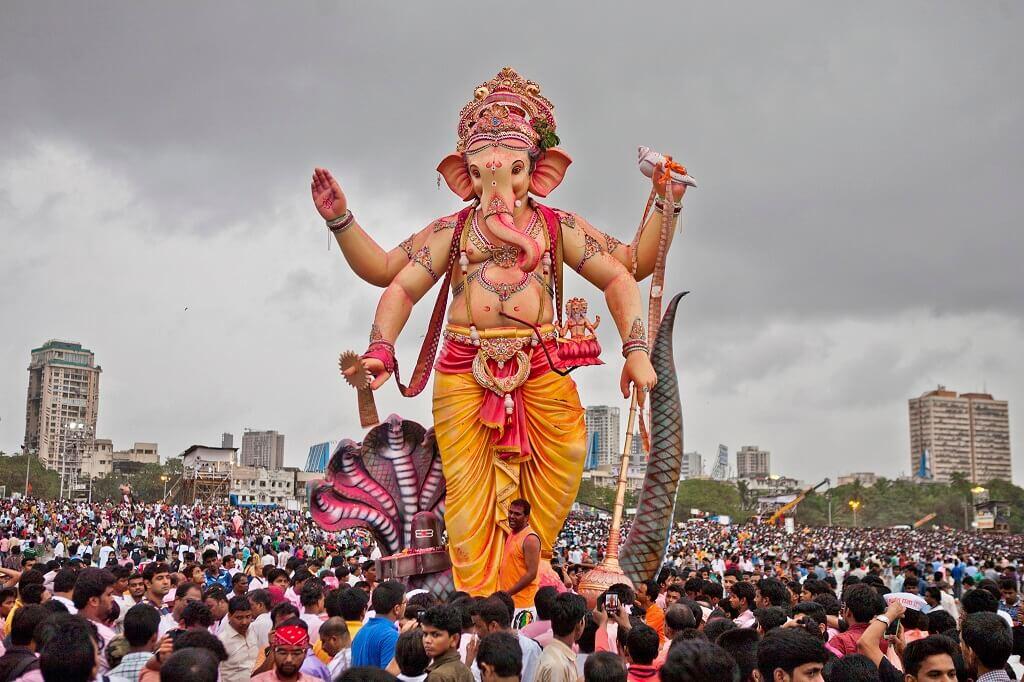
The Ganesh Chaturthi festival, which today unites millions of Hindus across India, especially in Maharashtra, has a history that is far more complex and political than most people realize.

Harishanker R P by Harishanker R P
30 August 2025
in Analysis
The Origins of Modern Ganesh Chaturthi Festival : A British Governor, Moharram Among Others
Share on FacebookShare on X

The Ganesh Chaturthi festival, which today unites millions of Hindus across India, especially in Maharashtra, has a history that is far more complex and political than most people realize. Its public celebration in its current form can be traced back to 1894 in Poona (now Pune), where it emerged as a cultural assertion against colonial divide-and-rule politics and as a Hindu alternative to Moharram processions. What began as a localized reaction to communal tensions eventually evolved into one of the most significant socio-religious movements in modern India.

The Colonial Spark: Harris’s Directive and Rising Tensions

In May 1894, Bal Gangadhar Tilak’s English-language newspaper The Mahratta published a revealing report. It detailed a confidential circular issued by Governor George Robert Canning Harris ironically a former England cricket captain directing officials that Hindus must refrain from playing music while passing mosques during religious processions. Crucially, the order was not reciprocal: Muslim processions faced no such restriction when passing temples.

RelatedPosts

Ancient Connections Revealed: Journey of Lord Ganesha from Indian Shores to European & American Civilizations

Miscreants throw eggs at procession carrying Ganesha idol in Vadodara, 3 including Sufyan-Shahnawaz arrested

Patriotism Meets Devotion: Hyderabad Mandal Unveils S-400-Inspired Lord Ganesha Idol As Tribute to Defence Forces

Load More

This asymmetric policy was widely viewed as a calculated divide-and-rule tactic, and it sowed the seeds of discontent. Matters came to a head in July 1894 during the famous palkhi processions of the revered poet-saints Dnyanoba and Tukaram. As Tukaram’s palkhi passed near a dargah in Ganesh Peth, stone-pelting erupted, targeting the drummer in the procession. A full-fledged scuffle broke out, with Hindus interpreting the incident as an attack on their faith. Tilak’s Kesari reported that nearly 50 Muslims had attacked the palanquin, inflaming passions further.

This episode occurred just days before Moharram, a major Muslim festival. For generations, Hindus had actively participated in tabut processions, where ornate tazias symbolizing Imam Hussain’s tomb were paraded with drums and later immersed in rivers or the sea. But the events of 1894 changed everything.

From Moharram to Ganesh Chaturthi: A Cultural Shift

After the palkhi violence, regional newspapers like Kalpataru, Mumbai Vaibhav, Indu Prakash, Deenbandhu, and Subodh Patrika began urging Hindus to boycott Moharram. Handbills were even pasted on temple walls instructing devotees not to make tabuts or participate in the festival.

One newspaper, Poona Vaibhav, went a step further, advising Hindus to celebrate their own deities with equal pomp. “If Hindus wish to have similar rejoicings,” it wrote, “they can start their own procession in honour of one of their gods on a suitable occasion.”

Soon after, an old festival—Ganesh Chaturthi—was chosen for public revival. Previously observed largely in homes or temples, it was suddenly elevated into a grand community celebration. On July 22, 1894, the newspaper Vyapari reported that Poona was preparing to celebrate Ganesh Chaturthi “with more than the usual éclat.” By September, local reports described how idols of Ganesha were being installed in mandaps resembling tabuts, accompanied by music, devotional singing, and street processions.

The festival was consciously remodeled in the style of Moharram. Like the immersion of tabuts, Ganesha idols were taken out in public processions and immersed on the final day. The Times of India noted on September 14, 1894: “In the place of the small Ganpatis which we have for years past been accustomed to see in Poona, the Hindoos have on this occasion made large imposing figures of their God of Wisdom,” prominently displayed in streets under decorative mandaps that mirrored tabut structures.

Tilak’s Role: Religion as National Regeneration

Tilak, a fiery nationalist and mass leader, recognized the potential of Ganesh Chaturthi to unite Hindus across castes and classes. Until then, the Indian National Congress, founded in 1885, was largely an elitist platform dominated by lawyers, aristocrats, and Western-educated Indians. Tilak sought to bring the common masses into the nationalist fold, and religion provided a unifying glue.

His newspaper Kesari explained in 1895 that a nation required three essentials: common laws, a common language, and a common religion. The British had already provided the first two, but the third—religious unity—had to be forged by Indians themselves. Ganesh Chaturthi, Tilak argued, could become the festival of “national regeneration.”

Unlike Moharram, which had both Hindu and Muslim participation but was prone to conflict, Ganesh Chaturthi was wholly Hindu in character and capable of transcending caste divides. The poet-saints Dnyaneshwar and Tukaram, venerated by the lower classes, became cultural symbols woven into the festival. Through Ganesha, Tilak created a platform where every Hindu—from Brahmin scholars to working-class laborers—could participate in devotional singing, plays, debates, and collective rituals.

Myths, Realities, and the Birth of Mass Politics

There are many myths about the founding of the modern Ganpati festival. One popular belief is that it was started to secretly spread anti-British messages. While this is not entirely accurate, the political undertones were undeniable. By taking religion out of private homes and into public squares, Tilak had created a new political theatre where colonial authority could be challenged indirectly.

Ganesh Chaturthi thus became both cultural assertion and political mobilization. It provided an alternative to Moharram at a time when Hindus felt alienated by colonial directives. It also filled a psychological void—Hindus who abstained from Moharram still craved a few days of music, dance, and public festivity. The Ganesh festival satisfied that desire, while simultaneously serving as a subtle assertion of Hindu identity and unity.

Notably, contemporary observers recognized the transformation. The Mahratta wrote in October 1894: “The festival was not a new one… However, it was modified so as to resemble the Moharram.”

From Divide-and-Rule to National Unity

The modern celebration of Ganesh Chaturthi owes its public revival not to purely religious sentiment, but to colonial interference and nationalist strategy. Governor Harris’s divide-and-rule directive in 1894 set off communal strife in Poona, which in turn gave birth to a Hindu counter-celebration modeled on Moharram.

What Tilak did was historic: he took a household deity and transformed him into a national icon of unity, identity, and regeneration. The festival cut across caste lines, drew in the common man, and became a training ground for political mobilization against British rule.

The irony is striking. The same Governor Harris who sowed division is remembered today not for his cricketing past but because his policy inadvertently gave rise to one of India’s most iconic festivals. His name even lingers in the Harris Shield school cricket tournament in Mumbai.

Ganesh Chaturthi today is celebrated with grandeur across India and beyond. But its modern form carries within it the story of how a colonial directive, communal conflict, and nationalist vision together reshaped a festival into a cultural and political phenomenon. It was, and remains, more than a religious ritual—it was a declaration of identity and unity, born in the crucible of colonial politics.


Tags: Ganesh ChaturthiMoharramNational RegenerationTilak’s Role
ShareTweetSend
Previous Post

Japan’s Secret Files: Time to End Mystery? The Unfinished Story of India’s Greatest Patriot Netaji Subhas Chandra Bose

Next Post

If Divine Intervention Is The Cause For Floods In India’s Himachal and Jammu, Then Who Is Responsible for Pakistan Floods?

Related Posts

Operation Sindoor exposes Pakistan false narrative, asserts India's precision strategy
Analysis

Operation Sindoor: India’s Precision Doctrine Exposes Pakistan’s False Flag Narrative at the UN

10 April 2026

In May 2026, South Asia's geopolitical and military landscape witnessed a decisive shift. India's Operation Sindoor, to avenge the...

Rare 1,000-km Rain Band Brings Storms Across India in Unusual Late-March Weather Shift; Delhi Sees Wettest March In 3 Years
Analysis

Rare 1,000-km Rain Band Brings Storms Across India in Unusual Late-March Weather Shift; Delhi Sees Wettest March In 3 Years

20 March 2026

An unusual weather phenomenon is currently unfolding across parts of India, Pakistan, and Afghanistan, bringing intense rainfall, thunderstorms, gusty...

Tibetans and Unbroken Cry of Tibet: Memory, Resistance, Weight of Silence
Analysis

Tibetans and Unbroken Cry of Tibet: Memory, Resistance, Weight of Silence

11 March 2026

March 10 is a date that Tibetans carry with them wherever they go, returning each year with a quiet...

Load More

Leave a Reply Cancel reply

Your email address will not be published. Required fields are marked *

I agree to the Terms of use and Privacy Policy.
This site is protected by reCAPTCHA and the Google Privacy Policy and Terms of Service apply.

Currently Playing

From Runways to Warships: India’s Firefighting Warrior Built for Bases & Battles| IAF | VayuShakti

From Runways to Warships: India’s Firefighting Warrior Built for Bases & Battles| IAF | VayuShakti

00:05:40

Ethanol, EVs and Solar- How India’s Energy Game Is Changing | Modi on LPG & Crude Oil | war| Hormuz

00:05:21

Truth of IRIS Dena: 8 Days That Changed Narrative | War zone Reality, Not an Indian Navy Exercise

00:08:02

300 Million Euros for SCALP: Strategic Necessity or Costly Dependency on France300

00:04:06

Tejas Mk1A: 19th aircraft coupled but Not Delivered: What Is Holding Back the IAF Induction?

00:07:21
Facebook Twitter Instagram Youtube
tfipostTfipost.com
Right Wing | News Analysis | Indian Opinion
  • About us
  • Contact Us
  • Careers
  • Brand Partnerships
  • Terms of use
  • Privacy Policy
  • Sitemap

©2026 TFI Media Private Limited

No Result
View All Result
  • Premium
  • Politics
    • Analysis
    • Opinions
    • Trending
  • Economy
    • Business
    • Finance
  • Defense
    • Defence
    • Strategy
    • Weaponry
  • Geopolitics
    • Africa
    • Americas
    • Asia Pacific
    • Europe
    • South Asia
    • West Asia
  • Knowledge
    • Culture
    • History
    • Indology
  • Law
  • Lounge
    • Books
    • Cinema
    • Food
    • Health
    • Sports
    • technology
    • Travel
    • Satire
TFIPOST हिन्दी
TFIPOST Global

©2026 TFI Media Private Limited