























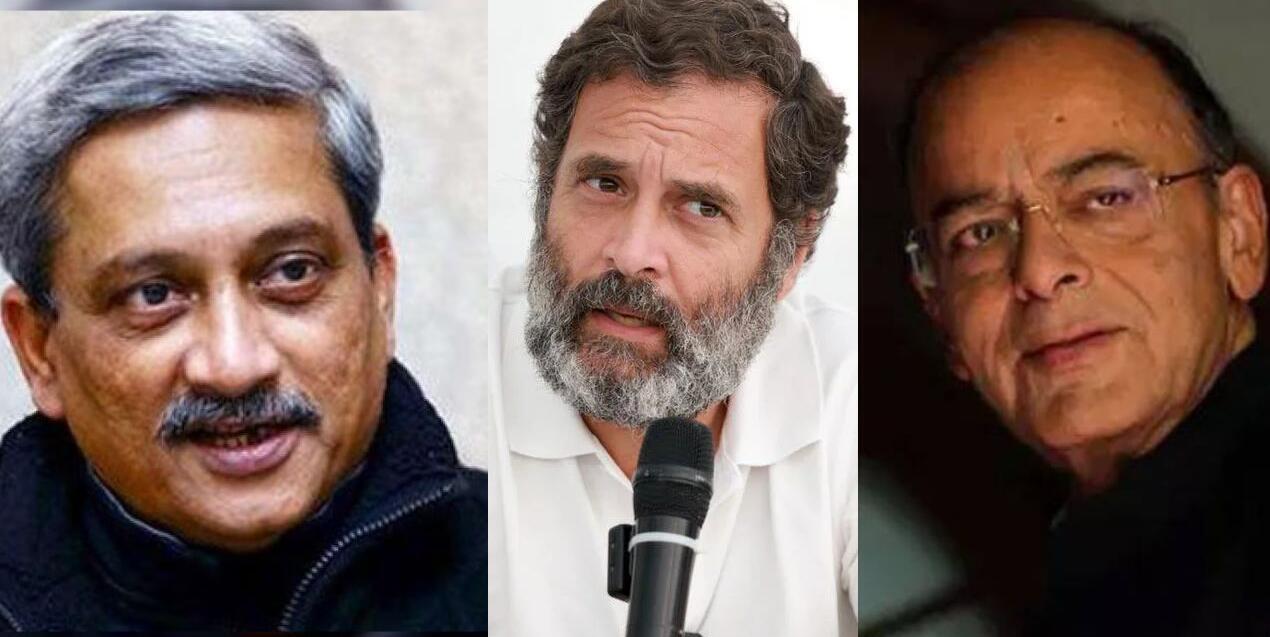
In a healthy democracy, no leader, past or present, ruling or opposition, is beyond criticism. Whether it’s Jawaharlal Nehru, Indira Gandhi, Rajiv Gandhi, Atal Bihari Vajpayee, Arun Jaitley or Manohar Parrikar, each one has wielded immense power and made decisions that deserve to be scrutinized. However, for such criticism to be meaningful, it must be based on facts that are publicly accessible, verifiable and open to debate.
This distinction, between legitimate criticism and baseless allegation, is now dangerously blurred. The Congress party, particularly its senior leaders and supporters have been over the past few days trying to equate the two forms of criticism in public sphere.
Saying “Nehru disastrously mishandled China, leading to the 1962 defeat” is a historically proven criticism that has been supported by facts. It is backed by declassified diplomatic correspondence, parliamentary records, military analysis and decades of scholarly work in the country and the world. Even many Congress-aligned historians accept that Nehru’s policies, particularly the “Forward Policy,” were misjudged and caused irreparable harm to the nation’s foreign policy.
Now contrast that with Rahul Gandhi’s recent claim: “Arun Jaitley threatened me and said if you keep opposing our regime, we’ll have to act against you.” This is a serious charge—accusing a senior constitutional functionary of intimidating a political opponent. The trouble with making such an allegation is that it is completely unverifiable, especially since Jaitley is no longer alive to confirm, deny or explain the context. Moreover, there is no public record of any such meeting or interaction. The statement by Gandhi also needs to be investigated, as being the scion of Congress, why did he take so long to reveal such an important issue.
The difference between these two statements is not trivial, as the Congress leaders and supporters are trying to project. The scrutiny of these statements is foundational to democratic accountability. One is a fact-based assessment of policy failure that has been established with due process, while the other is an unprovable personal allegation with no backing. Many Congress leaders, spokespersons and social media supporters are busy defending Rahul Gandhi by drawing false equivalences with criticisms of Nehru or Indira.
This is intellectually dishonest and politically corrosive.
Congress’s Culture of Evasion and Victimhood
The Congress has long positioned itself as the self-proclaimed custodian of democratic values and free speech in the country. Yet, when its top leader Rahul Gandhi makes wild, unverified allegations against deceased opponents, the response from party loyalists is not introspection but deflection.
Instead of holding Rahul Gandhi accountable for lowering the standard of political discourse, they rush to justify his words with arguments like:
“But the BJP also spreads lies.”
“At least Rahul Gandhi is speaking truth to power.”
“Nehru was also criticized, so why not Modi or Jaitley?”
These responses are intellectually lazy and ethically problematic for any mature democracy. Defending an unsubstantiated personal attack just because it comes from your camp is not critical thinking—it’s cult behavior and personalist worship.
Congress supporters often portray Rahul Gandhi as a victim—“He’s being targeted for being honest,” or “The media doesn’t give him a fair chance.” But when he makes serious accusations without evidence, they must be challenged, not excused. Truth is not a political slogan, it’s a standard that is expected to be met each and every time.
No Political Party Is Above Scrutiny
BJP leaders like Atal Bihari Vajpayee, Narendra Modi and Amit Shah have faced tough, fact-based scrutiny over the years.
Criticism of these leaders is legitimate because it is tied to policy outcomes, administrative choices, and decisions taken in office and not based on personal anecdotes that cannot be verified.
When a political culture begins to equate unprovable allegations with fact-based criticism, we risk descending into post-truth politics, where emotional and party loyalty replaces reason and grievance replaces evidence.
It is especially dangerous when Congress supporters abandon intellectual integrity to defend Rahul Gandhi at all costs. If the Congress party wishes to regain its credibility, it must hold its own leaders to the same standards of truth and accountability that it demands from other leaders.
Rahul Gandhi must lead by example by making claims that can be publicly substantiated, by accepting correction, and by upholding the principles of honest discourse. Or else it is politics of recklessness.
Criticism is not only healthy, it is necessary. But it must be rooted in verifiable facts, not untestable and personal assertions. If Congress leaders continue to on these defences they will end up harming their own credibility.
If Rahul Gandhi wants to be taken seriously as a national leader, he must rise above the impulse to provoke through unverifiable statements, repeatedly.