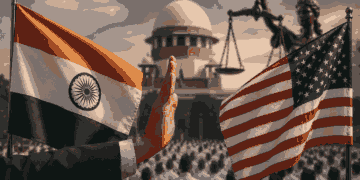












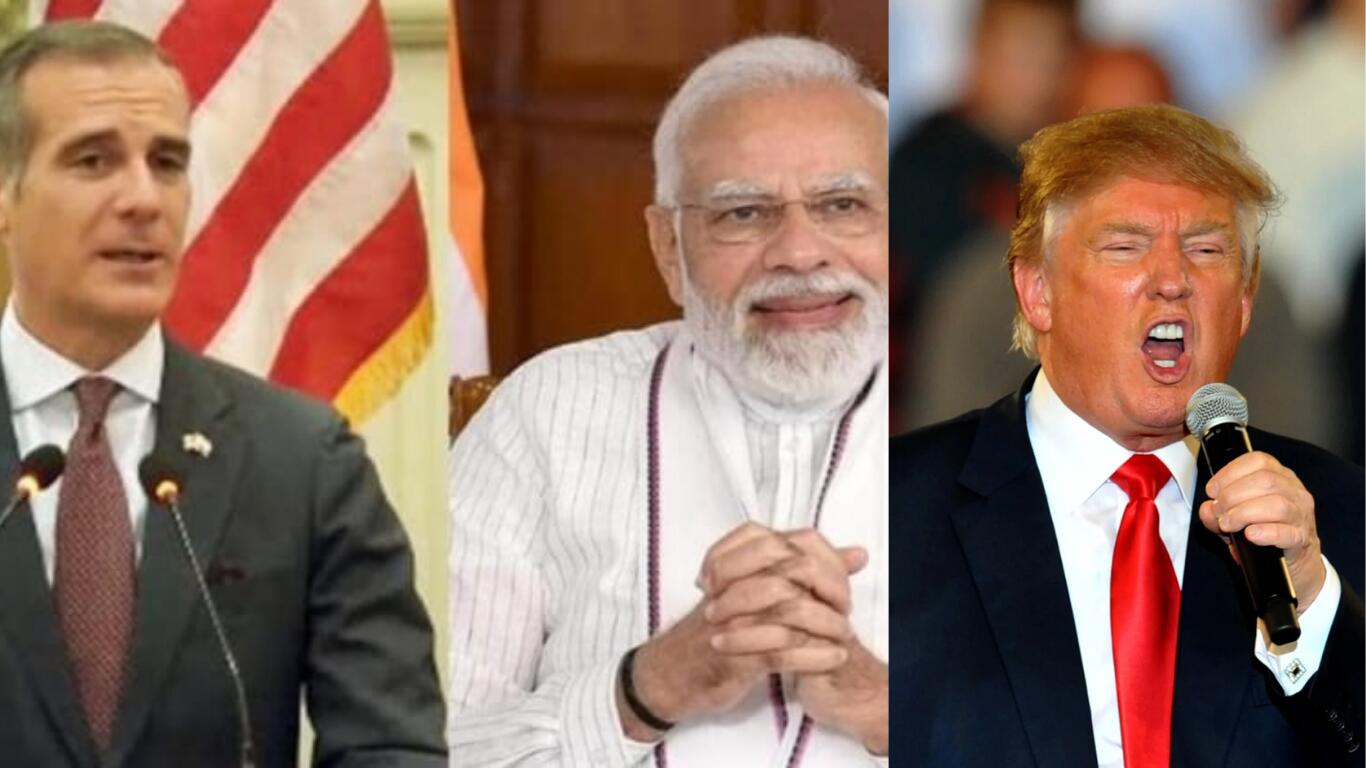
In a striking twist, a 2024 video of former US Ambassador to India Eric Garcetti openly backing India’s purchase of Russian oil has resurfaced just as President Donald Trump threatens steep tariffs on India for doing precisely that. Garcetti had clearly stated that India was encouraged to buy Russian oil to keep global prices stable. Yet now, the US is crying foul and using trade threats as leverage. This exposes Washington’s double standards where policies shift with political whims, not principles. But this is not the 1950s. It’s 2025. And the India of today, under Prime Minister Narendra Modi, doesn’t bend. It fights back.
Resurfaced Video Undermines US Tariff Justification
A video from 2024 featuring former US Ambassador to India, Eric Garcetti, has gone viral amid escalating tensions between New Delhi and Washington. In the clip, Garcetti unambiguously acknowledges that India’s purchase of Russian oil was not only known to the US but desired as part of a global strategy.
“They bought Russian oil because we wanted somebody to buy Russian oil at a price cap… That was not a violation or anything. It was actually the design of the policy,” Garcetti said at the 2024 Conference on Diversity in International Affairs.
This revelation comes as US President Donald Trump threatens to “substantially” raise tariffs on Indian exports over its continued energy dealings with Russia—despite the fact that India’s actions once aligned with US policy goals.
India Responds With Facts and Resolve
Reacting strongly to Trump’s remarks, the Indian Ministry of External Affairs (MEA) dismissed the tariff threats as “unjustified and unreasonable.” It stated that India’s energy imports from Russia are driven by practical and economic considerations, not geopolitical alignments.
“India began importing from Russia because traditional supplies were diverted to Europe after the Ukraine conflict. At that time, the United States actively encouraged such imports to maintain global energy stability,” the MEA said in a pointed statement.
India made it clear that its oil strategy was based on national interest and necessity—not opportunism. The MEA stressed, “India will take all necessary measures to safeguard its national interests and economic security.”
Double Standards Exposed: US, EU Continue Russian Trade
India also highlighted the glaring hypocrisy in the Western response. While accusing India of profiting from discounted Russian oil, both the US and European Union have continued significant trade with Russia.
In 2024 alone, the European Union imported a record 16.5 million tonnes of Russian liquefied natural gas (LNG). Simultaneously, the United States imported uranium hexafluoride for its nuclear power sector, palladium for electric vehicles, and large quantities of fertilizers and chemicals.
The MEA noted that this trade was not out of compulsion, as was the case with India, but driven by economic convenience—making the criticism levelled at New Delhi blatantly hypocritical.
India’s Energy Realignment: Driven by Global Market Realities
Before the Ukraine war, Russia supplied less than 1% of India’s oil. Today, it accounts for over 35%, making it India’s top crude supplier. This shift wasn’t political—it was practical. As Europe scrambled for energy, it began absorbing more oil from the Middle East, which forced India to seek alternative sources. Russia, offering discounted rates, emerged as a logical choice.
Despite US criticism, this strategy has helped keep inflation under control in India and ensured energy security for its growing population and economy—currently the fastest-growing major economy in the world.
India Will Not Be Bullied – A New Era of Assertiveness
India’s response to US pressure marks a turning point in its foreign policy posture. The era of quiet compliance is over. Today’s India, under the leadership of Prime Minister Narendra Modi, stands tall on the global stage ready to call out hypocrisy and defend its sovereignty.
Trump’s tariff threats may be designed to serve domestic narratives, but they ignore the broader truth: India is no longer a passive recipient of Western diktats. It is a confident, independent player that chooses its policies based on its people’s needs not foreign pressure. The world must understand: this is not the India of 1950. It is 2025. And India will not kneel.