




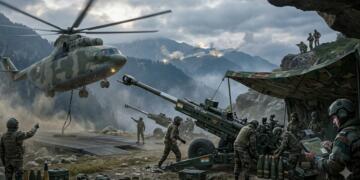
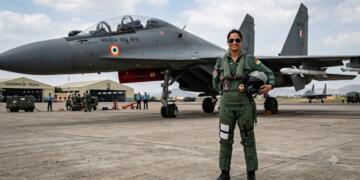




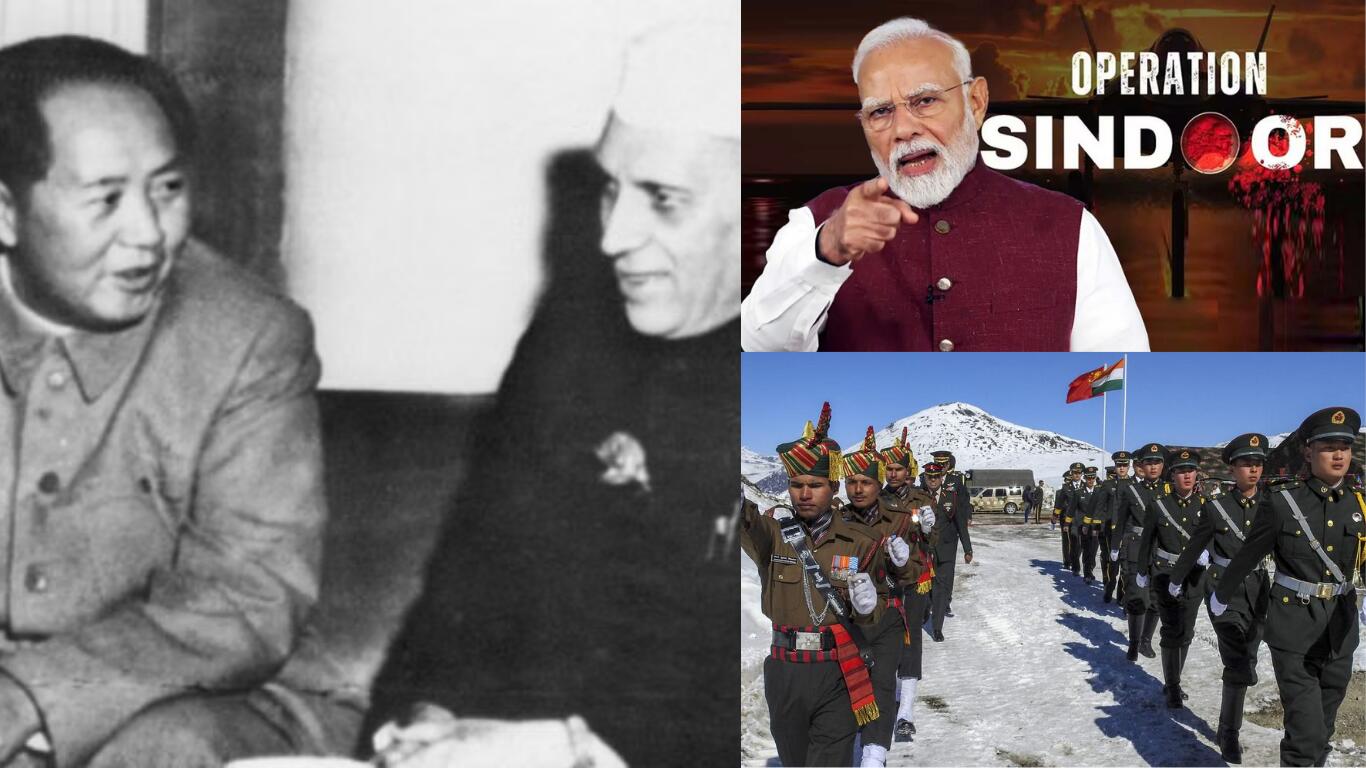
Prime Minister Narendra Modi on Friday during his Independence Day address, spoke with pride of Operation Sindoor a shining symbol of India’s self-reliant military power and its ability to strike decisively at enemies. Modi’s words reflected confidence, strength, and national pride.
But compare this with Jawaharlal Nehru’s infamous words after the humiliating 1962 defeat to China: “Losing to China had a good effect, people were sacrificing.” For Modi, victory is pride. For Nehru, defeat was an excuse.
Where Modi has stood firm against China at Galwan, strengthened India’s armed forces, and responded in the language of the enemy, Nehru repeatedly misread China’s intentions, weakened India’s defense preparedness, and ceded thousands of square kilometers of Indian territory. While Modi pushes for indigenous fighter jet engines and advanced defense systems, Nehru presided over India’s worst military disaster in history. The contrast is stark, and the lesson is clear: strong leadership secures a strong nation.
Nehru’s Strategic Miscalculations and the 1962 Debacle
The 1962 Sino-Indian War was not a sudden accident. It was the result of years of strategic blunders committed by Nehru and his Defence Minister, V.K. Krishna Menon.
Nehru was convinced that China would never go to war with India because, in his words, “any India-China war would become a world war.” This naive belief led him to adopt a reckless “forward policy,” pushing ill-prepared Indian troops into vulnerable positions without adequate resources, equipment, or strategy.
While China had been steadily building up military infrastructure across the Himalayas, Indian defense spending in the 1950s remained focused on Pakistan, ignoring the much larger Chinese threat. Nehru ignored repeated warnings from his own generals and intelligence agencies about Chinese aggression.
The consequences were disastrous. India faced an overwhelming Chinese attack in October 1962, where 10,000–20,000 Indian troops stood against nearly 80,000 Chinese soldiers. In just a month-long conflict, over 3,250 Indian soldiers were killed, and India lost 43,000 square kilometers of land in Aksai Chin, territory that remains under Chinese occupation to this day.
Instead of accountability, Nehru’s response was to call the humiliating defeat a “lesson” for the people. This dismissive attitude remains one of the darkest chapters of Indian history.
Ignoring Warnings: Nehru’s Deaf Ear to the Army
The greatest tragedy of 1962 was that India had been warned well in advance of the impending Chinese attack.
On March 17, 1960, Lt. Gen. S.P.P. Thorat, Commander of the Eastern Command, conducted a detailed military exercise called Exercise Lal Qila in Lucknow. His year-long study of the Chinese military build-up across the McMahon Line accurately predicted the timing, scale, and nature of a possible Chinese attack.
Thorat’s report was blunt: China refused to recognize the McMahon Line, was making deliberate incursions into Ladakh and the North-East Frontier Agency (NEFA, now Arunachal Pradesh), and would not hesitate to launch a full-scale war. He recommended urgent preparation, mobilization of forces, and even the offensive use of the Indian Air Force to counter Chinese aggression.
But Nehru and Krishna Menon chose to ignore Thorat’s warning. They dismissed the assessment as “alarmist” and continued to believe that diplomacy alone would secure India’s borders. When the war broke out, Indian soldiers were sent into the freezing Himalayas without even proper winter clothing.
Military historian Kunal Varma later observed that had Nehru heeded Thorat’s advice, India would have been better prepared and perhaps even victorious. Instead, the arrogance of civilian leadership silenced the wisdom of military professionals—and the nation paid the price.
Betrayal of Assam and the North-East
The people of Assam and the North-East Frontier Agency (now Arunachal Pradesh) remember 1962 as a betrayal. When Chinese troops advanced into NEFA, Nehru’s infamous radio broadcast declared: “My heart goes out to the people of Assam.” To many, it sounded like a virtual abandonment of the region to its fate.
At that time, Arunachal was still administered as a part of Assam, and Nehru’s words left a deep scar on the psyche of the people. While the Indian Army fought valiantly against impossible odds, the political leadership in Delhi was preparing to concede ground rather than defend it.
This memory continues to haunt Assam and Arunachal to this day, a reminder of how political cowardice in Delhi endangered the nation’s unity and security.
Nehru’s China Delusion: Diplomacy Over Defense
Declassified documents later revealed that China never reciprocated Nehru’s so-called “Hindi-Chini Bhai Bhai” friendship. In fact, Beijing referred to him as a “lackey of the British and Americans” and mocked India in international forums.
Yet, Nehru persisted with his misplaced trust in diplomacy, sidelining the armed forces and ignoring strategic realities. He even sought to discredit professional generals like Gen. K.S. Thimayya, who had repeatedly warned of Chinese aggression. By placing blind faith in Krishna Menon and dismissing the military’s concerns, Nehru undermined India’s ability to defend itself.
Air Marshal Denzil Keelor (Retd.) later remarked that India lost the 1962 war because of Nehru’s failure to listen to the armed forces. Soldiers were not only under-equipped but also demoralized by the lack of leadership from the top.
This was not just a military defeat—it was a failure of vision, leadership, and accountability.
Modi’s Strength vs Nehru’s Weakness
If Nehru’s era was marked by blunders, indecision, and humiliating defeat, Modi’s leadership reflects strength, preparation, and pride.
Where Nehru ignored military advice and ceded territory, Modi has rebuilt India’s military strength—from Galwan’s strong reply to China, to Operation Sindoor showcasing India’s self-reliance in defense, to indigenous fighter jet engine projects and modern defense systems.
For Nehru, defeat was acceptable. For Modi, only victory is acceptable. For Nehru, diplomacy meant surrender. For Modi, diplomacy is backed by the strength of the armed forces.
History teaches us one lesson: a weak leader’s mistakes can cost the nation its pride and territory. A strong leader’s resolve can safeguard both. India must never forget 1962—and must never allow another Nehru to weaken its defenses again.