



















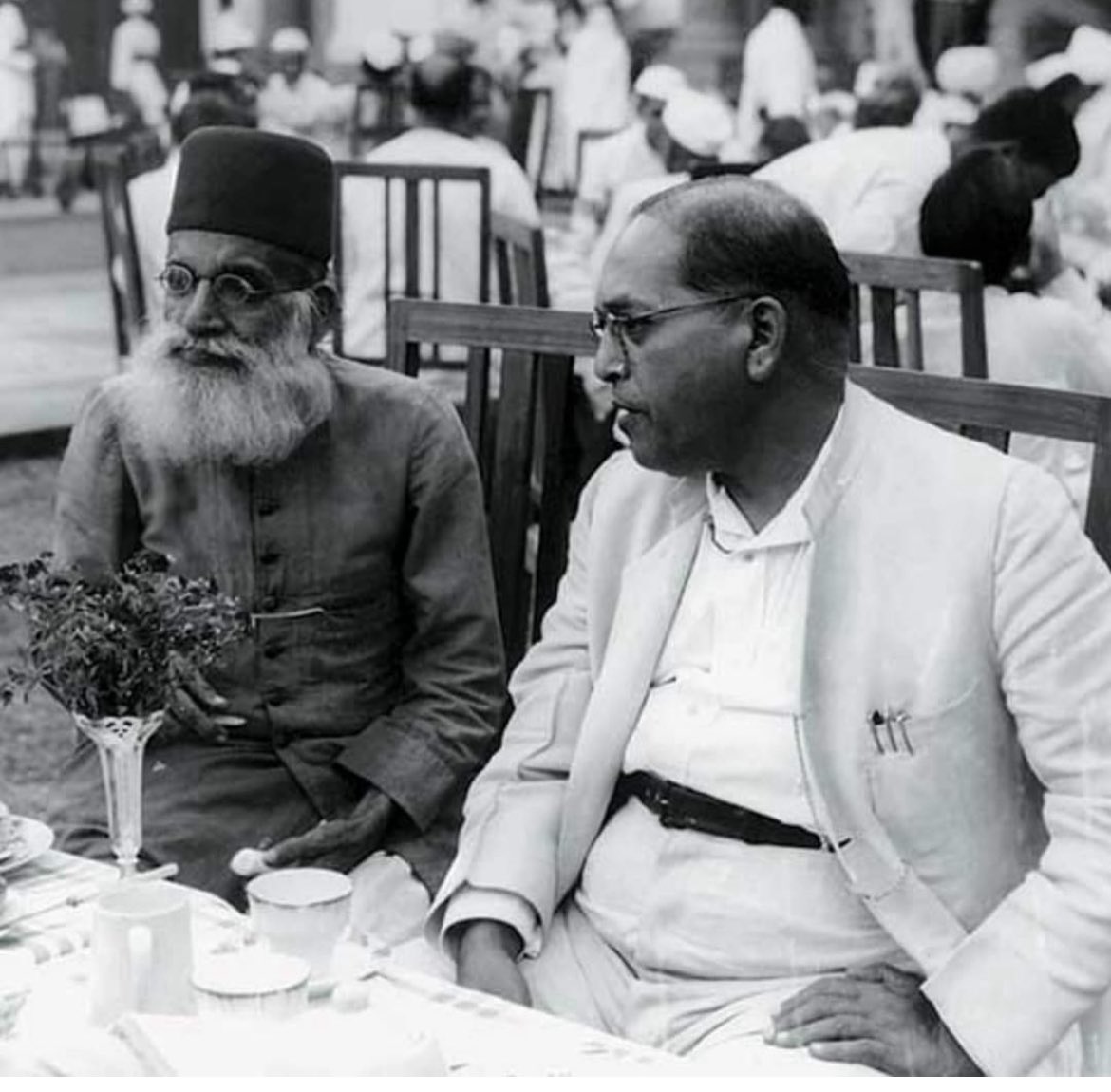
When the dust of partition settled in 1947, millions of Muslims crossed the new borders into Pakistan, while many Hindus and Sikhs fled the other way. Among the most surprising figures who stayed behind in India was Maulana Hasrat Mohani (1875–1951)- a poet, Islamic scholar, socialist, and one of the earliest advocates of the Two-Nation Theory.
His decision not to migrate puzzled contemporaries and continues to intrigue historians. Mohani was no secularist at heart; his political philosophy was steeped in Islamism and Muslim separatism. Yet, despite his lifelong commitment to Muslim identity politics, he chose to remain in India. The reason, scholars argue, lies not in any loyalty to a pluralist India, but in his disappointment with what Pakistan had become—a state led by elites, far removed from his radical Islamic and socialist ideals.
Demand of Poorna Swaraj
Hasrat Mohani’s political journey began as a fierce opponent of British colonialism. In 1921, long before the Congress formally adopted the slogan of complete independence, he demanded Poorna Swaraj i.e. full self-rule for Indians. His uncompromising stance placed him among the most radical voices of the time.
Simultaneously, Mohani was a founding member of the Communist Party of India, advocating Marxist-inspired social and economic reforms. He rejected half-measures and incremental reforms, calling instead for revolutionary upheaval that would transform both India’s political and social order.
Maulana Hasrat Mohani won a seat in the 1946 Provincial Assembly elections from the United Provinces (now Uttar Pradesh) on a Muslim League ticket. He was subsequently elected to the Constituent Assembly of India representing the United Provinces as a Muslim League member.
As much as he was a politician, Mohani was also a poet. His delicate ghazals, particularly “Chupke Chupke Raat Din”, are still cherished today. Yet behind the romance and mysticism of his poetry burned the spirit of rebellion. He coined the slogan “Inquilab Zindabad” i.e. “Long Live the Revolution”, which became a rallying cry for Indian freedom fighters.
Advocacy for Caliphate, Moplah Rebellion, and Two Nation Theory
Deeply committed to pan-Islamic causes, Mohani was a vocal supporter of the Ottoman Caliphate and urged Indian Muslims to rally behind what he saw as the ultimate institution of Islamic unity.
His political stance turned more controversial with his justification of the Moplah Rebellion of 1921 in Kerala, where violent uprisings led to communal killings and forced conversions. Mohani defended the Moplahs, arguing that such conversions were voluntary under Islamic law. This position underscored his uncompromising Islamist outlook, making him one of the most radical Muslim leaders of his generation.
Though often compared to Allama Muhammad Iqbal, the poet-philosopher regarded as the intellectual father of Pakistan, Hasrat Mohani was far more radical. While Iqbal philosophized about Muslim identity and cultural revival, Mohani translated those ideas into blunt political demands.
He was one of the earliest proponents of the Two-Nation Theory, insisting that Muslims and Hindus were irreconcilable as nations and that Muslims needed a separate political space governed by Islamic principles.
Why He Refused to Go to Pakistan
Yet, when partition became a reality, Mohani chose not to migrate. At first glance, this decision appears contradictory: why would an ideologue of Pakistan stay in India?
The answer lies in his disillusionment. Mohani’s vision of Pakistan was radically different from the state that emerged in 1947. He imagined a Pakistan that would combine Islamic governance with socialist ideals, an egalitarian order for Muslims, free from both Hindu domination and elite control.
Instead, the Pakistan that came into being was led by landlords, bureaucrats, and politicians whom Mohani considered out of touch with the masses. Far from being the revolutionary Islamic state he had envisioned, Pakistan quickly embraced conservative nationalism, leaving no room for Mohani’s socialist-Islamist synthesis.
For him, staying in India was not an endorsement of secular democracy but a continuation of his struggle. He believed Muslims who remained in India still needed leadership to safeguard their rights in a Hindu-majority country, and he took it upon himself to be their voice.
Leftist ‘Sanitation’ of his Legacy
In India, Hasrat Mohani is celebrated selectively. His slogan “Inquilab Zindabad” and his role in the independence movement are remembered, but his advocacy of Pakistan and his Islamist leanings are often downplayed. For nationalist historians outside the Nehruvian-Marxist fold, he remains a figure of contradictions- both a freedom fighter and a separatist.
In Pakistan, meanwhile, he is acknowledged as an early proponent of Muslim nationalism, but his refusal to migrate casts a long shadow. For many Pakistanis, he is a man with “divided loyalties”, a pioneer of the idea of Pakistan who ultimately rejected the country he helped imagine. His leftist politics, too, clash with the right-leaning nationalism that came to dominate Pakistan’s identity.
Maulana Hasrat Mohani died in Lucknow in 1951, leaving behind a legacy as complex as the subcontinent’s history itself. He was at once a devout Muslim and a committed socialist, a poet of tender ghazals and a firebrand revolutionary, a supporter of Pakistan who chose to live in India.
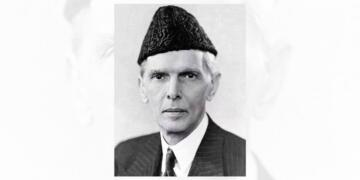
If Jinnah is remembered as the father of Pakistan, Mohani stands as the radical revolutionary who foresaw both its promise and its flaws. His story is a reminder that history does not move in straight lines, its most fascinating figures often reside in the gray zones, where conviction meets contradiction.