


















Nearly three months after India carried out precision airstrikes on nine targets across Pakistan under Operation Sindoor—launched in retaliation to the April 22 Pahalgam terror attack—the terror group Jaish-e-Mohammed (JeM), which suffered a severe blow with the destruction of its headquarters in Bahawalpur, has initiated a covert fundraising campaign to rebuild its recruitment and training camp.
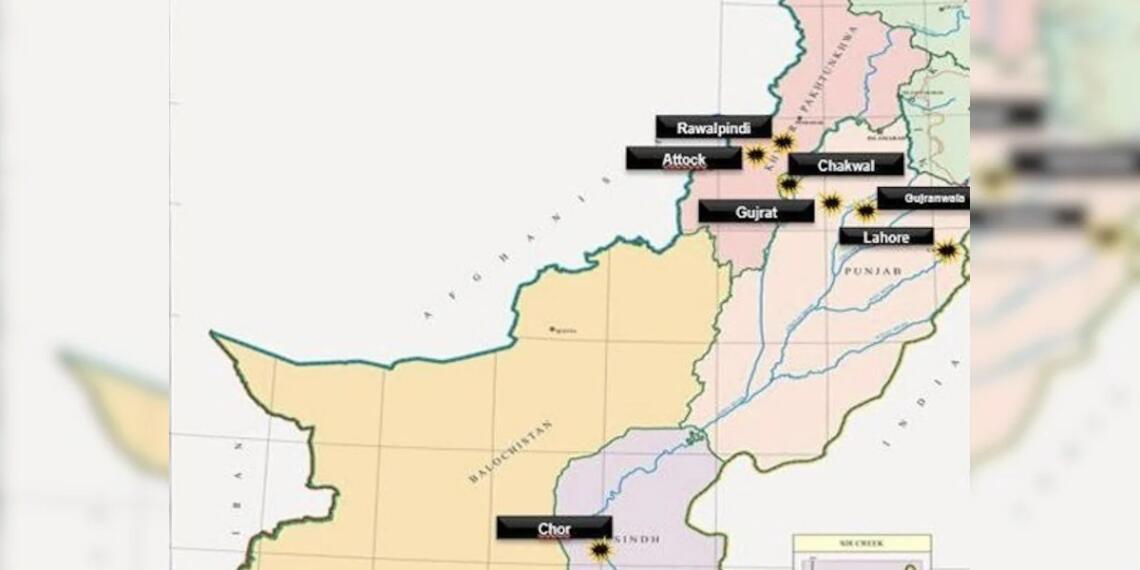
India carried out focused and measured strikes, targeting nine terror camps across Pakistan at Kotli, Bahawalpur, and Muzaffarabad in the early hours of May 7 following the terror attack in Pahalgam, Jammu and Kashmir, in which 26 people – including one Nepali national – were killed.
The group, Jaish-e-Mohammed led by UN-designated terrorist Maulana Masood Azhar, has reportedly launched a covert fundraising drive to rebuild its central facility and resume recruitment and training operations.
A message circulated on social media in Urdu calls for discreet donations to aid in the reconstruction of Jamia Masjid Subhan Allah—a sprawling complex in Bahawalpur that formerly served as JeM’s operational command and training center.
Bahawalpur, located around 100 km inside Pakistan’s southern Punjab province, has long been the ideological and operational centre of the terror group.
The terror group has positioned the revival campaign as a religious cause, urging followers to “transform parts of the Earth into paradise.”
The appeal marks a renewed effort to reestablish the Bahawalpur base, located roughly 100 km inside Pakistan’s southern Punjab province, which has long served as the ideological and logistical heart of JeM’s operations.
Operation Sindoor, carried out in the early hours of May 6–7, was a swift retaliatory action by India following the Pahalgam terror attack on April 22.
In a coordinated strike, India launched 24 precision-guided missiles at nine targets spread across Pakistan and Pakistan-occupied Kashmir (PoK).
According to Indian intelligence sources, over 70 terrorists were killed, and more than 60 injured in the strikes. Among the targeted sites, the JeM headquarters in Bahawalpur faced the heaviest damage, a fact corroborated by Maxar satellite imagery analyzed by NDTV.
Masood Azhar, in a statement attributed to him, claimed that 10 members of his family and four aides were killed during the operation.
These included his elder sister and her husband, a nephew and his wife, a niece, and five children from their extended family. Azhar referred to their deaths as a “blessing,” calling them “guests of Allah.”
He also mentioned the deaths of his brother Huzaifah and Huzaifah’s mother, along with two unnamed aides.
The United States earlier designated The Resistance Front (TRF), an offshoot of the banned Lashkar-e-Tayyiba, as a Foreign Terrorist Organization (FTO) and a Specially Designated Global Terrorist (SDGT).
The TRF — the group responsible for the April 22 terror attack in Pahalgam that killed 26 people.
The US department of state, led by secretary Marco Rubio, said in a statement that TRF is a Lashkar-e-Taiba proxy and front, and that it had claimed responsibility for the Pahalgam attack.
The statement said the group has also carried out multiple assaults on Indian security forces, including as recently as 2024.
In the aftermath of the operation, India has escalated both diplomatic and internal security measures to tighten the noose around terrorist networks operating across the border:
- Heightened Diplomatic Pressure: India has reiterated its call for Pakistan to hand over Masood Azhar, who remains at large despite being listed as a global terrorist by the United Nations Security Council. New Delhi continues to work with international allies to increase Pakistan’s accountability on harboring terror groups.
- Strengthened Surveillance and Intelligence Sharing: The Indian government has ramped up surveillance along the Line of Control and intensified cooperation with foreign intelligence agencies to monitor the movements and communications of terror operatives in Pakistan and PoK.
- Pre-emptive Security Operations: Security forces have been authorized to conduct pre-emptive operations across Jammu and Kashmir to neutralize potential threats before they manifest. These include raids on suspected sleeper cells and the use of drones and satellite imagery for constant reconnaissance.
- Freezing Terror Financing Channels: Indian agencies, in coordination with the Financial Action Task Force (FATF), have redoubled efforts to trace and block funding routes being used by groups like JeM. This includes close scrutiny of cross-border hawala networks and NGO fronts.
Despite Pakistan’s continued denial of Azhar’s presence within its territory, intelligence inputs suggest he remains in hiding under state protection. The destruction of his Bahawalpur stronghold, however, marks a critical setback for the JeM’s organizational capabilities.
With reconstruction efforts now reportedly underway, Indian security forces remain on high alert for any attempts by the group to reassert itself.