
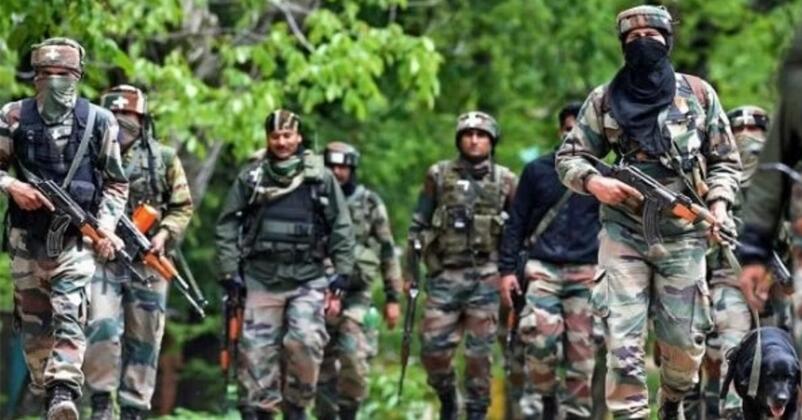
In a significant counter-terrorism operation, the Indian Army successfully foiled an infiltration bid along the Line of Control (LoC) in Jammu and Kashmir’s Uri sector on Wednesday, August 13. The operation took place in Churunda village of Uri district, following a cross-border attack in the area. One soldier was killed in the fierce gunfight with terrorists
Initial reports had pointed towards an attempted strike by Pakistan’s notorious Border Action Team (BAT). However, the Army later clarified that it was not a BAT operation, and further details were being verified. Following the incident, the Army launched a large-scale counter-infiltration and search operation to track down the infiltrators believed to be hiding under the cover of darkness.
The attempted intrusion comes against the backdrop of heightened tensions between India and Pakistan, especially after the Pahalgam terror attack in April this year, which killed 26 people. In response, India had launched Operation Sindoor, targeting terrorist infrastructure inside Pakistan and eliminating nearly 100 terrorists.
BAT: Pakistan’s Covert Strike Unit
Pakistan’s Border Action Teams are elite hybrid units designed for cross-border sabotage along the LoC. They combine personnel from Pakistan’s Special Services Group (SSG) with operatives from terrorist outfits such as Lashkar-e-Taiba, Hizb-ul-Mujahideen, and Jaish-e-Mohammad.
Trained in guerrilla warfare, reconnaissance, and brutal psychological warfare tactics — including past incidents of beheadings — BAT units are reportedly groomed by both the Pakistani Army and Air Force. Their training involves eight months with the Army, followed by four weeks of Air Force instruction. Typically, a BAT team comprises six to seven Pakistani soldiers along with local guides or volunteers.
These units have been involved in several high-profile attacks, including the Kupwara strike on July 27, 2024, which injured five Indian soldiers, one of whom succumbed to injuries. Past BAT atrocities include the beheading of Indian soldiers in 2017 and 2020, as well as foiled intrusion attempts in 2018 and 2019.
Uri Operation Linked to Wider Counter-Terror Campaign
The infiltration attempt in Uri falls within the Area of Responsibility (AOR) of 16 Sikh LI (09 Bihar Advance Party) under Police Station Uri. The encounter resulted in the martyrdom of one Indian soldier. Following the incident, security forces launched a sweeping search operation in the region.
This latest engagement coincides with Operation Akhal, launched on August 1 in South Kashmir after intelligence inputs suggested the presence of terrorists in the Akhal forest area. The operation, which has been ongoing for over ten days, has already resulted in the elimination of more than five terrorists.
Operation Akhal follows Operation Mahadev, where security forces neutralised Lashkar-e-Taiba terrorists involved in a massacre near Srinagar’s Dachigam area. The very next day, Operation Shiv Shakti was carried out, killing two more terrorists.
Pakistan’s Proxy War Meets India’s Resolve
Pakistan’s repeated attempts to infiltrate terrorists into Indian territory, whether through BAT units or other covert operations, reveal a sustained strategy of proxy warfare. However, the Uri operation and ongoing counter-terror missions like Operation Akhal, Operation Mahadev, and Operation Shiv Shakti prove that the Indian Army remains steadfast in defending the nation.
Every infiltration foiled and every terrorist eliminated sends a clear message: India will not tolerate cross-border aggression, and its armed forces are fully prepared to neutralise any threat to national security no matter the cost. The sacrifices of soldiers are a solemn reminder that the price of peace and security is paid daily by those standing guard on the nation’s frontlines.