















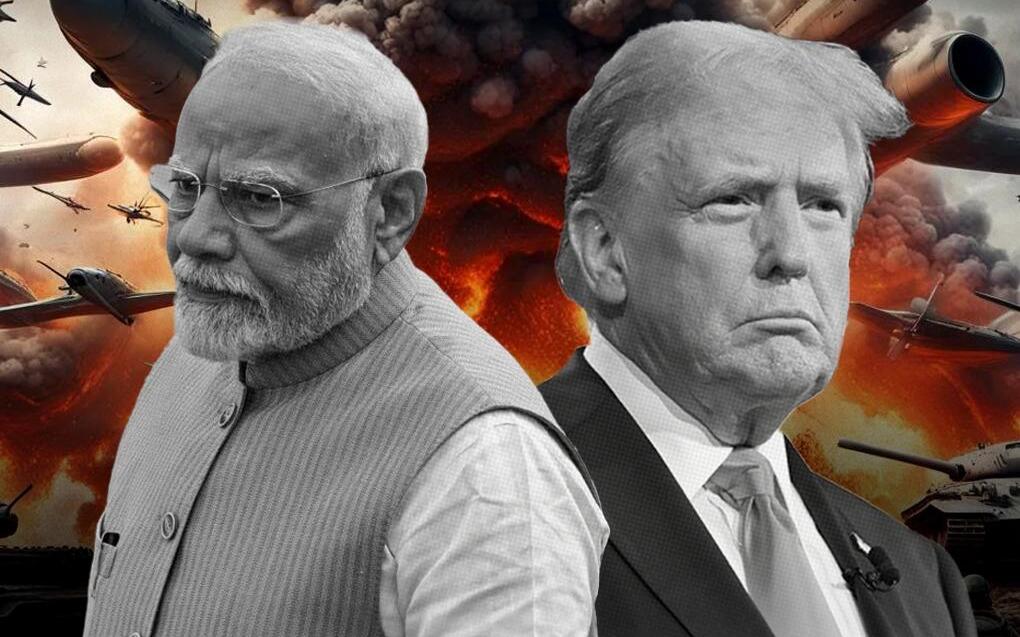
In what can only be described as a dramatic escalation in an already tense economic standoff, US President Donald Trump has now ruled out any possibility of further trade negotiations with India, at least until Washington’s dispute over tariffs is resolved. His remarks, delivered from the Oval Office on Thursday (August 7), bring months of painstaking talks to a grinding halt and marks the lowest point in India-US trade relations in recent years.
Trump’s decision comes on the heels of a punishing economic blow: an executive order slapping an additional 25% tariff on Indian goods, allegedly as retribution for New Delhi’s continued purchase of Russian oil. Combined with an earlier 25% tariff already in place, India now faces a staggering 50% levy on its exports to the US, placing it among the most heavily taxed US trading partners in Asia, alongside Brazil.
For all the tough talk about “friendship” between Washington and New Delhi, this move leaves little doubt: Trump is willing to use tariffs as a political hammer, even against allies, and is unapologetic about the collateral damage.
Trump’s Message: No Talks Until You Comply
When asked if he expected negotiations to resume after this tariff hike, Trump didn’t bother with diplomatic ambiguity. He shrugged and said, flatly, “No, not until we get it resolved.” The “resolution” he seeks? India halting its purchase of Russian oil. Trump’s argument, delivered with his trademark bluntness, is that India is profiting from Russian crude while ignoring the human cost of the war in Ukraine.
India, for its part, has been unmoved by the criticism. The Ministry of External Affairs reiterated that energy imports are based on market needs and the “overall objective of ensuring the energy security of 1.4 billion people.” Prime Minister Narendra Modi was even more defiant, declaring that India would “never compromise” on the interests of farmers, fishermen, and dairy producers even if it meant paying a “heavy price” for that stance.
From Warm Handshakes to Cold Tariffs
The breakdown is all the more striking given where the relationship stood just months ago. In February, during Modi’s White House visit, both leaders openly celebrated the prospect of a “very big” trade deal. Talks progressed steadily through the spring, with Indian Commerce Minister Piyush Goyal and US officials exchanging visits and hammering out a framework for negotiations.
By June, Trump was telling reporters that a deal with India was “close.” But the optimism didn’t last. In early July, Goyal publicly stressed that India would not rush into a trade deal to meet “deadlines,” putting national interest “supreme.” Behind the scenes, agriculture and dairy trade emerged as major sticking points.
By late July, Trump had switched from wooing to warning. He announced the first 25% tariff hike and signaled that the Russia oil purchases would be his red line.
The irony here is glaring. Washington and New Delhi share common concerns over China’s rise, cybersecurity threats, and global energy stability. But instead of leveraging that alignment, Trump has chosen a tariff-first, talk-later approach, one that may play well to his political base but leaves strategic trust in tatters.
For now, the US and India find themselves at an impasse: no trade deal, some of the world’s highest mutual tariffs, and a widening gulf of mistrust. If this is Trump’s version of the “art of the deal,” it’s one that comes with a steep price tag and no guarantee of a payoff.