














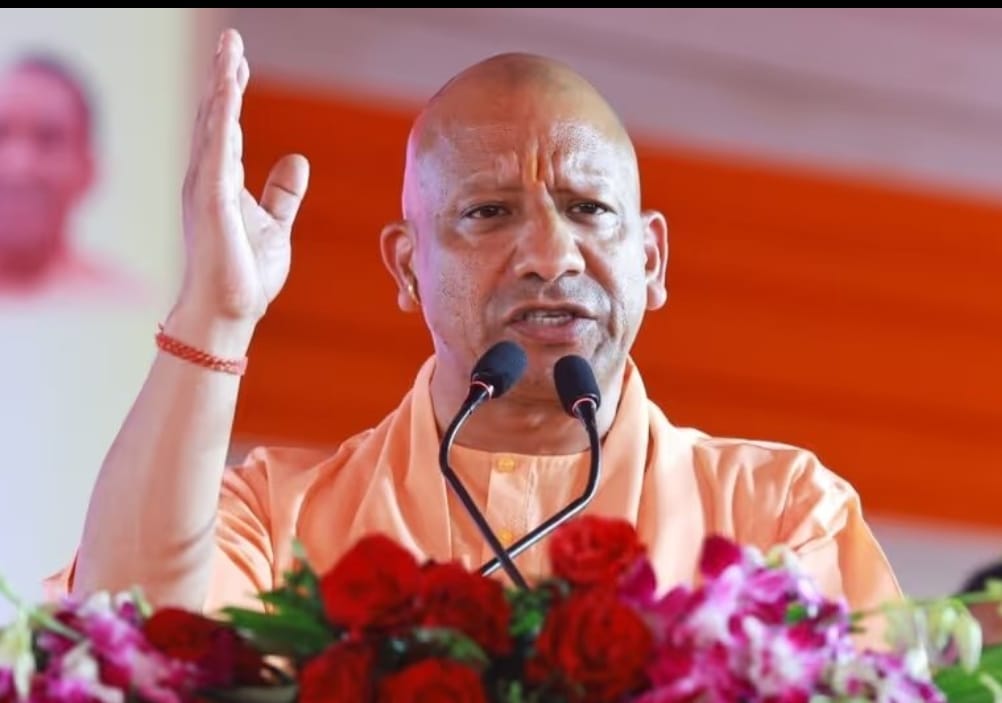
Uttar Pradesh Chief Minister Yogi Adityanath has marked his name into the political history of India’s most populous state by becoming its longest-serving Chief Minister. As of today, he has completed eight years and 132 days in office, surpassing the record held by Govind Ballabh Pant, the state’s first CM and a towering figure in post-Independence Indian politics.
Yogi Adityanath, who assumed office for the first time on March 19, 2017, after the Bharatiya Janata Party’s landslide victory, has since emerged as one of the most dominant political leaders in Uttar Pradesh’s contemporary history. In 2022, he created a unique electoral precedent by becoming the first Chief Minister in the state’s history to return to power after completing a full five-year term, further consolidating his political legacy.
A State of Many Chief Ministers
Since attaining statehood in 1950, Uttar Pradesh has seen 21 Chief Ministers, representing various political parties and ideologies. The journey began with Govind Ballabh Pant, who governed from January 1950 to December 1954 and laid the administrative foundations. He was succeeded by Sampurnanand, who served nearly six years, holding the longest uninterrupted term before Yogi’s.
Through the decades, Uttar Pradesh’s chief ministership has passed through the hands of leaders like Sucheta Kripalani, India’s first woman CM; Hemwati Nandan Bahuguna, known for his populist image; Mulayam Singh Yadav and Akhilesh Yadav of the Samajwadi Party; and Mayawati, who held the office four times and remains the only Dalit woman to become a CM in Indian history.
Yet, among all, only three leaders before Yogi; Mayawati, Akhilesh Yadav, and Sampurnanand also completed full five-year terms. Yogi Adityanath not only joined that elite group in 2022 but now stands at the top in terms of total time in office.
From Gorakhpur to State Capital: The Rise of Yogi
Born as Ajay Mohan Singh Bisht on June 5, 1972, in Uttarakhand, Yogi Adityanath took a unique path to political prominence. He became one of India’s youngest parliamentarians in 1998 at the age of 26, representing Gorakhpur in the Lok Sabha. As a five-time MP, he gained a reputation for being a fierce advocate of Hindutva and law-and-order policies.
In 2014, he succeeded his spiritual mentor Mahant Avaidyanath as the Mahant of the Gorakhnath Math, a religious seat with vast influence in eastern UP. That dual role of a monk and a politician has shaped his image as a leader who blends spiritual authority with administrative power.
Governance Anchored in Law and Identity
Over the past eight years, Yogi Adityanath has built his political brand on a platform combining infrastructure development, religious tourism, industrial investment, and law enforcement. Programs like One District One Product (ODOP) aimed to boost local industries, while initiatives under Mission Shakti focused on women’s safety and empowerment. His governance model emphasized a firm crackdown on crime syndicates, high-profile arrests, and encounters that gained national attention garnering both praise and criticism.
Most recently, the CM inaugurated an 11-storey PAC barrack in Gorakhpur and revealed that over 2.16 lakh police personnel had been recruited transparently under his administration, a move that reflects his sustained emphasis on security.
A Legacy in the Making
Yogi Adityanath’s extended tenure places him in a distinct position not only within the BJP but also in the broader canvas of Uttar Pradesh’s post-Independence political narrative. While earlier leaders like Pant and Sampurnanand laid the groundwork for governance, and figures like Mayawati and Mulayam Singh redefined caste and identity politics, Yogi represents a new era of ideologically assertive, governance-driven leadership.
As Uttar Pradesh continues to evolve economically and politically under his stewardship, Yogi’s role is likely to remain central. With multiple development projects underway and political stability backing him, his legacy as UP’s longest serving and potentially most transformative CM is still unfolding.