
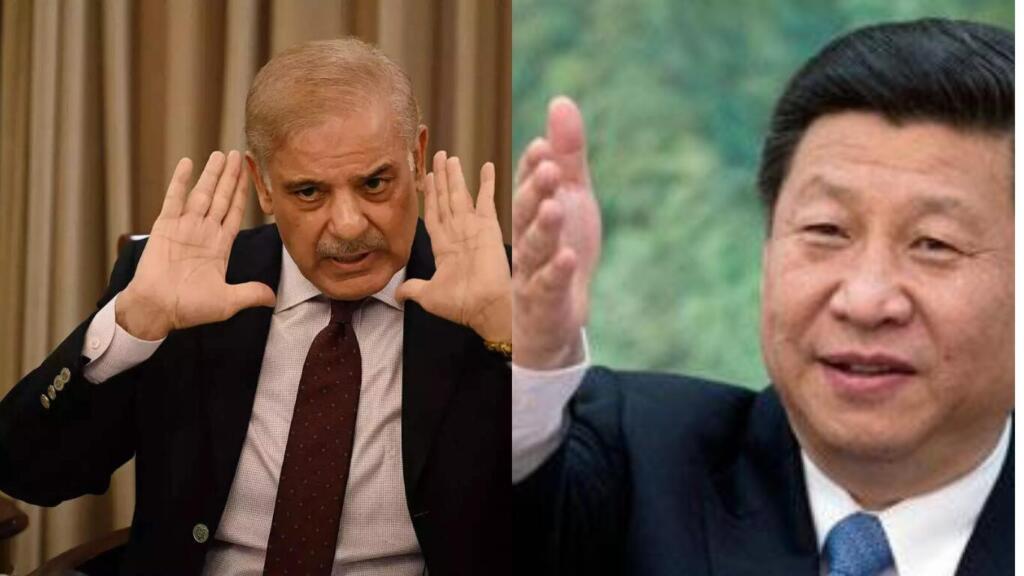
It took the deaths of 20 Chinese nationals in multiple terrorist attacks since 2021 for Pakistan Prime Minister Shehbaz Sharif to finally break his silence. Now, in a dramatic gesture of sudden concern, the Pakistani PM is “reviewing” security arrangements for Chinese workers involved in key infrastructure projects like the China-Pakistan Economic Corridor (CPEC). One would assume that the death toll from 14 attacks would have prompted urgency long ago especially given the high-profile nature of CPEC, supposedly the crown jewel of China’s Belt and Road Initiative. But instead, Islamabad seemed busy feeding the very monsters that now bite the hand of its so-called “iron brother.”
Despite China’s continued financial indulgence and diplomatic cover for Pakistan on global platforms, the latter has done precious little to ensure the safety of Chinese citizens working on multibillion-dollar projects. The same Pakistan that harbours terror outfits now puts on a fresh mask of security assurance but only after years of bloody negligence. As Sharif wakes from his strategic slumber, China must be wondering: was this the cost of blind friendship?
Shehbaz Sharif’s Sudden Concern – Too Little, Too Late?
After years of near-silence and ineffective measures, Pakistani PM Shehbaz Sharif finally chaired a high-level meeting this week to discuss the security of Chinese citizens in Pakistan. These workers, many of whom are engaged in CPEC and other infrastructure initiatives, have increasingly become the targets of suicide bombings and militant violence.
Sharif described China as a “friendly country” and claimed that the protection of Chinese workers is now his government’s top priority. But the question lingers: if China is such a treasured ally, why did Islamabad take four years and 20 deaths to acknowledge the crisis?
Pakistan has announced that special security escorts will now be provided for Chinese nationals. However, many observers rightly see this as a face-saving move rather than a serious policy shift. The same rhetoric has been offered in the past with no tangible results. The reality is that terror groups like the Baloch Liberation Army (BLA) and Pakistani Taliban, long allowed to flourish in the country’s underbelly, continue to operate with shocking impunity.
CPEC: A Dream Built on Fragile Ground
Launched in April 2015 with a value of $46 billion, the CPEC was envisioned as a transformative economic corridor connecting Gwadar Port to China’s Xinjiang. But the dream has slowly turned into a logistical and security nightmare. Thousands of Chinese workers are spread across volatile provinces like Balochistan, Sindh, and Khyber Pakhtunkhwa, where they are easy targets for militant groups who view Chinese presence as foreign occupation.
Since 2021 alone, Pakistan’s National Counter Terrorism Authority (NACTA) reports 14 separate terror attacks targeting Chinese nationals, resulting in at least 20 deaths and 34 injuries. These figures reveal a hard truth: CPEC, the supposed game-changer, is increasingly becoming a death trap.
Despite heavy security commitments in words, in practice, Pakistan has failed to provide even basic protection to Chinese engineers, project staff, and workers on ground.
China’s Patience Wearing Thin
For years, China has tolerated Pakistan’s duplicity. Even when Beijing’s own citizens were killed, it preferred issuing diplomatic warnings rather than demanding accountability. However, the tone in recent months has changed. Chinese officials have openly criticized Pakistan, stating that the violence has become a “constraint” on their Belt and Road investments.
Yet Beijing’s condemnation is half-hearted. While it expects Pakistan to curb terror, it has consistently shielded Islamabad at global forums, blocking India’s attempts to blacklist Pakistan-based terrorists. By doing so, China has only emboldened Pakistan’s deep state, which has long used terror as a state policy.
The irony is hard to miss: China is suffering the blowback of supporting a country that manufactures the very threat it claims to be fighting.
Time to Rethink the ‘Iron Brotherhood’
Pakistan’s sudden concern for Chinese lives may look noble on paper, but it reeks of desperation and damage control. With CPEC stagnating, the economy in free fall, and terror incidents rising, Islamabad is scrambling to reassure Beijing — not out of loyalty, but out of necessity. China, meanwhile, must realize that its all-weather friendship with Pakistan is becoming a costly liability. No investment is safe in a state that feeds terror and refuses reform. The dragon is finally bleeding — not by external enemies, but by its own protégé. It’s high time Beijing stopped pretending this is a strategic alliance and started calling it what it truly is — a toxic entanglement.