
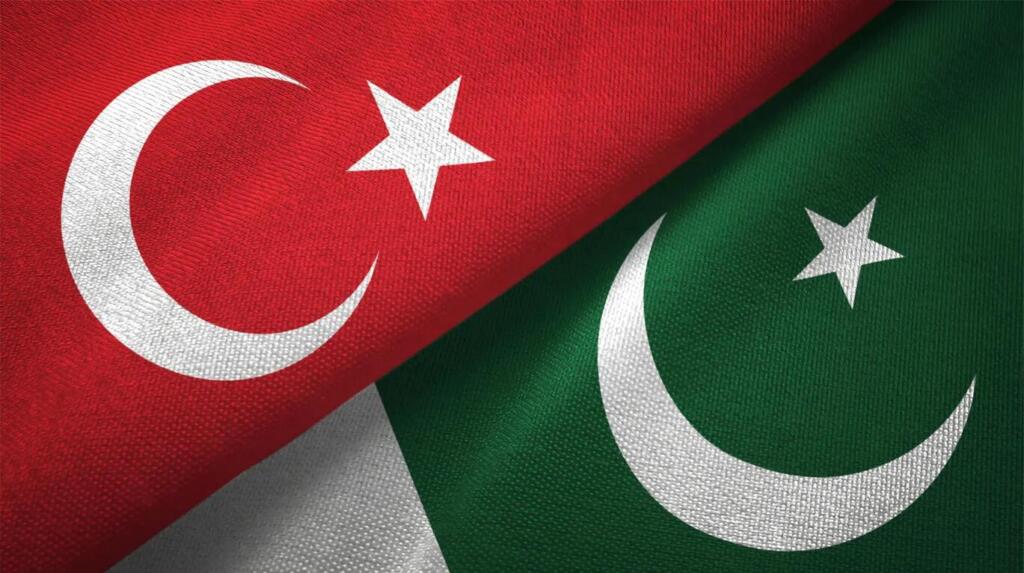
In a move that raises fresh concerns for India’s national security, Pakistan and Turkey (Türkiye) are forging deeper military, intelligence, and economic ties aimed at boosting their strategic alliance particularly in the context of anti-India operations. According to highly placed defense sources, both countries are not only collaborating on massive arms deals but are also increasing coordination in intelligence sharing and regional destabilization efforts under the guise of strategic partnership. Intelligence officials fear this growing proximity may result in heightened security threats in Kashmir and other border areas.
Defense Deals: Drones, Loitering Munitions, and Covert Weapons
Turkey is expected to supply Pakistan with over 700 loitering munitions and a fleet of advanced Bayraktar TB2 and Akinci drones, estimated to be worth $900 million. In return, Pakistan will provide Turkey with mortar shells, artillery equipment, and other battlefield weapons. The defense arrangements are being kept confidential, though insiders suggest that secret military protocols have already been signed between Ankara and Islamabad.
While Turkey is projecting itself as a drone superpower, the battlefield reality tells another story. Pakistan reportedly used Turkish-made SONGAR drones during a cross-border skirmish with India in May, which coincided with Operation Bunyan ul Marsoos, an ISI-backed infiltration attempt. Indian defense sources, however, dismissed the drones as ineffective, outdated, and easily neutralized by Indian anti-drone defense systems. “They were no match for our systems. The Pakistani plan flopped,” said a senior Indian military official.
Strategic Visits and High-Level Talks
Last week, a high-powered Turkish delegation led by Foreign Minister Hakan Fidan and Defense Minister Yasar Güler visited Pakistan. They met top Pakistani leaders including Prime Minister Shehbaz Sharif, Deputy PM Ishaq Dar, Army Chief General Asim Munir, Air Chief Marshal Zaheer Ahmed Baber Sidhu, Defense Minister Khawaja Asif, National Security Advisor, and ISI Chief Lt. Gen. Muhammad Asim Malik.
The meetings primarily focused on cementing cooperation in intelligence sharing, defense production, counter-surveillance systems, and regional strategy concerning India, Iran, Gaza, and Afghanistan. Discussions also covered fast-tracking trade expansion to $5 billion by the end of 2025, including a mutual defense manufacturing framework.
Sharif also expressed gratitude to Turkey for standing by Pakistan during its recent faceoff with India, calling Turkish support “invaluable”. The two sides agreed to hold regular joint military drills and intelligence briefings.
Radicalization Network and Terror Sympathies
The growing Turkey-Pakistan alliance is not just confined to state-level defence cooperation but extends into a covert ideological war against India. Intelligence reports reveal that Turkey’s National Intelligence Organisation (MIT) and state-backed NGOs like the IHH and TÜGVA are actively radicalizing Indian youth.
These organizations have targeted youth from Kashmir and Kerala, reportedly bringing them to Turkey under the guise of cultural or educational exchange programmes like the Erasmus scheme. Once there, they are allegedly connected with Pakistan-linked extremist groups such as Jamaat-e-Islami, Hizbul Mujahideen, and the banned Popular Front of India (PFI).
CNN-News18 has earlier reported how PFI operatives were assisted by IHH in travelling to Syria to join ISIS. Further links have emerged involving Bilal Erdogan, son of Turkish President Erdogan, in radical outreach activities, making Turkey a hub for ideological training against Indian interests.
Trade Masking Strategic Convergence
Amid these security concerns, both nations are also working to expand their economic footprint under the radar. With an ambitious goal of reaching $5 billion in bilateral trade by 2025, Turkey is being offered lucrative defense offset contracts and business incentives in return for its continued support in weapons supply and propaganda operations.
Pakistani officials claim that Turkey is also helping Islamabad in lobbying international organizations on Kashmir. In return, Turkey is expected to gain access to Pakistan’s low-cost defense hardware production and strategic placement in South Asia.
Further, Pakistan is offering logistical and raw material support to Turkey’s drone and missile production facilities. Ironically, Turkish drones provided earlier to Pakistan and used during Operation Bunyan ul Marsoos were dubbed “useless and easily intercepted” by Indian defense experts. Yet, both sides are pushing for further drone and munitions collaboration.
Rising Threat from a Radical Alliance
The growing strategic, defense, and ideological alliance between Pakistan and Turkey represents more than just routine bilateral cooperation it is a calculated challenge to Indian sovereignty and security. With intelligence-sharing, radicalization hubs, covert drone warfare, and a thinly-veiled anti-India agenda at its core, the new phase of their relationship should raise red flags in New Delhi and beyond.
India must monitor this axis closely and enhance counter-intelligence, border surveillance, and cyber operations to blunt any future threat. Diplomatically, New Delhi should also raise this nexus at global forums to expose how state-backed terror and radicalization continue to be legitimized by nations like Turkey in alliance with Pakistan.