
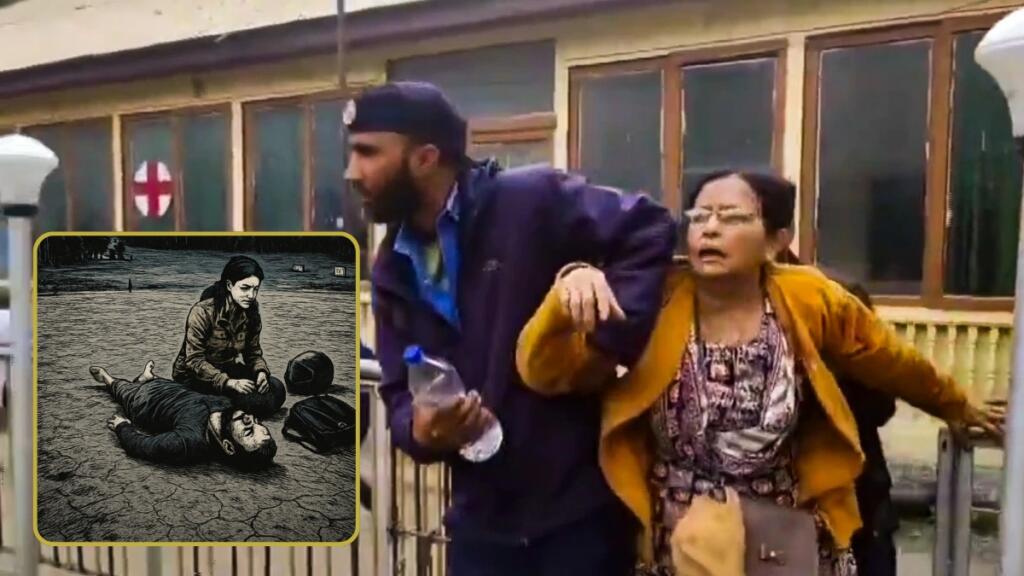
The horrifying terror attack in Jammu and Kashmir’s Pahalgam on April 22, which claimed the lives of 26 innocent civilians, was reportedly orchestrated with direct involvement from Pakistan’s intelligence agency ISI and the terror outfit Lashkar-e-Taiba (LeT), acting on instructions from Pakistan’s political and military leadership. According to a report by The Times of India, the attack bore stark similarities to the 2008 Mumbai terror attacks and is being viewed by Indian security agencies as a meticulously planned “LeT-ISI project.”
Chilling Details of a Cold-Blooded Massacre
The attack unfolded at the picturesque Baisaran meadows in Pahalgam, a popular tourist destination. Victims were reportedly asked their religion before being targeted and killed evoking chilling memories of past communal terror strikes. Security sources revealed that the operation was executed solely by Pakistani nationals to maintain secrecy, with no involvement of Kashmiri militants in the planning or execution.
The use of only foreign terrorists, sources said, was a deliberate move to minimize exposure and leaks. Lashkar commander Sajid Jutt was specifically instructed by Pakistan’s ISI to involve only trusted Pakistani operatives, with any local support limited strictly to logistics and only on a “need-to-know” basis.
Key Mastermind: A Former Pakistani Commando
The central figure behind the attack has been identified as Sulaiman, believed to be a former special forces commando of the Pakistan Army. According to intelligence sources, Sulaiman had previously served as a trainer for Lashkar terrorists at Muridke — the headquarters of LeT in Pakistan’s Punjab province.
He reportedly crossed the Line of Control (LoC) into India in 2022 and remained hidden for nearly two years. Satellite phone data analysis showed that Sulaiman was present in the Tral forest on April 15, just a week before the massacre. It is believed he surveyed the Baisaran site extensively for several days leading up to the attack.
Sulaiman’s name also surfaced in connection with the deadly Poonch Army truck ambush in April 2023, in which five Indian soldiers were killed.
Who Were the Other Attackers?
While Sulaiman’s identity and role have been confirmed, the names of the other two Pakistani terrorists involved in the Pahalgam attack have not yet been made public. Earlier suspicions by Jammu and Kashmir Police pointed to the involvement of two Pakistani nationals, Hashim Musa and Ali Bhai, though their involvement remains unconfirmed. Additionally, there is no definitive evidence to link local militant Adil Hussain Thoker as a facilitator in the operation.
Local Support: Minimal but Present
The National Investigation Agency (NIA) has arrested two local residents from Pahalgam, Parvaiz Ahmad Jothar and Bashir Ahmad Jothar, who are alleged to have assisted the terrorists by providing shelter, food, and logistical support. However, their role appears to be limited and transactional. According to the report, both men claimed they were unaware of the terrorists’ actual plans and acted solely in exchange for small amounts of money.
India’s Swift Response: Operation Sindoor
In retaliation for the brutal massacre, Indian security forces launched a massive counter-offensive, Operation Sindoor, on May 7, just two weeks after the attack. The high-intensity operation continued for four days until May 10, resulting in the elimination of over 100 terrorists, according to defense sources.
During the operation, Indian forces reportedly struck across the border, targeting Pakistan’s terror-linked infrastructure, including airbases believed to be sheltering militants. The scale and speed of the response underscored India’s resolve to take decisive action against cross-border terrorism.
Grim Reminder and Call for Accountability
The Pahalgam attack has reignited long-standing concerns over Pakistan’s state-backed support for terrorism in the region. The involvement of Pakistani nationals, the strategic planning by ISI, and the use of a former special forces operative all point to a deeply entrenched terror ecosystem operating across the border.
With clear parallels being drawn to the 26/11 Mumbai attacks, this massacre stands as a grim reminder of the persistent threats to peace and security in the region. As investigations continue, pressure is mounting on the international community to hold Pakistan accountable for its role in enabling cross-border terrorism.