




















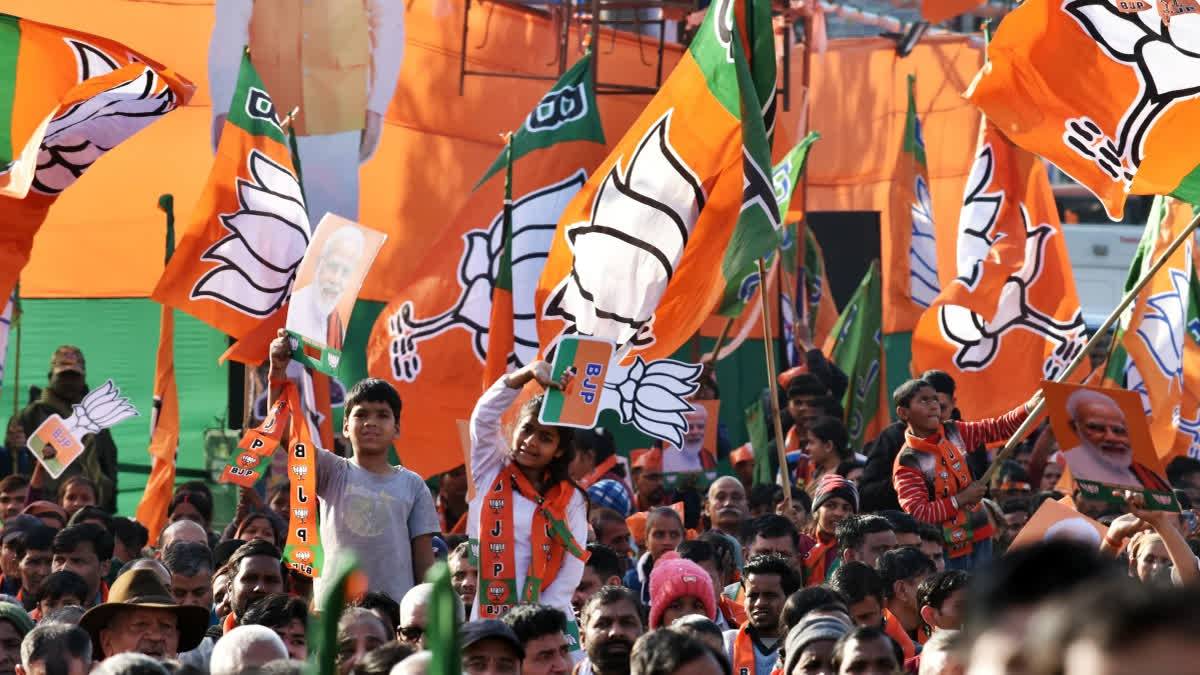
The political spotlight has shifted firmly to the Vice Presidential election, following the sudden resignation of Jagdeep Dhankhar. In what appears to be a clear assertion of its leadership within the NDA alliance, the Bharatiya Janata Party (BJP) is set to nominate its own candidate for the post of Vice President of India. Senior sources within the coalition confirm that the final decision will be taken upon Prime Minister Narendra Modi’s return from his official visits to the UK and Maldives. According to senior coalition insiders, the individual being considered will be someone with a strong ideological alignment with the BJP and extensive experience in parliamentary procedure.
BJP to Retain Key Post as NDA Rallies Behind It
In a move that reinforces the BJP’s central authority within the National Democratic Alliance, top government sources have confirmed that the next Vice President of India will be from the BJP. Dispelling all speculations about a possible consensus candidate from alliance partners, senior NDA leaders have clarified that the party will take the lead in naming the successor to Jagdeep Dhankhar. According to insiders, the BJP is looking for a candidate with deep parliamentary expertise and ideological consistency qualities that will ensure smooth functioning in the Rajya Sabha and alignment with the government’s legislative priorities.
Alliance members, including the TDP and JD(U), have reportedly endorsed the BJP’s approach without any friction, indicating a united front. Despite media speculation suggesting a JD(U) leader might be in the fray, authoritative voices within the NDA have labelled such reports as completely unfounded.
Dhankhar’s Sudden Resignation Raises Eyebrows
Jagdeep Dhankhar’s unexpected resignation from the post of Vice President came as a shock on the opening day of the Monsoon Session. At a time when Parliament was gearing up for an intense legislative calendar, Dhankhar’s sudden move disrupted proceedings and prompted immediate political speculation.
On July 21, Dhankhar made an unanticipated visit to Rashtrapati Bhavan and submitted his resignation to President Droupadi Murmu. In his letter, which was later made public, Dhankhar cited health reasons for stepping down, saying he wished to prioritise his well-being in accordance with Article 67(a) of the Constitution. While the BJP has respected his decision, internal assessments suggest the party was prepared for such a possibility and has acted swiftly to consolidate support for a successor.
Election Commission Moves to Finalise Process
The Election Commission of India has promptly initiated preparations for electing the new Vice President. On July 23, the poll panel confirmed that it had begun setting up the electoral college, consisting of elected and nominated Members of Parliament from both Houses. Returning officers for the poll are also being appointed, with the formal election schedule expected to be announced shortly.
This efficient response by the Election Commission underscores the constitutional importance of the Vice Presidential post, especially at a time when legislative productivity in the Rajya Sabha is a critical objective for the government.
Why the BJP’s Choice Will Matter
Unlike in coalition-driven eras, the BJP today enjoys decisive influence within the NDA, allowing it to pick key constitutional functionaries without internal compromise. Sources within the government have indicated that the incoming Vice President will be someone who not only understands legislative dynamics but also upholds the decorum of the office. Given that the Vice President also serves as the Chairperson of the Rajya Sabha, the BJP wants a figure who can facilitate smooth functioning of the Upper House and support reform-oriented legislation.
This approach also reflects the party’s long-term vision. The BJP, under Prime Minister Modi, is focused on building institutions led by individuals committed to national interest, ideological clarity, and parliamentary efficiency.
A Strategic Appointment to Reinforce Governance Vision
The resignation of Jagdeep Dhankhar may have come as a surprise, but the BJP’s swift and assertive response reflects its readiness to steer the country’s key constitutional offices with confidence. With Prime Minister Modi expected to return shortly from his overseas engagements, a final decision on the Vice Presidential nominee is imminent. As the BJP prepares to name someone who embodies experience, ideology, and discipline, it reaffirms its commitment to building strong, stable governance rooted in parliamentary democracy. In the evolving political landscape, this upcoming appointment will not just be symbolic—it will be strategic.