























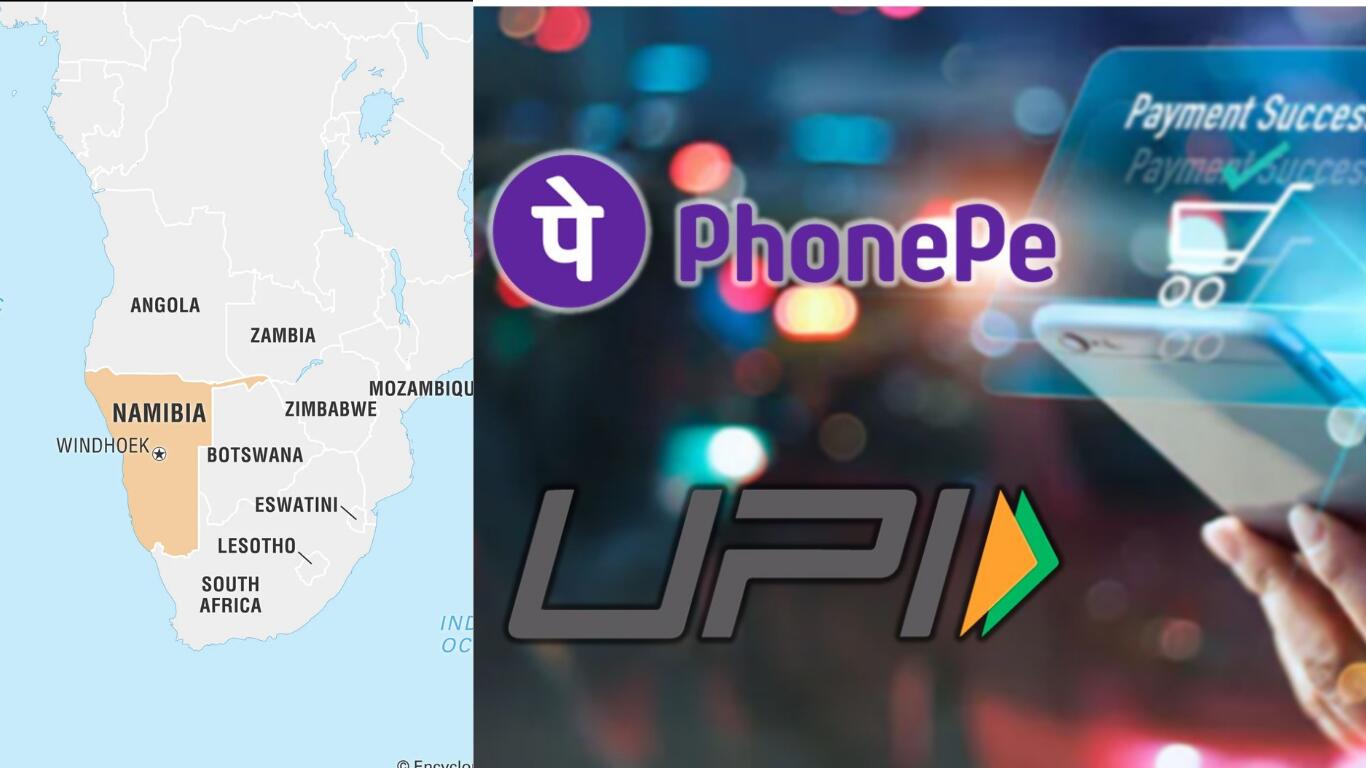
Namibia is poised to enter the next phase of its digital revolution by partnering with India to launch a Unified Payments Interface (UPI)-like instant payment system. This transformative move was announced during Prime Minister Narendra Modi’s state visit to the African nation, making Namibia the first country in the world where India will license UPI technology through its National Payments Corporation of India (NPCI).
The partnership signals not just Namibia’s leap toward financial inclusion, but also a strategic win for India, cementing its status as a global fintech leader. Indian firms may soon find fertile ground in Namibia, with the digital rails now ready for expansion.
What is UPI and Why Is It a Game-Changer for Namibia?
UPI, or Unified Payments Interface, is a real-time payment system developed by NPCI that allows users to transfer funds instantly across bank accounts via mobile phones. Launched in India in 2016, UPI has eliminated the need for complex banking details, making financial transactions fast, secure, and seamless. The upcoming Namibian version, developed in collaboration with NPCI International Payments Limited (NIPL) and the Bank of Namibia (BoN), aims to mirror this model.
For Namibia, where many rural and underserved populations lack access to formal banking services, a UPI-like system can be a game-changer. It promises affordable, real-time transactions, allowing individuals and businesses especially in informal sectors to send and receive money with a simple tap. The goal is to reduce cash dependency, enable interoperability across financial institutions, and foster a digital economy that benefits all.
Namibia’s central bank Governor Johannes Gawaxab emphasized that this platform will be critical in achieving the country’s vision for a modern, secure, and inclusive financial infrastructure by 2025. Real-time Person-to-Person (P2P) and Person-to-Merchant (P2M) transactions will become commonplace, significantly improving access to digital financial services across Namibia.
India’s Global Fintech Footprint Expands
This move represents a significant milestone for India’s digital diplomacy. It is the first time NPCI is licensing UPI to another country in collaboration with a foreign central bank. India’s Unified Payments Interface has evolved into more than just a domestic tool—it is now a global template for modern financial systems.
NPCI International CEO Ritesh Shukla stated that Namibia will benefit from cutting-edge Indian fintech infrastructure, enabling the country to gain sovereignty in digital payments and extend financial inclusion to even the most remote communities.
India’s Ministry of External Affairs hailed this licensing agreement as a landmark achievement, highlighting the growing trust in India’s homegrown technologies. With UPI as a vehicle of soft power, India is exporting not just code, but an inclusive financial model tailored to developing economies.
The Journey of UPI: From Local Disruption to Global Adoption
Launched officially in 2016, UPI was conceived as a part of India’s financial modernization drive under the Reserve Bank of India and Indian Banks’ Association. It rapidly outpaced traditional payment methods like NEFT, RTGS, and IMPS by offering frictionless, mobile-first experiences.
In May 2025 alone, UPI processed 18.67 billion transactions worth over ₹25.14 trillion (approx. $293 billion), handling nearly 7,000 transactions per second. The platform now boasts over 500 million active users and covers more than 400 banks.
Globally, UPI is becoming a model for real-time payment systems. Countries like France, UAE, Singapore, and now Namibia have either signed MoUs or are in discussions to adopt UPI-like frameworks. According to a 2022 report, UPI was responsible for 46% of global real-time payment transactions, making India the world’s leader in instant payments.
How UPI Works: Simplicity Meets Scalability
UPI operates on a four-layered push-pull model involving front-end payment service providers and backend banking infrastructure. Unlike earlier systems that required IFSC codes, bank names, and lengthy account details, UPI users only need a virtual payment address (VPA) or phone number linked to their bank account.
The system is fully interoperable, allowing seamless transfers between different banks and applications. Over time, features like UPI AutoPay, linking credit cards (such as RuPay), QR code withdrawals, and even voice-enabled payments for feature phones have been added.
UPI 2.0, launched in 2018, introduced mandates, overdraft account linking, and invoice features. More recently, India has enabled UPI for Non-Resident Indians in ten countries, making it a true global asset.
Benefits for Namibia: Financial Inclusion and More
With the adoption of UPI’s infrastructure, Namibia is set to witness several immediate and long-term benefits:
- Financial Inclusion: Rural and remote populations will gain access to the formal economy.
- Reduced Cash Dependency: Safer, faster digital alternatives will decrease cash usage.
- Business Growth: Small vendors and informal workers will be able to accept payments digitally.
- Interoperability: A single platform connecting all banks and payment service providers.
- International Integration: Namibia can eventually connect to India and other UPI-enabled markets.
This adoption aligns perfectly with Namibia’s financial sector strategy that aims for complete interoperability of payment instruments by 2025.
A Digital Bridge Between India and Africa
India’s agreement with Namibia to develop a UPI-like payment platform isn’t just a financial transaction—it’s a diplomatic signal. It highlights the power of Indian innovation and its increasing relevance in the global South. For Namibia, this partnership is an investment in financial sovereignty and economic empowerment. For India, it’s a soft power victory, a commercial opportunity, and another feather in its cap as the digital vanguard of the Global South. As Indian technology quietly integrates into African infrastructure, a new chapter in India-Africa ties begins rooted in code, powered by trust, and built for inclusion.