



















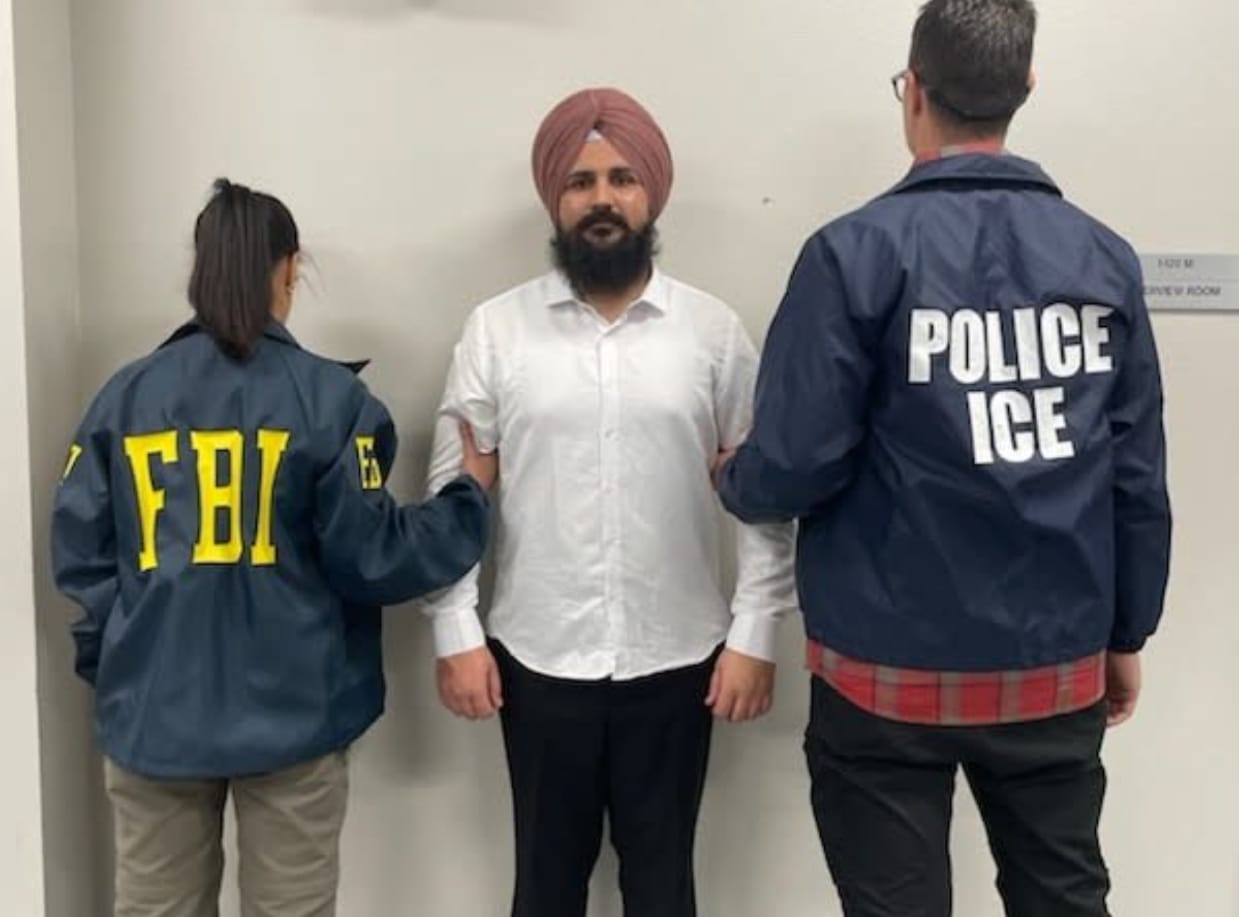
In a major boost to India’s counter-terrorism efforts, Harpreet Singh, alias Happy Passia, a wanted Khalistani terrorist accused of orchestrating multiple bombings and grenade attacks across Punjab, is being extradited from the United States to India. Official sources confirmed that the long-sought militant, who has deep links to Pakistan’s ISI and the pro-Khalistan outfit Babbar Khalsa International (BKI), will soon face trial on Indian soil.
Who Is Harpreet Singh?
Harpreet Singh, popularly known by his alias ‘Happy Passia’, has been under the scanner of Indian intelligence agencies for years due to his alleged role in coordinating terror operations remotely from the US. His name has been linked to at least 16 blast incidents in Punjab, many of which targeted police installations and public infrastructure, sowing fear and instability in the region.
According to investigative agencies, Singh was not only a financier and handler but also a key operational planner, using encrypted platforms and overseas networks to guide ground-level terrorists. He is believed to have radicalized and recruited local youth, supplying them with arms and explosives through cross-border channels.
Ties with ISI and Babbar Khalsa
Investigations have revealed Singh’s close coordination with Pakistan’s Inter-Services Intelligence (ISI) and Babbar Khalsa International, a banned Khalistani terror outfit notorious for its violent separatist agenda. Intelligence sources allege that Singh acted as a key conduit for funds and strategic planning, with ISI operatives allegedly providing him logistical support from across the border.
BKI, once a declining movement, has witnessed a resurgence in digital propaganda and overseas financing, with operatives like Singh playing a pivotal role in keeping the ideology alive; especially among diasporic communities in North America and Europe.
Arrest in the US: A Coordinated Operation
Singh’s arrest on April 17, 2025, was the result of a joint operation by the Federal Bureau of Investigation (FBI) and US Immigration and Customs Enforcement (ICE). After months of surveillance and intelligence exchange with Indian authorities, Singh was apprehended and held in ICE custody pending extradition proceedings.
Sources familiar with the case confirmed that the Indian government had submitted a detailed dossier of evidence, including his digital footprint, financial transactions, and recorded conversations, as part of the formal extradition request. His deportation is being seen as a rare example of seamless cooperation between Indian and US agencies on counter-terrorism matters.
Over 30 Criminal Cases and a ₹5 Lakh Reward
The National Investigation Agency (NIA), which is spearheading the probe, has registered over 30 criminal cases against Singh. These include charges of terror conspiracy, attempted murder, arms smuggling, sedition, and violations under the Unlawful Activities (Prevention) Act (UAPA). The NIA had earlier announced a cash reward of ₹5 lakh for any actionable information leading to his capture.
Officials say Singh’s interrogation is expected to unravel deeper links between Khalistani factions operating abroad and their partners within India, possibly leading to more arrests and network disruption.