
Just three days after the brutal April 22 Pahalgam attack that killed 26 civilians, India had already launched a full-scale diplomatic and intelligence offensive to expose the Pakistan-backed terror outfit The Resistance Front (TRF). On April 25, Indian authorities shared substantial intelligence with the United States, proving TRF’s direct involvement in the attack. This evidence included details about its leadership, operational links with the banned Lashkar-e-Taiba (LeT), and recent terror strikes. Far from waiting for international sympathy, New Delhi initiated a pre-emptive and aggressive campaign, ensuring TRF’s role could not be denied or ignored.
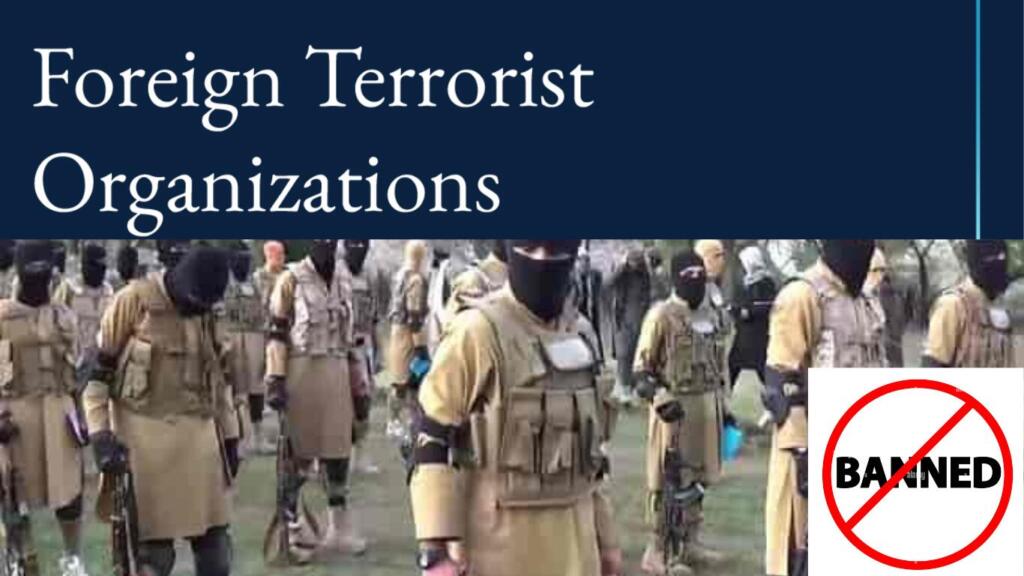
The result of this fast-paced diplomacy? A major foreign policy and counter-terrorism win for India. On July 18, less than three months after the attack, the U.S. State Department officially designated TRF as a Foreign Terrorist Organization (FTO) and Specially Designated Global Terrorist (SDGT), based on the very intelligence India had submitted. This was not just a victory in narrative-building but a strike against Pakistan’s long-standing policy of using terror groups as strategic proxies under new names.
Strategic Briefings, Global Outreach: India’s Counter-Terror Diplomacy
India’s path to getting TRF designated as a global terrorist outfit was not just swift—it was methodical and data-driven. The campaign began with Foreign Secretary Vikram Misri briefing key diplomats from the US, UK, France, Russia, and even China on April 25. These briefings, held under the G20 diplomatic umbrella, focused on the attack’s execution, casualties, and most importantly, TRF’s direct involvement. India left no ambiguity—TRF was not a standalone organisation but a covert arm of Lashkar-e-Taiba.
Through April and May, Indian diplomats and intelligence officials maintained constant communication with U.S. authorities and other global partners. A crucial part of these briefings was the identification of TRF’s operational leader, Sheikh Sajjad Gul, and the group’s repeated claims of responsibility for attacks on Indian civilians and soldiers in 2024 and 2025.
Meanwhile, India dispatched seven multi-party delegations to 33 global capitals—including Washington, Brussels, and Canberra—to present irrefutable proof of Pakistan’s sheltering of TRF and other proxy groups. Each meeting was a reminder that Pakistan continued to play a double game: pretending to fight terror while nurturing it within its borders.
US Recognition: A Blow to Pakistan’s Diplomatic Shielding
The success of India’s campaign was evident when the U.S. government declared TRF a designated terrorist organisation on July 18. The announcement explicitly cited the intelligence provided by Indian authorities and acknowledged TRF’s role in the Pahalgam attack. This was a powerful global endorsement of India’s narrative and a blow to Pakistan’s denials.
Interestingly, India also exposed how Pakistan’s foreign minister Ishaq Dar allegedly tried to dilute global condemnation of TRF. After the Pahalgam massacre, Dar reportedly ensured that the name of TRF was removed from a UN Security Council condemnation message—even though TRF had publicly taken credit for the attack. The U.S. designation of TRF thus not only validated India’s evidence but publicly embarrassed Islamabad’s attempts to shield its proxies.
The TRF listing also reaffirms that global counter-terror mechanisms—when immune to political pressures—can work in India’s favour. Unlike the UN Security Council’s often politically compromised process, the U.S. State Department’s designation system is intelligence-led, stringent, and not easily manipulated—making the outcome a genuine diplomatic and strategic victory for India.
UNSC Roadblocks: China and Pakistan Form the Wall
Despite the U.S. support, India’s next hurdle lies in getting TRF blacklisted under the United Nations Security Council (UNSC) 1267 sanctions committee—an effort that remains deeply complicated by geopolitics. Pakistan, currently a non-permanent member of the UNSC until December 2026, holds the power to stall discussions, delay decisions, and water down proposals through procedural hurdles.
Even though non-permanent members don’t have veto rights, their ability to disrupt consensus—especially with the backing of a veto-wielding ally like China—poses serious challenges. China, known for repeatedly blocking India’s earlier proposals to designate Pakistani terrorists like Masood Azhar and Hafiz Saeed, is expected to once again use its diplomatic weight to stall TRF’s listing under the UN mechanism.
Historically, China has insisted on what it calls “solid evidence” and “greater consultation,” terms it often uses to justify technical holds. In reality, these are thin veils for its strategic alliance with Pakistan. The pattern is clear: India presents the evidence, Western powers support it, and China uses its UNSC veto power to block the listing—usually at Islamabad’s request.
A Diplomatic Breakthrough, but the Battle Isn’t Over
India’s swift and coordinated campaign following the Pahalgam attack stands as a model of effective diplomacy and intelligence-backed foreign policy. From briefing global powers within 72 hours to getting TRF designated as a global terrorist outfit by the U.S. in under three months, India has demonstrated resolve and strategic clarity.
However, the real test lies ahead. While the U.S. listing damages TRF’s legitimacy and tightens international scrutiny on Pakistan, securing a similar outcome at the United Nations remains a challenge. With Pakistan sitting on the UNSC and China protecting its interests, India faces an uphill task in pushing TRF through the 1267 Committee.
But India has gained something even more critical: international momentum. The U.S. endorsement has provided India with a diplomatic springboard. As global opinion continues to shift against state-sponsored terrorism, even the UNSC may not be able to indefinitely ignore India’s evidence. With sustained pressure and smart diplomacy, New Delhi is poised to continue its fight—because terrorism, no matter where it comes from, must never be allowed diplomatic immunity.