
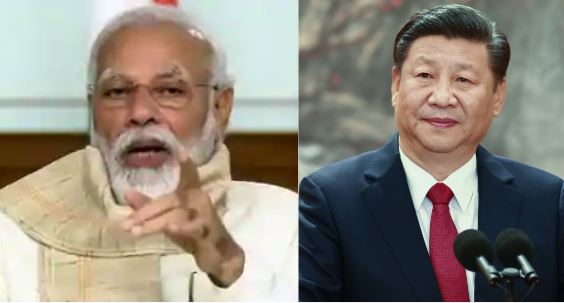
From border clashes to baby steps in diplomacy, New Delhi’s latest visa decision signals thaw but not without caution. In the high-stakes chessboard of Asian geopolitics, every move is symbolic. And India’s latest one is no exception.
After nearly five years of diplomatic deep-freeze, the Indian government has officially reopened tourist visas for Chinese citizens, starting July 24, 2025, a move that would have been unthinkable in the immediate aftermath of the deadly Galwan Valley clash in 2020. But now, with incremental shifts on both sides, this decision appears to be part of a slow, strategic recalibration of bilateral ties.
The announcement came via the Indian Embassy in Beijing, which posted the update on Weibo, China’s largest social media platform. From July 24 onwards, Chinese nationals can apply for a tourist visa by filling out an online form, booking an appointment, and submitting required documents at visa centres. A routine announcement on paper, but one layered with meaning.
From Conflict to Cautious Coexistence
The Galwan incident was more than a military skirmish; it was a psychological rupture in Sino-Indian ties. Public outrage was palpable. Trade ties soured. Chinese apps were banned en masse. The border turned cold and diplomacy colder.
What followed was a visa lockdown that went beyond COVID-19 protocols. While most countries resumed normal travel with India post-2021, China remained excluded, a not-so-subtle signal from New Delhi that relations were far from normal.
The breaking point came when China denied entry to over 22,000 Indian students who had been studying in Chinese universities before the pandemic. For India, it was both a humanitarian and diplomatic insult, prompting the continued suspension of Chinese tourist visas as a tit-for-tat measure.
Signs of a Soft Thaw
Fast forward to 2025, and the tone is shifting albeit gingerly. Military disengagement at Depsang and Demchok brought some relief to the long-tensed Line of Actual Control (LAC). And in January 2025, direct flights between the two countries resumed after a long hiatus, a critical step in restoring people-to-people contact.
India’s move to revive the Kailash Mansarovar Yatra, a major pilgrimage that passes through Chinese-controlled territory, further indicated growing confidence. The visit of Foreign Secretary Vikram Misri to Beijing, followed by External Affairs Minister S. Jaishankar’s participation in the SCO Summit, has helped put momentum back into the diplomatic pipeline.
The result? India is now willing to let tourists, and by extension soft diplomacy, flow again.
A Strategic Gesture
Make no mistake: this is not a full diplomatic embrace. It’s a calibrated gesture, carefully measured and symbolically timed. Trust between the two nuclear powers remains thin and fragile.
While India reopens its gates, it hasn’t forgotten the lessons of Galwan. The Chinese military continues to modernize its infrastructure across the border, and New Delhi remains wary of Beijing’s assertive posturing in the Indo-Pacific, its closeness with Pakistan, and its expanding digital and trade influence in the region.
But India, long considered the ‘reluctant power,’ may now be experimenting with strategic maturity, willing to engage where it benefits, and push back where it must.
Why This Matters Beyond Visas
The global context matters. As the world fractures into multipolar tensions, India finds itself at the fulcrum of East-West rivalry. Its role as a balancing power between China, the U.S., Russia, and the Global South requires it to occasionally shift gears. Reopening visas to China, therefore, is not just about tourism. It’s about testing waters, rebuilding leverage, and keeping backchannels alive.
Tourism also ties into soft power and economic recovery. For a country eager to boost post-pandemic travel revenue and host global events, opening doors to the world’s largest outbound tourist market is both practical and political.
For now, the visa move is a welcome sign if only for what it represents: dialogue over deadlock, engagement over exclusion. But the real test lies in what comes next.
Will student visas, stalled education ties, and deeper trade frictions be addressed? Will border peace hold, or will it collapse at the next high-altitude standoff?
The answers remain unclear. But one thing is certain: in diplomacy, silence is dangerous; conversation, even if strained, is progress.