
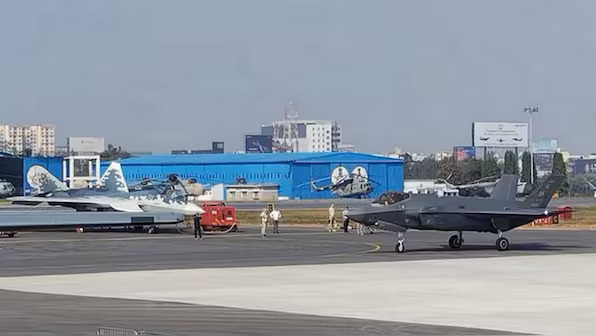
The Indian Air Force (IAF) has made a strong case to the government for procuring two to three squadrons (approximately 40–60 aircraft) of fifth-generation stealth fighters from foreign sources. With a squadron typically comprising 18‑20 jets, this interim acquisition is intended to bolster India’s capabilities while indigenous development of the Advanced Medium Combat Aircraft (AMCA) matures.
IAF leadership, according to reports, presented a detailed rationale to policymakers—highlighting the urgency of air superiority in the face of growing threats from China and Pakistan along the northern and western frontiers. An empowered committee under Defence Secretary R.K. Singh has backed this recommendation, noting that these advanced jets would provide critical deterrence and maintain operational readiness during the transition period.
Why Acquiring Fifth-Generation Fighters Is Imperative
India currently operates at just 30 out of a sanctioned 42 combat squadrons, with many platforms nearing obsolescence. This shortfall creates strategic risks given China’s deployment of J-20 stealth fighters along the LAC and Pakistan’s planned acquisition of the same from China. To maintain credible deterrence and operational edge, the IAF has identified an urgent need to plug this capability gap.
Su-57 vs. F‑35: The Strategic Choice
India is weighing offers from two countries. Russia has pitched the Su-57E, proposing full technology transfer and local co-production at HAL facilities. This aligns with India’s “Make in India” ethos and builds on deep collaboration in platforms like the Su‑30MKI. Russia’s offer includes joint development of avionics, radar, engines, and weapons integration—potentially fast-tracking India’s own AMCA programme through associated technological spillover.
The U.S. is offering the F‑35A Lightning II, a proven platform renowned for its stealth, sensor fusion, AI-enabled systems and integration into Western networks. While the U.S. has publicly stated interest in eventual sales, no formal negotiations have begun, and the proposal appears confined to government‑to‑government channels. The F‑35 is likely incompatible with India’s existing Russian-origin systems and comes with strict end‑user and operational controls, limiting Indian sovereign control.
Cost is another distinct factor: estimates put the F‑35 between $80–110 million per unit (not including high sustainment costs), whereas the Su-57 is estimated at $35–45 million per aircraft, allowing for potentially larger squadron acquisitions under the same budget. The Su-57 also promises smoother integration with India’s existing logistics chains and tactical systems.
Strategic Dimensions
The procurement decision extends beyond immediate capability. India’s AMCA programme, though approved and under development, is not expected to produce operational aircraft until at least the 2035 timeframe. Therefore, the Air Force needs a transitional platform to maintain aerial deterrence and upgrade combat readiness.
Choosing the Su-57 would support defense-industry self-reliance—enabling IAF and DRDO to build domestic expertise in stealth, sensors, and avionics while strengthening bilateral ties with Russia. In contrast, accepting the F‑35 could deepen strategic alignment with Western defense ecosystems but at the expense of technology autonomy and potential operational constraints imposed by export controls and proprietary systems.
No decision has been finalized, and negotiations are ongoing. The IAF and government remain cautious, balancing immediate tactical needs against long-term industrial strategy. Acquiring two to three squadrons of fifth-generation fighters now, whether the Su-57 or F‑35, could fill a crucial capability void while India builds its own stealth aircraft under the AMCA programme.
The choice between operational readiness and industrial sovereignty lies at the heart of this pivotal defence decision, with implications not only for India’s air power but also for its global strategic posture in an increasingly multipolar world.
The need for maintaining superior air power was emphasised more after India launched Operation Sindoor, a targeted military response to the Pahalgam terror attack. The IAF conducted precision strikes on 11 Pakistani military air bases, including locations such as Nur Khan, Rafiqui, and Skardu. These strikes aimed to neutralize key infrastructure, including drone warfare command centers and aircraft deployment hubs, thereby crippling Pakistan’s air capabilities.