



















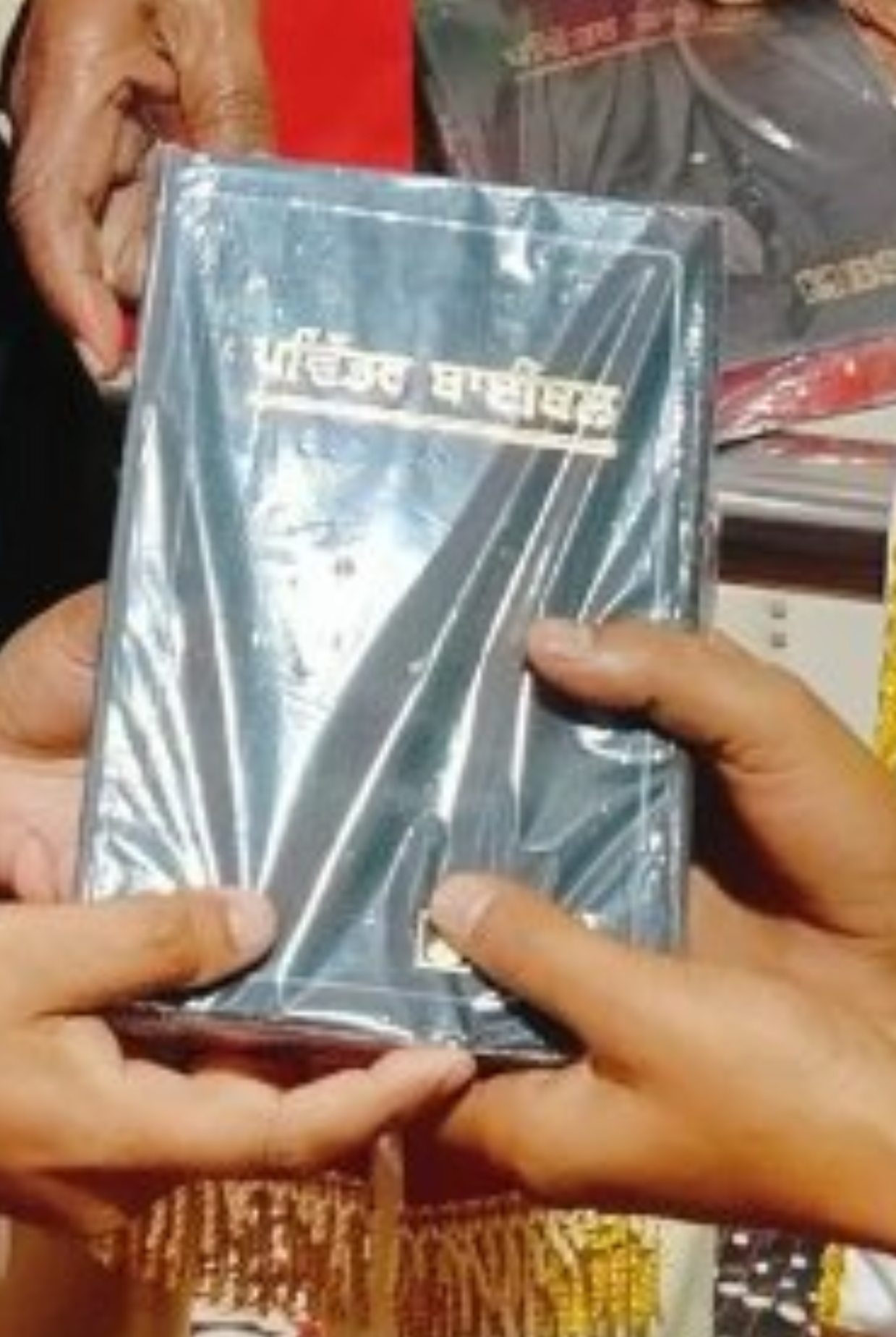
In the quiet, dust-blown villages of Punjab, the sound of gurbani is witnessing conversion to gospel. The Guru Granth Sahib gathers dust as Bibles are handed out in plastic covers. In homes once adorned with photos of Sikh gurus, images of Jesus now hang prominently, flanked by flickering candles and hopeful eyes.
This is not a silent transformation. It is loud with desperation, punctuated by cries for healing, promises of prosperity, and testimonies of “miracles.” From the wheat fields of Mansa to the barbed borders of Gurdaspur and Amritsar of Punjab, entire communities, mostly Dalit Sikhs, are converting to Christianity. And behind each cross lies a story of poverty, pain, and profound institutional betrayal.
‘Jesus Saved Me from Alcohol and Death’
Major Singh, a laborer from Khiyala Kalan village of Punjab, remembers the night he nearly died. ‘I was drunk. My veins had collapsed. I was dying,’ he says. He claims Jesus came to him in a vision and told him to preach. Today, after converting to Christianity, he runs a church from his home, conducts healing services, and says at least 30 families in his village now follow Christ.
His son is also a pastor. His sister-in-law’s cancer, he claims, vanished without treatment. His story isn’t unique; it is repeated, almost word for word, in dozens of villages where pastors are emerging from the very communities they preach to.
The Gospel of Survival
In Dyal Bhatti village near the Pakistan border, women speak in hushed tones about how ‘prayers’ brought them sons, healed their illnesses, and ended their suffering.
‘I had four daughters. I wanted a son,’ says Suman, a convert. ‘The pastor prayed for me. The next year, I had a boy.’
Baby, another convert, says the church offered more than faith; it offered hope. ‘They gave me ₹800 a month. They said my children will get jobs and scholarships,’ she says. Her family now attends prayer services every Sunday. Their home is marked with crosses.
But many don’t know that the pensions and ration cards they receive are actually government schemes- facilitated, but not funded, by the church. The illusion of charity has become a powerful conversion tool.
Healing or Hysteria?
In Amritsar’s Churiyan Road, a church packed with hundreds echoes with cries of ‘Hallelujah.’ A woman faints. A child convulses. The pastor lays hands and declares a demon cast out. Every week, people travel miles for these services- seeking cures for cancer, paralysis, infertility, or depression.
‘I was suicidal. Now I feel calm,’ says Parminder, a 23-year-old who attends every Sunday. He also believes prayer cured his mother’s undiagnosed cancer. No medical proof. No second opinion. Just faith, and desperation to convert to Christianity.
Pastors Push Back: ‘We Don’t Take Foreign Money’
Pastor Raspal in Jagowal village is firm: ‘No one is forced. No one is paid to convert. I’m a painter by trade. I preach because Jesus saved my father from a tumor.’
He denies receiving foreign funds for conversion practices. But behind his modest home lies a church with imported sound systems, branded hymn books, and new construction. Questions linger.
Another recent incident reveals the true identities of such pastors. Touted as a faith healer and a saviour by many, Pastor Bajinder Singh’s fall from grace reveals a darker truth behind Punjab’s rising wave of religious conversions. Once seen leading mass gatherings promising miracles, he now faces life behind bars for the 2018 rape of a woman who trusted him as a spiritual guide. A Mohali court rejected his mercy plea, declaring that those who claim divine authority cannot violate the very people who place their faith in them. His conviction casts a long shadow over the unchecked rise of self-styled preachers converting vulnerable Sikhs under the guise of healing and hope.
The Collapse of Sikh Institutions
While churches grow, gurdwaras are emptying. Granthis, the Sikh equivalent of priests are unpaid or underpaid. Villages have no outreach. SGPC, the body meant to safeguard Sikhism, is seen as an elite bureaucracy with no grassroots presence.
Ranjit Singh, the priest at Khiyala Kalan gurdwara, is blunt. ‘We have no salaries, no funds, no platform to preach. The SGPC has abandoned us,’ he says. ‘Meanwhile, pastors are organizing youth camps, distributing aid, and making people feel seen.’
The result? An emotional and spiritual vacuum, quickly filled by churches offering community, care, and crucially attention.
Families Split at the Altar
In Tibbar village, 65-year-old Rajkumar watches his grandson pass by the gurdwara without bowing. ‘My son converted. My daughter-in-law too. Now the boy doesn’t come here. He doesn’t take prasad. Doesn’t eat langar. He’s eight,’ Rajkumar says, tears swelling.
His home is divided; faith has built walls where love once stood.
A Wake-Up Call for Punjab
These conversions are not just religious. They are political. They are personal. They are the loudest cry yet from Punjab’s most marginalized: We are not being heard. We are not being helped. We are finding God where you failed us.
In a state still healing from the trauma of partition, militancy, and drug epidemics, the mass exodus from Sikhism to Christianity is not a spiritual trend. It is a referendum on how religion, politics, and power have failed the people.
As new churches rise where gurdwaras once stood central, the message is clear: communities are seeking support, connection, and hope, wherever they can find it.
Whether this transformation of Sikhs continue or find course correction will depend not only on religious institutions but on how Punjab addresses the very conditions driving its people to the edge, and into the arms of a new faith.