
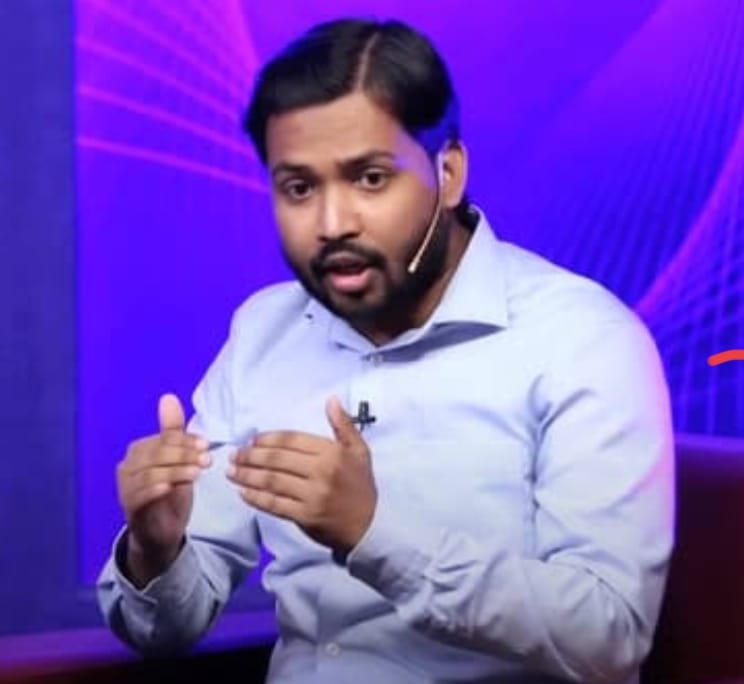
Recently, a clip of online educator Khan Sir went viral on social media, sparking widespread outrage for his remarks about Maharaja Hari Singh, the last ruling monarch of the princely state of Jammu and Kashmir. In the video, Khan Sir described the Maharaja as ‘greedy’ and ‘self-serving’ and accused him of being responsible for the Kashmir conflict. He went so far as to make a deeply offensive claim regarding the Maharaja’s family and the 1947 invasion of Kashmir by Pakistani-backed tribal forces.
The language used was not just historically inaccurate, but it was inflammatory, insensitive, and utterly lacking in context.
A Stinging Rebuttal by Vikramaditya Singh
Vikramaditya Singh, senior politician and grandson of Maharaja Hari Singh, issued a firm and articulate response on X (formerly known as Twitter):
‘Vile lies and disgraceful abuse against Maharaja Hari Singh Ji must be condemned outright. He was a patriot who stood firm against Pakistani invaders. Twisting history to suit petty agendas or seem relevant is not journalism, it’s intellectual rot.’
He further expressed concern about individuals within the education system who misrepresent history, stating that such distortions are not only misleading but a betrayal of academic responsibility and national integrity.
His statement resonates beyond a personal defense, it reflects a growing frustration among scholars, historians, and concerned citizens about the casual and dangerous manipulation of history in the public sphere.
The Real History
Maharaja Hari Singh’s reign coincided with one of the most volatile periods in India’s modern history, the Partition of 1947. As ruler of a strategically located princely state, he faced immense pressure from both India and Pakistan. After Pakistani-backed tribal militias invaded Kashmir in October 1947, he signed the Instrument of Accession to India, a legal and decisive step that brought Jammu & Kashmir into the Indian Union.
There is room for informed debate over his decisions; but branding the Maharaja as the sole cause of Kashmir’s conflict, and doing so in crude, accusatory language, is deeply irresponsible and historically dishonest.
Educators Hold Influence and Accountability
Khan Sir is not just a private citizen expressing an opinion; he is an educator with a vast following. His words shape the perceptions of millions of students who turn to him for knowledge and inspiration. When an educator distorts historical events like this, it is not simply an error, it is a breach of trust.
The purpose of education is to enlighten, not mislead. In a country where historical understanding already suffers from oversimplification and politicization, such commentary only adds confusion and resentment.
The Dangerous Rise of Historical Sensationalism
What we’re witnessing is not an isolated incident. Across platforms, there’s a rising trend of reducing complex historical narratives into digestible, emotionally charged soundbites. Whether it’s for likes, views, or ideological point-scoring, the result is the same: truth gets sacrificed.
Historical revisionism, when guided by populism rather than facts, creates a toxic echo chamber where misinformation thrives. This undermines public understanding and endangers social cohesion.
What’s at Stake
Society loses perspective when public discourse treats history as a weapon rather than a mirror. It becomes easy to vilify individuals, erase nuance, and turn education into performance. In doing so, we erode the very foundation of civil debate and informed citizenship.
This is not about shielding historical figures from criticism. It’s about ensuring that critique is based on evidence, not agenda, on context, not character assassination.
Uphold Integrity in Education
History is not a tool for ridicule or personal gain; it is a solemn chronicle of a nation’s journey. Maharaja Hari Singh, like many historical figures, had flaws and made difficult choices. But his role during Partition, especially his resistance to Pakistan’s aggression and accession to India, deserves a fair and balanced assessment.
Educators, content creators, and public figures must remember their influence comes with responsibility. The youth of this country deserve truth, not distortion, context, not chaos.
Let us be vigilant. Let us speak out against historical misinformation. And most importantly, let us defend the dignity of our past with honesty, not hatred.