





















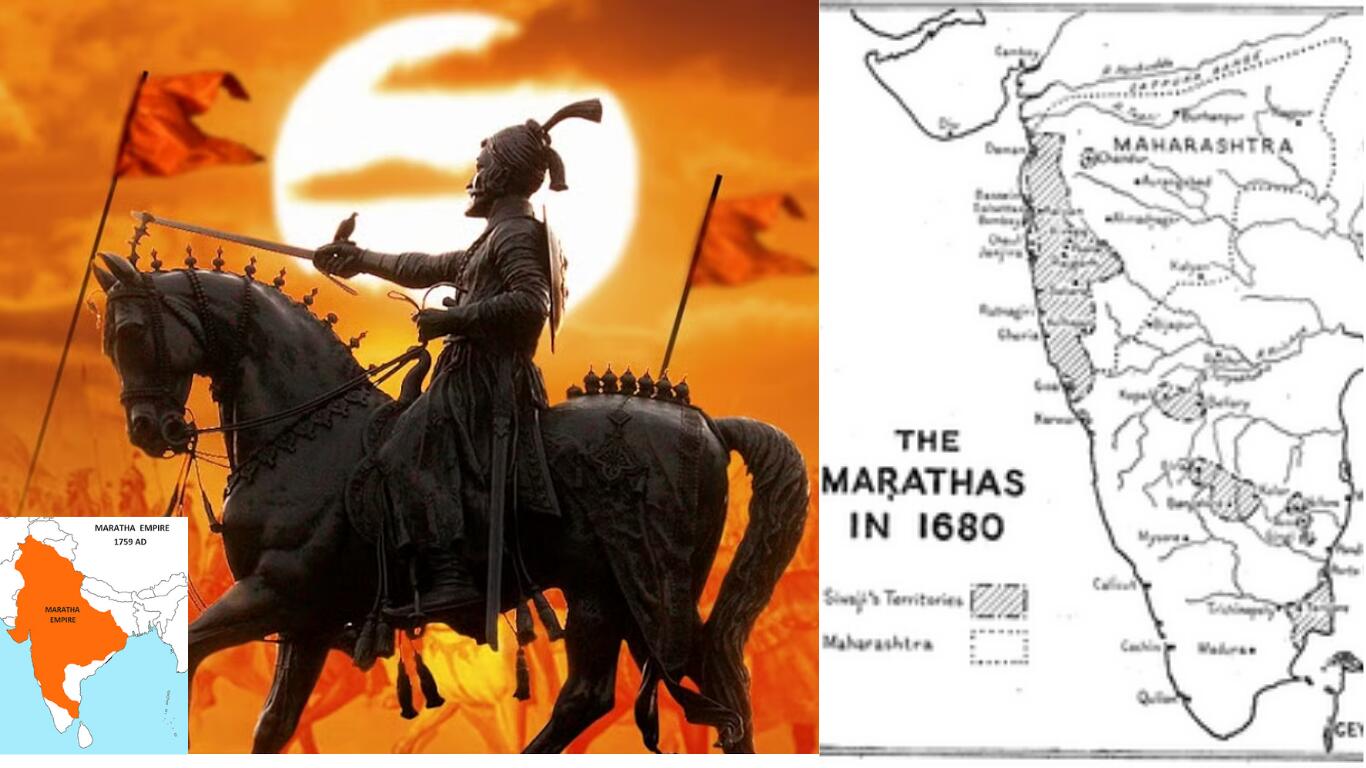
The majestic Gingee Fort in Tamil Nadu, often referred to as the “Troy of the East,” has finally earned its rightful place on the global heritage map. Among the twelve Indian forts recognised by UNESCO under the “Maratha Military Landscapes” nomination, Gingee is the only one located outside Maharashtra. This has piqued national curiosity: what is a Maratha fort doing in the heart of Tamil Nadu? The answer reveals a forgotten saga of courage and vision—a time when the Marathas, under Chhatrapati Shivaji Maharaj and his successors, extended their military and cultural influence deep into the southern peninsula.
Originally built by the Cholas and later fortified by the Vijayanagara rulers, Gingee gained new significance in the late 17th century when Chhatrapati Rajaram, Shivaji’s son, used it as a stronghold during the Mughal siege of the Maratha empire. It was here that the Maratha resistance burned bright even when most of their forts in Maharashtra had fallen to Aurangzeb’s onslaught.
Shivaji Maharaj’s Southern Campaign: Strategy, Not Expansionism
The Maratha march into Tamil Nadu wasn’t a random military expedition—it was a bold and calculated strategic move. In 1677, Shivaji Maharaj formed a military alliance with the Qutub Shah of Golconda. With support from this alliance, he launched a southern campaign against the Bijapur Sultanate. Backed by a massive army of over 70,000 troops, Shivaji captured forts like Vellore and Gingee and laid the foundation for Maratha control in Tamil Nadu and parts of Karnataka.
Shivaji’s campaign even brought him into conflict with his half-brother Venkoji, the Maratha ruler of Thanjavur. Despite familial tension, Shivaji’s focus remained clear: unite Bharatiya lands under indigenous rule and resist foreign and Islamic imperial forces. His campaign wasn’t about domination—it was about national consolidation against invaders.
Naval Supremacy and Anti-Colonial Resistance
Shivaji Maharaj’s genius wasn’t confined to land. In 1657, he laid the foundations of the Maratha Navy—India’s first structured naval force. Long before the British, French, or Mughals showed serious maritime intent, Shivaji had gallivats and gurabs patrolling the Konkan coast. Under Admiral Kanhoji Angre, the Maratha navy not only protected Indian shores but launched raids against European powers.
He directly challenged the Portuguese and the Siddis, disrupting their trading posts and supply chains. Forts like Sindhudurg and Vijaydurg became naval bastions. This vision of maritime freedom extended to the south too, ensuring that the coastline from Gujarat to Tamil Nadu would not fall easily into colonial hands.
Maratha Roots in Tamil Nadu: Culture and Dharma
The Maratha presence in Tamil Nadu extended far beyond military posts. It became a civilisational bond. Nowhere is this more visible than in Thanjavur, where the Bhonsle dynasty ruled for generations. They became patrons of the famed Brihadeeswarar Temple, built by the Cholas but nurtured under Maratha rule.
Even today, the descendants of this dynasty—like Prince S Babaji Rajah Bhonsle—serve as temple trustees. They are living reminders that the Marathas were never outsiders. They preserved temples, promoted dharmic institutions, and embraced Tamil culture while strengthening the broader civilisational identity of Bharat.
The Southward Vision of Swarajya Still Stands Tall
The inclusion of Gingee Fort in the UNESCO heritage list is not just a bureaucratic achievement—it is a symbolic reclamation of our united history. Shivaji Maharaj’s southern campaign was not an act of conquest but an assertion of sovereignty, unity, and dharma. He envisioned Swarajya not bounded by geography, but by shared culture and purpose.
In today’s divisive times, when attempts are made to pit north against south and language against language, the Maratha legacy in Tamil Nadu serves as a reminder of India’s unbroken civilisational unity. The Marathas didn’t invade Tamil Nadu—they protected it. They didn’t impose culture—they upheld it. From Gingee’s ramparts to Thanjavur’s temple domes, their presence echoed one message: Bharat is one, united in soul and sovereignty. This forgotten chapter, now recognised globally, must be remembered proudly—because it shows us





