





















RelatedPosts
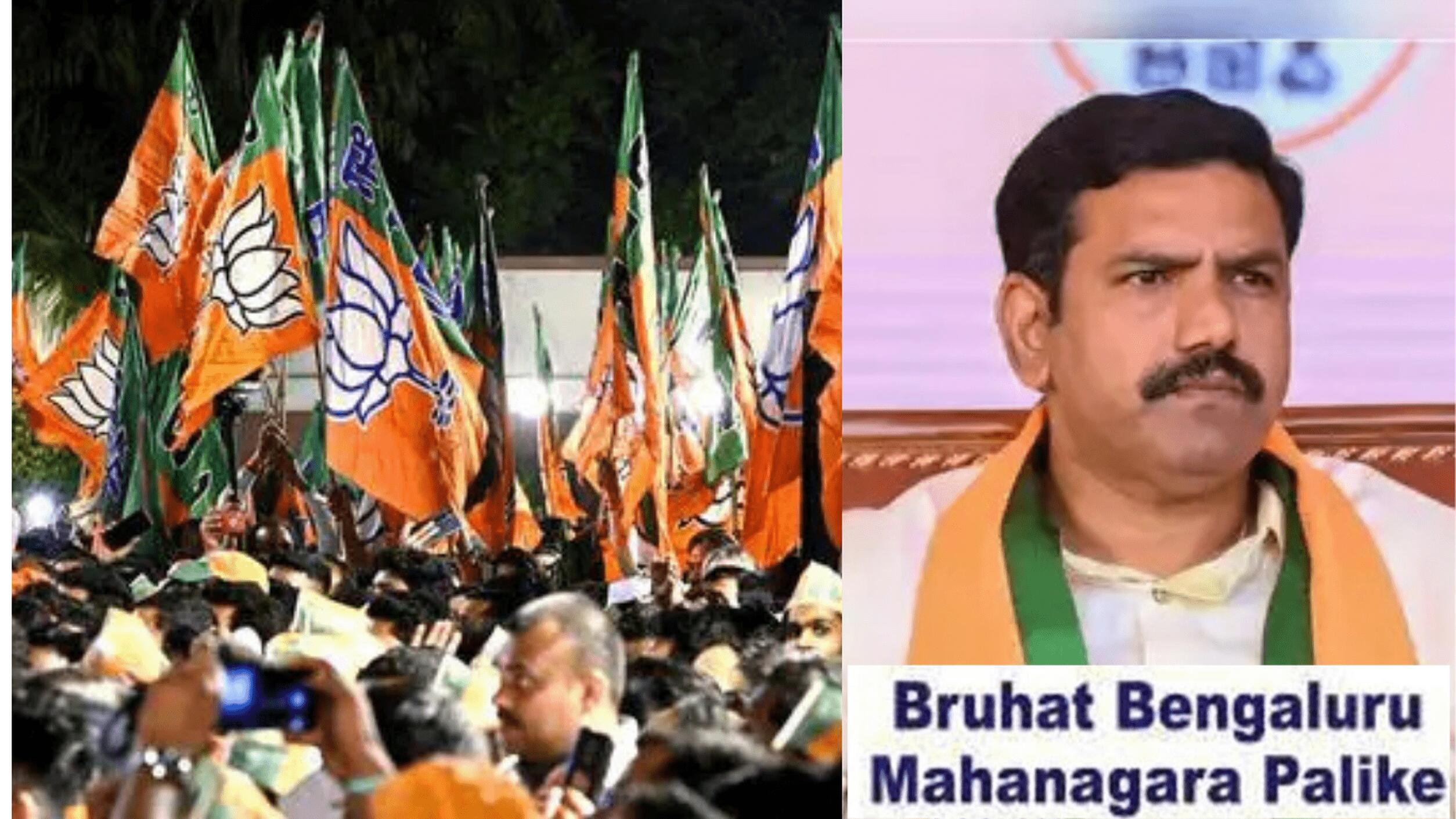
In a major political escalation in Karnataka, the Bharatiya Janata Party (BJP) has launched a full-scale agitation against the Congress government’s proposal to divide the Bruhat Bengaluru Mahanagara Palike (BBMP) into five smaller corporations. The BJP has labelled the move a politically-driven conspiracy to alter the electoral landscape of Bengaluru ahead of the much-delayed civic polls. Far from being a governance reform, the BJP alleges that this division plan is an ill-conceived tactic to weaken the opposition’s stronghold and deflect attention from real civic issues facing the city.
At the heart of the controversy is the Congress-led government’s renewed push to create a “Greater Bengaluru” by carving BBMP into five distinct administrative units. While the government claims it is meant to streamline administration, BJP leaders are up in arms, calling it a reckless experiment that will increase administrative costs, disrupt governance, and serve no real purpose for the city’s overburdened residents.
BJP Leaders Mobilize Against BBMP Split
In a strategic meeting held at the BJP state headquarters in Malleshwaram on July 26, top leaders, including state party president B.Y. Vijayendra and Leader of the Opposition R. Ashoka, drew up a battle plan. The session, attended by BJP MLAs from the Bengaluru metropolitan region, resulted in a decision to challenge the Congress move on all fronts — inside the Assembly, through public protests, and in the judiciary.
R. Ashoka made it clear that the BJP would not allow what he called the “balkanisation” of Bengaluru. “This is not an administrative necessity. It is a well-thought-out political manoeuvre by the Congress to manipulate ward boundaries and control future BBMP elections,” he told reporters after the meeting. The BJP plans to launch ward-level campaigns to educate citizens about the pitfalls of the BBMP split, and challenge the bill in the High Court if passed in the Assembly.
Legal, Political and Public Campaigns in the Works
While the Congress government may have the numbers to push the bill through the legislature, the BJP has resolved to take the battle to the public and the courts. Leaders have pointed out that the plan lacks transparency, scientific backing, or any demand from citizens. Instead, they argue that dividing the BBMP will multiply bureaucratic red tape and drain resources.
According to B.Y. Vijayendra, the government’s priorities are grossly misplaced. “Instead of addressing Bengaluru’s core problems like traffic congestion, housing backlog, and waste management, the Congress is busy redrawing governance maps. They are floating tenders without studies and entertaining blacklisted companies for major projects like the tunnel road,” he alleged.
Vijayendra also highlighted the failure of similar models in cities like Delhi and Mumbai. In both cases, trifurcation of municipal corporations created confusion, administrative overlap, and public dissatisfaction, eventually forcing governments to reverse their decisions.
Misplaced Urban Priorities, Say BJP Leaders
The BJP has strongly criticised what it calls the Congress government’s lack of planning. Bengaluru, one of India’s fastest-growing cities, still faces severe civic challenges — from flooded roads and poorly managed traffic to a lack of Occupancy Certificates (OCs) and Completion Certificates (CCs) for thousands of apartments.
Despite this, the Congress leadership under Chief Minister Siddaramaiah and Deputy CM D.K. Shivakumar is reportedly rushing into administrative experiments. “What Bengaluru needs is cohesive and coordinated urban management, not fragmentation and confusion,” Vijayendra said.
The party has also questioned the rationale behind creating five separate mayors and corporations, when administrative decentralisation can be achieved with zone-level reforms under a unified civic body. “Appoint five senior IAS officers for five zones. That’s workable. But splitting BBMP into five corporations will only politicise governance,” said a senior BJP MLA.
Political Engineering Behind BBMP Division?
At the crux of BJP’s objection lies the suspicion that the Congress is using the BBMP division to redraw ward boundaries and weaken BJP influence. Party leaders have stated that this move is a desperate attempt to gain ground in areas where Congress is unpopular. The timing, ahead of expected BBMP elections, is raising even more doubts.
Ashoka accused the Congress of deliberately ignoring unresolved issues like property tax inconsistencies, increased cess charges, and failure of e-governance platforms. “This government is not interested in solving real problems. Their entire focus is on how to manipulate civic institutions to their advantage,” he charged.
The BJP has identified five key objections to the proposal: the plan solves no real problems; it weakens existing administrative structures; past experiments in Delhi and Mumbai have failed; administrative costs will spike; and the move is driven by political motives, not public welfare.
A Battle for Bengaluru’s Governance
The BJP’s aggressive stance against the BBMP trifurcation reflects a broader political battle over the control and future of Bengaluru. While the Congress government frames the division as administrative reform, the BJP has exposed it as a politically charged tactic with little public support and grave consequences for governance. The saffron party is determined to turn this issue into a mass movement, not just a legislative debate.
As the Assembly session approaches, all eyes will be on how this confrontation unfolds in the courts, on the streets, and in the political arena. One thing is certain: Bengaluru’s governance model is now at the heart of Karnataka’s newest political flashpoint.