



















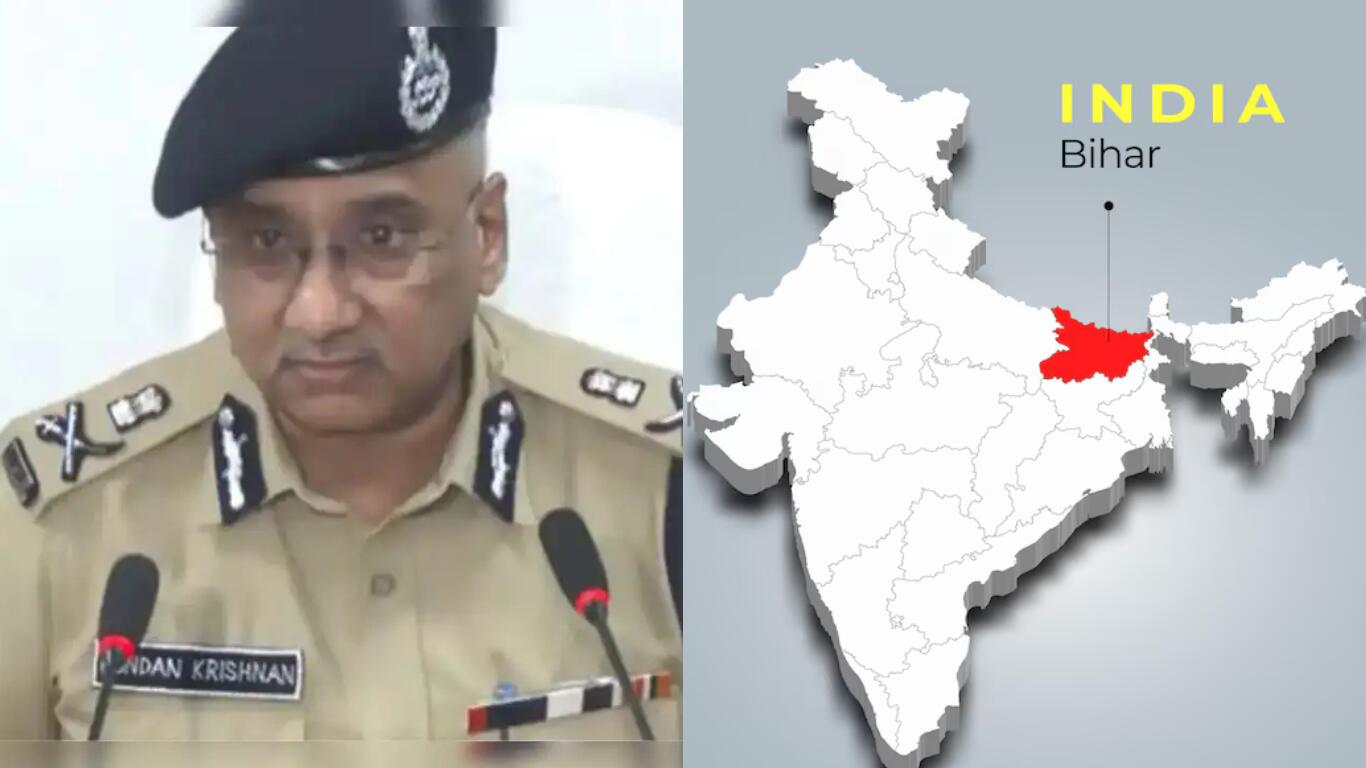
A shocking statement by Bihar’s ADG Kundan Krishnan has stirred public debate — he claimed that farmers being free during May and June leads to a spike in murders in the state. While crime continues to make headlines in Bihar, the state police have launched a multi-front offensive to tackle organized killings, drug trade, and gang violence. From forming special monitoring cells for contract killers to reviving fast-track courts, Bihar Police is under pressure to restore order. Amid rising incidents involving hired assassins and armed robberies, the crackdown is also politically significant as the state moves toward upcoming elections.
Contract Killer Cell Formed Under STF
In response to a surge in contract killings, Bihar Police has created a dedicated “Contract Killer Monitoring Cell” under the Special Task Force (STF). ADG Headquarters Kundan Krishnan announced that this cell will collect and digitize comprehensive dossiers on known contract killers operating across Bihar. Each file will include photographs, residential details, and gang affiliations. The move is intended to enhance the police’s ability to track suspects swiftly after any murder-for-hire incident. The ADG expressed concern over young men lured into such killings for money, urging society to step in and prevent youth from going down this dangerous path.
Kodha, Narcotics Gangs Under the Scanner
The crackdown isn’t limited to contract killings. The Bihar Police has also launched specialized cells to monitor the activities of local gangs. One of them is the Kodha Cell, targeting the infamous Tiwari gang operating out of Begusarai. Another newly constituted unit within the Anti-Terrorism Force (ATF) focuses on the narcotics trade, particularly synthetic drugs proliferating in semi-urban regions. These cells aim to strengthen inter-station coordination and expand personnel count to improve response time. The ADG said the state is investing in intelligence-led operations, emphasizing that many inter-state criminal plots have already been foiled this year due to STF efforts.
Fast-Track Justice to Return
To speed up convictions in violent crimes, Bihar is planning to reinstate fast-track courts. ADG Krishnan noted that until 2012-13, such courts were delivering 2,000 to 3,000 life sentences annually. Today, that number has dropped to just 500–600. A proposal has already been sent to the Home Department to revive and expand the fast-track system. The objective is not only to ensure swift justice but also to build public confidence in law enforcement. The ADG emphasized that punitive action — including confiscation of illegally acquired property — will be intensified. So far, 1,290 criminals have been identified for property seizure.
Crime Rates, Seasonal Trends, and Naxalism Decline
Interestingly, ADG Krishnan argued that crime hasn’t increased but follows a seasonal pattern. “Murders are highest between April and June when farmers are generally free,” he claimed, linking crime rates to rural idleness. He also claimed that the overall crime trend is declining compared to last year. Meanwhile, on the insurgency front, he declared that Maoist strongholds in Gaya, Aurangabad, Munger, and Jamui have been largely cleared. Since January, 82 Naxalites have been arrested. With the capture of key leader Amarjeet Bhokta, Bihar’s remaining armed squads are reportedly disbanding. A few residual cells in Jamui and Kharagpur are expected to be neutralized soon.
Police Reform and Social Stability Needed
The Bihar Police’s multi-pronged crackdown shows clear intent — but intent must now translate into institutional success. Reviving fast-track courts, compiling criminal databases, and busting narcotics networks are necessary reforms. However, the deeper issues — youth unemployment, rural frustration, and political protection for criminals require long-term social and governance interventions. With elections approaching, Nitish Kumar’s government will be closely watched for outcomes on law and order. If crime rates and contract killings can be contained, it could strengthen NDA’s position. But if the seasonal excuse becomes a yearly recurrence, public anger may find a different outlet at the ballot box.