























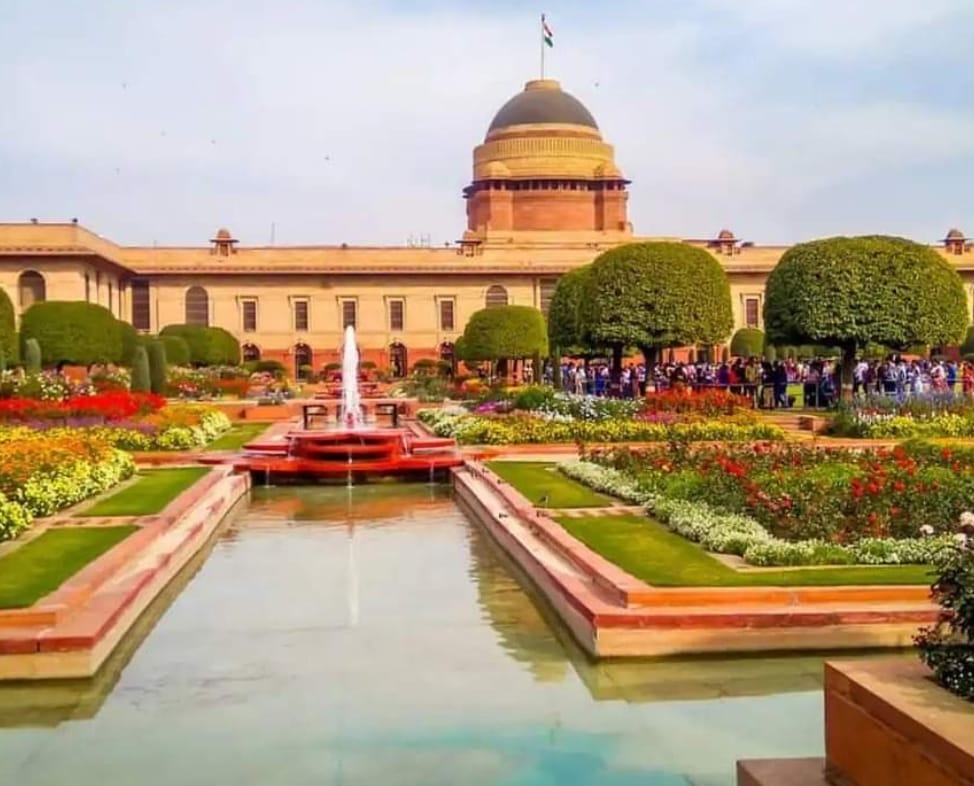
While Mughal-era gardens like Shalimar Bagh and Humayun’s Tomb are widely celebrated as the epitome of horticultural art in India, a thought-provoking thread by author and history commentator Amit Schandillia has reignited debate about the subcontinent’s far older and often overlooked garden legacy.
In a detailed post on Twitter (X), Schandillia writes:
‘To credit the Mughals with India’s horticultural heritage is unalloyed intellectual and ideological dishonesty.’
He points out that long before Babur laid out his famed Charbagh in Kabul, Indian texts across millennia, from epics and scriptures to poetry and even erotica were steeped in lush descriptions of gardens and aesthetic landscapes.
From the celestial Nandanavana of Indra, to Ashoka Vatika in Ramayana, the poetic gardens of Kalidasa, and the sacred Vrindavan of Krishna; India’s civilizational memory is rich with arboreal imagery. Even in Kamasutra entire chapters are devoted to the ideal of garden-making, listing flowers, ponds, and aesthetic duties for the cultured citizen.
‘Every single Purana discusses gardens. Both Ramayana and Mahabharata paint pictures of luxurious horticulture. Everything Kalidasa ever composed revolved around gardens,’ he writes.
His post cites numerous classical references:
Greek sophist Philostratus (2nd century AD), who described an Indian garden with fountains and a drinkable pool
Roman writer Claudius Aelianus, who spoke of royal zoos in India centuries before Islam
Chinese monks Faxian and Xuanzang, who in the 5th and 7th centuries CE described beautifully cultivated monastery gardens and serene urban landscapes across India.
Schandillia’s core argument is that while few physical remnants of pre-Islamic gardens remain largely due to nature’s erosion and centuries of neglect, the literary record is too vast and vivid to ignore.
‘Just because no manicured, pre-Muslim arboretum has survived into our century doesn’t mean they didn’t exist. Manicuring is work, and without it, gardens grow wild,’ he notes.
The post, now widely shared has struck a chord in a climate where questions about historical narratives and cultural credit are under fresh scrutiny. While there’s no denying that the Mughals elevated garden architecture with Persian styles and imperial patronage, Schandillia’s argument is that the roots of Indian horticulture run much deeper into spiritual tradition, poetic imagination, and aesthetic philosophy.
His closing line sums up the sentiment with biting clarity:
‘Bharat itna bhi gaya guzra nahi tha yaar.’
(India wasn’t that far gone, my friend.)