




















Ancient India was a civilizational powerhouse of knowledge, science, and culture. Its influence shaped Asia’s religions, governance, medicine, and arts, and extended into Europe through translated texts. From advanced mathematics to metallurgy, India’s contributions were foundational yet often uncredited. Despite invasions and erasure, India’s legacy endures, demanding recognition as a global intellectual and spiritual leader.
An ancient civilization with a history spanning millennia, India has profoundly influenced its neighbors and regions far beyond its borders. This influence, often spread peacefully, unlike the invading cultures, through trade, religion, education, and the exchange of ideas, has left an indelible mark across the world, on the cultures, sciences, and societies of Southeast Asia, East Asia, Central Asia, the Arab world, and indirectly, to Russia and Central Europe. This discourse explores the multifaceted civilizational influence of India, examining its impact on culture, religion, technology, trade, and more, while also addressing the significant transmission of Indian knowledge to the Middle East and Europe.
India’s most significant and enduring influence has been in the realms of culture and religion, primarily through the dissemination of Hinduism and Buddhism. These faiths, born in India, carried with them a rich tapestry of art, literature, social structures, and philosophical thought.
In Southeast Asia, from the early centuries before other cultures were formed, traders, priests, and scholars from India established contact with kingdoms across the region. Powerful empires like the Khmer of Cambodia, the Srivijaya of Sumatra, and the Majapahit of Java adopted Hinduism and Buddhism as state religions. Monumental structures such as Angkor Wat in Cambodia, Borobudur and Prambanan in Indonesia reflect Indian religious, architectural, and mythological influence. Stories from the Ramayana and Mahabharata are integrated into local folklore and performances across Thailand, Cambodia, and Indonesia. The concept of Devaraja (god-king) echoed Indian notions of divine kingship.
Sanskrit became the language of elites, and Indian scripts such as Pallava were adapted to local languages. Indian styles of governance and the concept of dharma-based rulership influenced administrative frameworks. The caste system was loosely emulated in some areas. Indian architectural principles, temple layouts, and mandala-based designs were widely adopted.
In East Asia, India’s influence traveled via Buddhism. From the 1st century CE, Buddhism spread into China, Korea, and Japan, carrying with it Indian deities, philosophy, and monastic traditions. Hindu gods such as Ganesha and Saraswati were integrated into Chinese and Japanese Buddhist pantheons. The Japanese goddess Benzaiten originates from Saraswati. Indian art influenced Buddhist sculpture and cave paintings, notably in China’s Dunhuang caves.
The martial art of Kung Fu traces back to the Indian monk Bodhidharma, who introduced physical training and meditation techniques to Shaolin monasteries. Similarly, Kalari Payattu of Kerala influenced martial practices in East Asia.
In Central Asia, Indian culture flourished especially during the Kushan Empire. Brahmi and Kharosthi scripts were used, and Buddhist monasteries dotted the Silk Road. The massive Bamiyan Buddhas in Afghanistan were prime examples of Indian artistic and spiritual influence before their destruction in 2001.
The Zoroastrian/Persian religion (Avesta), predominant in ancient Persia, shares deep linguistic, ritualistic, and theological links with the Vedic tradition. Deities like Mithra, Ahura Mazda, and Soma have their counterparts in Hinduism. Pre-Islamic Arabia also had goddesses like al-Lat, al-Uzza, and Manat, bearing resemblance to Hindu goddesses Lakshmi, Durga, and Saraswati. The Yazidi Kurds retain practices such as sun worship, peacock symbolism, and reverence for serpents echoes of ancient Hindu traditions.
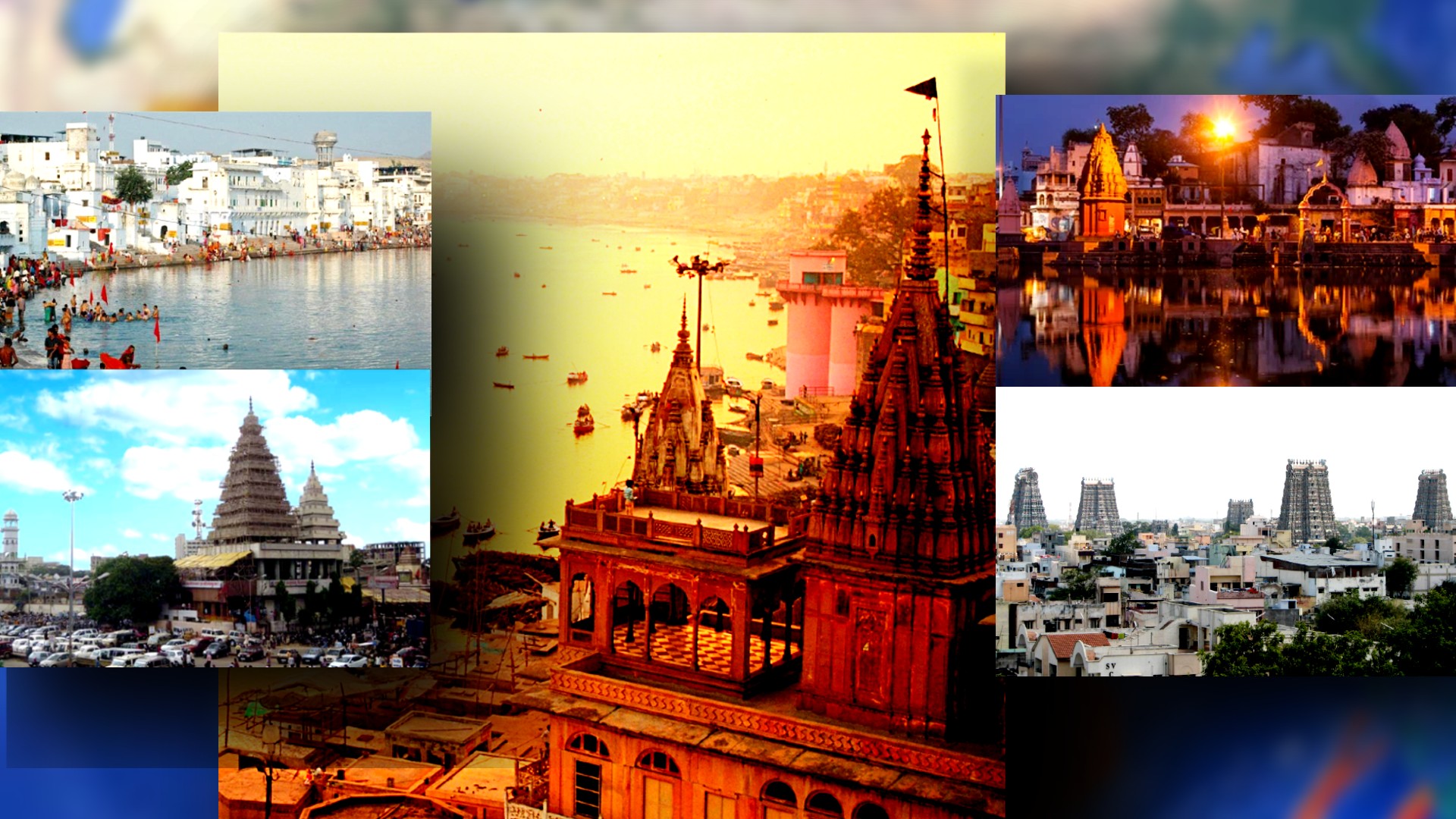
Ancient India’s vast educational ecosystem ranging from forest universities to global centers like Nalanda, Takshashila, Ujjain, and Sharada Peeth embodied a civilizational culture rooted in knowledge, science, and spiritual inquiry. Institutions like Kanthalloor Shala and Valabhi specialized in mathematics, political science, and medicine. Learning thrived in temples and urban centers alike. This sophisticated system was later destroyed by invasions, with fragments of its knowledge trickling to Europe through Arabic and Latin translations, especially at places like the Toledo School in Spain. The depth, diversity, and continuity of this knowledge tradition affirm India’s status as a cradle of global intellectual heritage.
India’s contributions to science and mathematics were transformative. The decimal system and the concept of zero originated in India. These were transmitted to the Arab world via scholars like Al-Khwarizmi and later reached Europe. Aryabhata, Brahmagupta, and Bhaskaracharya developed foundational concepts in trigonometry, algebra, and calculus.
The Surya Siddhanta explained planetary motion, spherical geometry, and sidereal time centuries before Kepler or Newton. Indian texts described gravity as “Gurutvakarshan” centuries before Newton. The Kerala School of Mathematics developed calculus concepts, including infinite series, which predated Newton and Leibniz. Jesuit scholars and traders likely carried these ideas to Europe, where they were adopted without due credit.
Ancient India’s intellectual legacy was not incidental it was a conscious civilizational pursuit. From early forest universities to great centers like Takshashila, Nalanda, Ujjain, Valabhi, and Kanthalloor Shala, India nurtured knowledge systems in science, philosophy, arts, and governance. Sharada Peeth in Kashmir held a revered library, while temple learning hubs such as Annamalai preserved oral and written traditions. These centers were destroyed by waves of invasions, and much of their knowledge was appropriated or erased. What survived was often filtered into Europe via Arabic and Latin translations at centers like the Toledo School in Spain. This systemic and civilizational commitment to learning was unmatched.
Oppenheimer quotes the Bhagavad Gita after witnessing the first atomic bomb test. Western scientists like Heisenberg, Schopenhauer, and Tesla studied Indian philosophy. Yet institutional acknowledgment of Indian sources remains rare.
In metallurgy, India produced advanced Wootz steel, used in Damascus swords and later influencing Japanese katana production. The Iron Pillar of Delhi remains rust-free after 1600 years an engineering marvel.
Ayurveda was translated into Arabic, forming the basis of Unani medicine. Sushruta’s surgical techniques influenced Middle Eastern medical systems. Indian herbs and dietary principles influenced Southeast Asian medicine.
Indian traders traveled widely, using sophisticated financial instruments like hundis and organizing themselves into guilds. The Chola dynasty maintained naval and diplomatic links with Southeast Asia. Universities like Nalanda and Takshashila attracted scholars from Tibet, China, Korea, and the Arab world. Panini’s Sanskrit grammar laid the groundwork for European linguistics.
Some traditions link the lost years of Jesus Christ to study in Indian and Tibetan monasteries. His moral teachings mirror Buddhist and Hindu dharma. The Ten Commandments bear similarities to Yamas and Niyamas of Indian philosophy.
Indian spiritual traditions Yoga, Vedanta, Samkhya were translated and spread worldwide. Upanishads, the Gita, and Patanjali’s Yogasutras were translated into Arabic and later European languages. They influenced Sufism and Western mysticism.
India’s influence on Russia and Central Europe was indirect but present through trade and scholarship. Indian traders settled in cities like Astrakhan. Russian Indologists in the 18th–19th centuries studied Sanskrit and Indian philosophy. Slavic mythologies contain themes parallel to the Vedas.
In conclusion, India’s civilizational legacy is global and foundational. Its contributions in spirituality, science, governance, medicine, and art formed the intellectual bedrock of much of Asia and significantly impacted Europe and the Middle East. From Cambodia’s temples to Japan’s swords, from Arab goddesses to European mathematics India’s imprint is everywhere. That these contributions were often erased, appropriated, or diminished is a historical injustice. It’s time India reclaims its rightful place in world history with facts, evidence, and unapologetic pride.