


























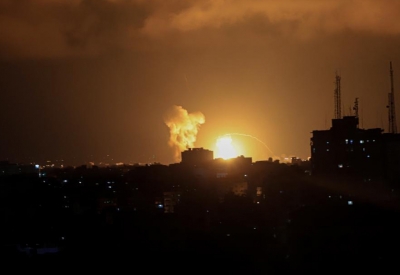
As missiles lit up skies over the Middle East during the recent Israel-Iran confrontation, the world witnessed just how crucial air defence systems have become in modern warfare. While Israel’s advanced defence grid faced an overwhelming wave of drones and missiles from Iran—some of which broke through—India quietly demonstrated its own air defence strength closer to home.
In May 2025, India faced a different kind of pressure: cross-border drone and missile threats from Pakistan following a major anti-terror strike. Unlike Israel, India managed to keep its skies secure with little to no reported damage. This contrast has sparked a new conversation: Is India’s air defence system more effective in real-world scenarios than it gets credit for?
Operation Sindoor: A Quiet Test of Strength
Triggered by a deadly terror attack in Jammu and Kashmir’s Pahalgam, India launched Operation Sindoor, targeting terror camps across the Line of Control. In retaliation, Pakistan deployed a wave of drones and short-range missiles towards Indian cities, including Jammu, Srinagar, and Amritsar.
But this time, India was ready.
Key systems like:
SAMAR – a short-range, quick-response air defence system built in India,
Akash – an integrated radar and control network for tracking and intercepting threats,
Barak-8 – a joint India-Israel missile system designed to intercept a variety of aerial threats,
S-400 Triumf – India’s most powerful long-range air defence system, sourced from Russia,
All worked in tandem to intercept incoming threats with remarkable precision. The result? No significant damage, no major disruption, and a strong signal to adversaries.
What Went Wrong for Israel—and Why It Matters to India
Meanwhile, in West Asia, Iran launched over 300 projectiles—including ballistic missiles, cruise missiles, and kamikaze drones—at Israel in what was one of the largest aerial attacks in recent history.
Even though Israel deployed its well-known Iron Dome, David’s Sling, and Arrow systems, a few missiles still broke through. Some targeted military sites, while others impacted civilian infrastructure. Advanced Iranian missiles like the Ghadr-110 (which deploy decoys to confuse interceptors) and the Fattah-1 hypersonic missile (capable of flying over Mach 13) exposed the limits of even top-tier defence tech.
This offers an important lesson: no system is impenetrable, but the ability to minimize damage through coordination and rapid response is what makes the difference.
India’s Advantage: Innovation, Integration, and Real-World Success
India’s strength lies not only in the hardware, but in how well its systems are integrated and adapted to local threats.
Take SAMAR, for example. Built using repurposed technology, it’s a cost-effective tool designed to shoot down low-flying drones and missiles—a threat that’s increasingly common in the region. During Operation Sindoor, it performed exactly as intended.
Akash, another homegrown system, ensures smooth communication between radar units and interceptor teams, helping make split-second decisions during attacks.
Unlike systems that are only tested in labs or drills, India’s defences have faced real combat scenarios—and delivered.
Why It’s Time for India to Lead in Defence Exports
Proven Track Record: India’s systems have already been battle-tested—not just once, but repeatedly. That gives them a credibility few others can claim.
Affordable and Effective: Indian defence tech is often cheaper than its American, Israeli, or European counterparts—without compromising performance.
Strategic Partnerships: Countries in Africa, Southeast Asia, and Latin America are seeking defence alternatives that don’t come with political strings. India is well-placed to fill that gap.
Exporting more defence tech means more investment in Indian manufacturing, jobs, and innovation—strengthening India’s own defence ecosystem in the process.
A Warning and an Opportunity
The Israel-Iran conflict has been a wake-up call for many nations. It reminded the world that threats can come in waves, in the form of drones, decoys, or hypersonic missiles. Countries that don’t adapt fast risk being overwhelmed.
India, with its recent show of strength, now has a window of opportunity—not just to protect its own skies, but to become a reliable air defence partner for the world.
As the global defence landscape shifts, India is no longer a passive observer. Its performance in recent conflicts proves it has what it takes—not just to defend itself, but to lead. The next step? Turn that battlefield credibility into strategic influence and economic strength through smart defence exports.
