















TFIPOST हिन्दी
TFIPOST Global
Tfipost.com
Tfipost.com
No Result
View All Result
  • Premium
  • Politics
    • All
    • Analysis
    • Opinions
    • Trending
    From pilgrimage to metros, now without the wait

    From Kashi to Mumbai and Ayodhya to Pune: Modi Expands Rail Network with New Amrit Bharat Express Services

    Why is Making a Jet Engine so Hard | The failure of Kaveri

    Why is Making a Jet Engine so Hard | The failure of Kaveri

    Rajnath Singh at SCO, reaffirming India’s zero-tolerance stand on terrorism.

    “No More Double Standards”: Rajnath Singh’s SCO Message Rewrites India’s Terror Response Playbook

    Nepal PM Faces Fresh Controversy as Church Demolition Row Triggers Political Storm

    Nepal PM Faces Fresh Controversy as Church Demolition Row Triggers Political Storm

    • Analysis
    • Opinions
    • Trending
  • Economy
    • All
    • Business
    • Economy1
    • Finance
    India–New Zealand FTA signed in New Delhi, marking a “once in a lifetime” moment in trade ties.

    India, New Zealand Seal Fast-Tracked Trade Pact to Expand Duty-Free Access, Jobs and $5 Billion Trade Target

    Ahmadis in Pakistan: From Faith to Marginalisation Under Law and Society

    Ahmadis in Pakistan: From Faith to Marginalisation Under Law and Society

    Open Demat Account with Zero Annual Maintenance Charges What to Look For

    Open Demat Account with Zero Annual Maintenance Charges What to Look For

    Blood in the Meadows: How the Pahalgam Terror Attack Exposed Calculated Targeting of Civilians in Kashmir

    Blood in the Meadows: How the Pahalgam Terror Attack Exposed Calculated Targeting of Civilians in Kashmir

    • Business
    • Finance
  • Defense
    • All
    • Defence
    • Strategy
    • Weaponry
    Why is Making a Jet Engine so Hard | The failure of Kaveri

    Why is Making a Jet Engine so Hard | The failure of Kaveri

    Rajnath Singh at SCO, reaffirming India’s zero-tolerance stand on terrorism.

    “No More Double Standards”: Rajnath Singh’s SCO Message Rewrites India’s Terror Response Playbook

    Recovered arms and arrests have intensified scrutiny on a suspected cross-border terror network.

    Pakistan’s Proxy War Faces a Setback as Delhi Terror Plot is Crushed, 18 Weapons Seized

    The scars of Pahalgam endure, even as the nation moves forward

    Pahalgam Anniversary: Modi Signals Firm National Stand as India Reasserts Anti-Terror Resolve

    • Defence
    • Strategy
    • Weaponry
  • Geopolitics
    • All
    • Africa
    • Americas
    • Asia Pacific
    • Europe
    • South Asia
    • West Asia
    When law becomes an instrument of exclusion, persecution moves far beyond the courtroom.

    Ahmadis in Pakistan: From Faith to Marginalisation Under Law and Society

    When uranium becomes strategy, India moves first.

    India’s $4 Billion Uranium Coup with Kazakhstan Rewrites the Global Nuclear Balance

    “Fixing the World”: What a Century of Big Ideas Reveals About Us

    “Fixing the World”: What a Century of Big Ideas Reveals About Us

    Pakistan Tried to Bury an NYT Report. It Only Exposed Asim Munir’s Panic

    Pakistan Tried to Bury an NYT Report. It Only Exposed Asim Munir’s Panic

    • Africa
    • Americas
    • Asia Pacific
    • Europe
    • South Asia
    • West Asia
  • Knowledge
    • All
    • Culture
    • Education
    • History
    • Indology
    Chants of ‘Jai Badri Vishal’ Echo as Badrinath Portals Open; All Four Dhams Now Accessible to Pilgrims

    Chants of ‘Jai Badri Vishal’ Echo as Badrinath Portals Open; All Four Dhams Now Accessible to Pilgrims

    Kedarnath Dham Portals Open for Devotees After 181 Days Amid Vedic Chants, Traditional Rituals

    Kedarnath Dham Portals Open for Devotees After 181 Days Amid Vedic Chants, Traditional Rituals

    Sardar Patel and Amit Shah

    Sardar Patel’s 1947 Blueprint on Minority Quotas Resurfaces as Reservation Debate Returns to Centre Stage

    The 1973 Constitution and ‘Bhutto’ the Man Who Made It: What Pakistan Owes and What It Destroyed

    The 1973 Constitution and ‘Bhutto’ the Man Who Made It: What Pakistan Owes and What It Destroyed

    • Culture
    • History
    • Indology
  • Law
  • Lounge
    • All
    • Books
    • Cinema
    • Entertainment
    • Food
    • Games
    • Health
    • Lifestyle
    • Satire
    • Sports
    • technology
    • Travel
    When regulation meets the algorithm

    India Tightens Digital Control as Online Blocking Orders Surge to 24,300 Amid AI Deepfake Trend

    Digital Data Collection In India

    India’s Data Reset Begins: Census 2027 to Become First Fully Digital Population Count

    5 Facilities in Bengaluru Specializing in Mental Health Treatment for Those with Cancer

    5 Facilities in Bengaluru Specializing in Mental Health Treatment for Those with Cancer

    UNESCO World Book Day and Copyright Day

    World Book Day 2026: UNESCO’s Multilingual Push Aligns with India’s Deep Literary Continuum

    • Books
    • Cinema
    • Food
    • Health
    • Sports
    • technology
    • Travel
    • Satire
Tfipost.com
  • Premium
  • Politics
    • All
    • Analysis
    • Opinions
    • Trending
    From pilgrimage to metros, now without the wait

    From Kashi to Mumbai and Ayodhya to Pune: Modi Expands Rail Network with New Amrit Bharat Express Services

    Why is Making a Jet Engine so Hard | The failure of Kaveri

    Why is Making a Jet Engine so Hard | The failure of Kaveri

    Rajnath Singh at SCO, reaffirming India’s zero-tolerance stand on terrorism.

    “No More Double Standards”: Rajnath Singh’s SCO Message Rewrites India’s Terror Response Playbook

    Nepal PM Faces Fresh Controversy as Church Demolition Row Triggers Political Storm

    Nepal PM Faces Fresh Controversy as Church Demolition Row Triggers Political Storm

    • Analysis
    • Opinions
    • Trending
  • Economy
    • All
    • Business
    • Economy1
    • Finance
    India–New Zealand FTA signed in New Delhi, marking a “once in a lifetime” moment in trade ties.

    India, New Zealand Seal Fast-Tracked Trade Pact to Expand Duty-Free Access, Jobs and $5 Billion Trade Target

    Ahmadis in Pakistan: From Faith to Marginalisation Under Law and Society

    Ahmadis in Pakistan: From Faith to Marginalisation Under Law and Society

    Open Demat Account with Zero Annual Maintenance Charges What to Look For

    Open Demat Account with Zero Annual Maintenance Charges What to Look For

    Blood in the Meadows: How the Pahalgam Terror Attack Exposed Calculated Targeting of Civilians in Kashmir

    Blood in the Meadows: How the Pahalgam Terror Attack Exposed Calculated Targeting of Civilians in Kashmir

    • Business
    • Finance
  • Defense
    • All
    • Defence
    • Strategy
    • Weaponry
    Why is Making a Jet Engine so Hard | The failure of Kaveri

    Why is Making a Jet Engine so Hard | The failure of Kaveri

    Rajnath Singh at SCO, reaffirming India’s zero-tolerance stand on terrorism.

    “No More Double Standards”: Rajnath Singh’s SCO Message Rewrites India’s Terror Response Playbook

    Recovered arms and arrests have intensified scrutiny on a suspected cross-border terror network.

    Pakistan’s Proxy War Faces a Setback as Delhi Terror Plot is Crushed, 18 Weapons Seized

    The scars of Pahalgam endure, even as the nation moves forward

    Pahalgam Anniversary: Modi Signals Firm National Stand as India Reasserts Anti-Terror Resolve

    • Defence
    • Strategy
    • Weaponry
  • Geopolitics
    • All
    • Africa
    • Americas
    • Asia Pacific
    • Europe
    • South Asia
    • West Asia
    When law becomes an instrument of exclusion, persecution moves far beyond the courtroom.

    Ahmadis in Pakistan: From Faith to Marginalisation Under Law and Society

    When uranium becomes strategy, India moves first.

    India’s $4 Billion Uranium Coup with Kazakhstan Rewrites the Global Nuclear Balance

    “Fixing the World”: What a Century of Big Ideas Reveals About Us

    “Fixing the World”: What a Century of Big Ideas Reveals About Us

    Pakistan Tried to Bury an NYT Report. It Only Exposed Asim Munir’s Panic

    Pakistan Tried to Bury an NYT Report. It Only Exposed Asim Munir’s Panic

    • Africa
    • Americas
    • Asia Pacific
    • Europe
    • South Asia
    • West Asia
  • Knowledge
    • All
    • Culture
    • Education
    • History
    • Indology
    Chants of ‘Jai Badri Vishal’ Echo as Badrinath Portals Open; All Four Dhams Now Accessible to Pilgrims

    Chants of ‘Jai Badri Vishal’ Echo as Badrinath Portals Open; All Four Dhams Now Accessible to Pilgrims

    Kedarnath Dham Portals Open for Devotees After 181 Days Amid Vedic Chants, Traditional Rituals

    Kedarnath Dham Portals Open for Devotees After 181 Days Amid Vedic Chants, Traditional Rituals

    Sardar Patel and Amit Shah

    Sardar Patel’s 1947 Blueprint on Minority Quotas Resurfaces as Reservation Debate Returns to Centre Stage

    The 1973 Constitution and ‘Bhutto’ the Man Who Made It: What Pakistan Owes and What It Destroyed

    The 1973 Constitution and ‘Bhutto’ the Man Who Made It: What Pakistan Owes and What It Destroyed

    • Culture
    • History
    • Indology
  • Law
  • Lounge
    • All
    • Books
    • Cinema
    • Entertainment
    • Food
    • Games
    • Health
    • Lifestyle
    • Satire
    • Sports
    • technology
    • Travel
    When regulation meets the algorithm

    India Tightens Digital Control as Online Blocking Orders Surge to 24,300 Amid AI Deepfake Trend

    Digital Data Collection In India

    India’s Data Reset Begins: Census 2027 to Become First Fully Digital Population Count

    5 Facilities in Bengaluru Specializing in Mental Health Treatment for Those with Cancer

    5 Facilities in Bengaluru Specializing in Mental Health Treatment for Those with Cancer

    UNESCO World Book Day and Copyright Day

    World Book Day 2026: UNESCO’s Multilingual Push Aligns with India’s Deep Literary Continuum

    • Books
    • Cinema
    • Food
    • Health
    • Sports
    • technology
    • Travel
    • Satire
No Result
View All Result
Tfipost.com
Tfipost.com
No Result
View All Result
  • Premium
  • Politics
  • Economy
  • Defense
  • Geopolitics
  • Knowledge
  • Law
  • Lounge

‘Champions’ of Free Market Economy get jackhammered by India at SCO

Abhishek Kumar Singh by Abhishek Kumar Singh
17 September 2022
in Economy, Geopolitics
free market economy
Share on FacebookShare on X

When a country has lots on the economic platter, it can propagate any theory and claim that the particular theory is the reason behind its success. But the test of true allegiance to that theory is only when the back is against the wall. This is where the proponents of the free market economy failed and that is why India is jackhammering them.

Oil trade is being done by private companies

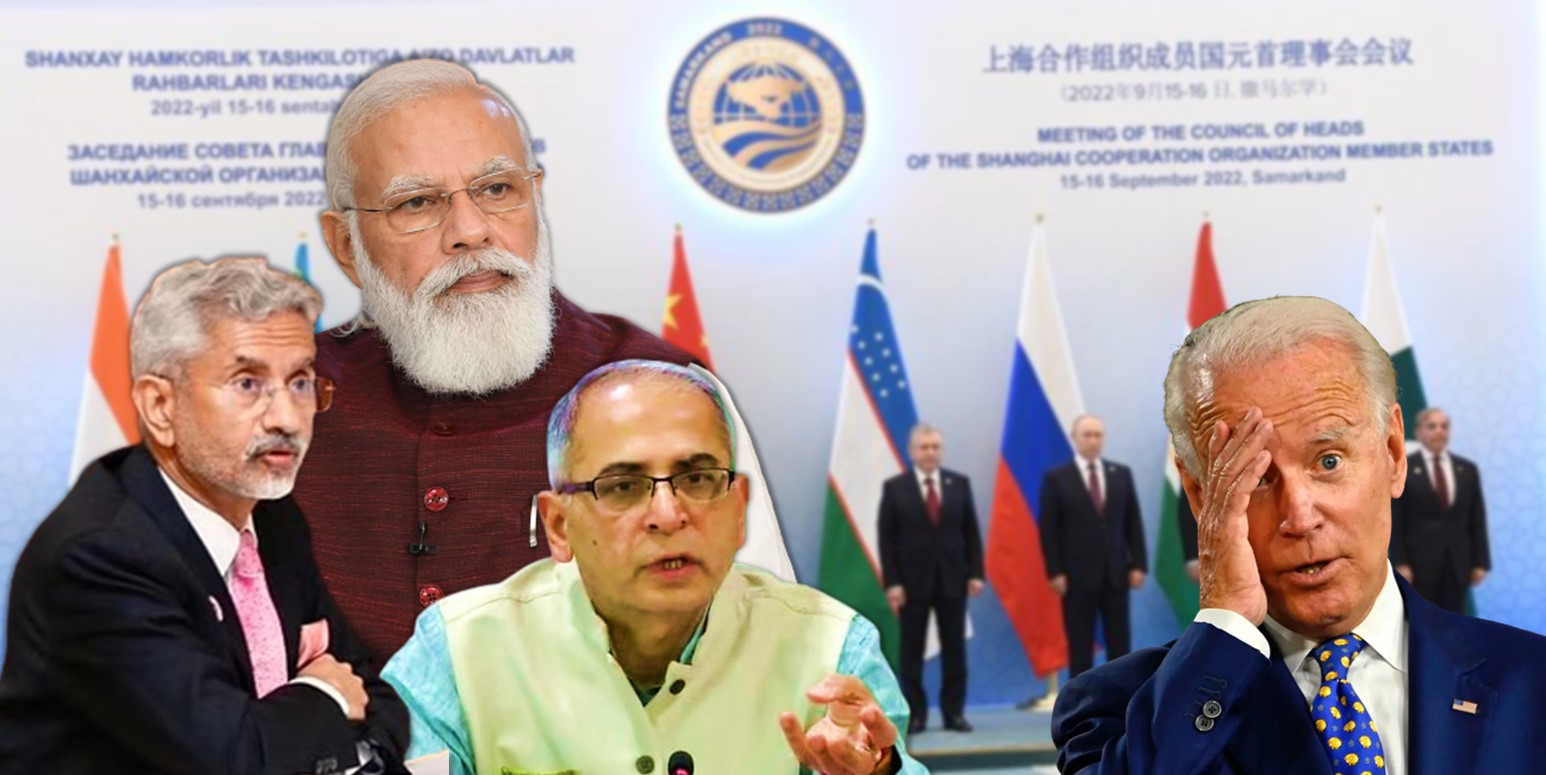
The Modi government has made it clear that, unlike western governments, it does not interfere in the day-to-day operations of private companies. Vinay Kwatra, our Foreign Secretary, gave this reality check to the media at a media briefing during the Shanghai Cooperation Organisation (SCO) meet. Kwatra explicitly said that the Russian oil available in India is there only because private companies are taking advantage of the cheaper price of oil being sold by Russian Companies.

RelatedPosts

Pakistan’s Proxy War Faces a Setback as Delhi Terror Plot is Crushed, 18 Weapons Seized

India’s $4 Billion Uranium Coup with Kazakhstan Rewrites the Global Nuclear Balance

India, New Zealand Seal Fast-Tracked Trade Pact to Expand Duty-Free Access, Jobs and $5 Billion Trade Target

Load More

Kwatra also remarked that privileges which G7 countries have accorded to themselves are not available to India. Quote, “India is not a member of the G7. Deeper discounts, market pricing.. look, we have said this several times that when the Indian entities go out and try to respond to India’s needs of the energy security and procure oil, they essentially procure it from the market.” Stating again that the government is not involved in oil purchases, Kwatra added, “These are not government-to-government purchases that we do.”

Indian companies did not accede to West’s demands

Western countries have been furious over Indians refusing their demand of not buying Russian oil. They have been trying their best to pressurise India into accepting their self-defeating demands. Various methods including overt and covert aggression were tried, but Indian companies just did not give a dime about their demands. On its part, the Indian government also did not pressurise any company against buying Russian oil.

On diplomatic forums, Indian Foreign Minister S. Jaishankar also took on journalists criticising the purchase of cheap oil. Resultantly, India’s import of Russian oil has increased by 50-fold in the aftermath of the Ukraine-Russia crisis. Russia’s position as the top oil supplier to India keeps hovering between number 1 and number 3.

Hypocrisy, thy name is West

But there is a larger point which we are missing here. The larger issue at the hand is hypocrisy. No, we are not talking about Europe’s dependence on Russian fuels. We have talked about it a lot in the past, so no point. We are talking about the inherent hypocrisy hidden in their attempts to reduce their dependence on Russian oil.

Yes, even after their sincere attempts to minimise their dependence on Russia, western countries could not shelve themselves from criticism of hypocrisy. In fact, they are so cornered that whether they buy Russian fuel or not, hypocrisy is bound to hit them. Let me explain by giving a brief snapshot of how modern-day western economies have been shaped by economic theories.

Origin of free market economy

The plinth of modern-day western economies is rooted in the concept of a free market economy. The concept first came into effect when the industrial revolution started to take shape in European countries during the 17th and 18th centuries. Within no time, the perception of land changed from crop-producing stuff to something on which factories could be established.

Now the problem with the availability of land was that its supply is non-elastic. It means that land does not follow the direct correlation link between supply and demand. So, while for resource A, an increase in supply by two percent means a similar change in price; for land, an increase in supply of land by two per cent may mean an increase of 25 per cent in the purchasing price. The problem got so exacerbated that it became easier to conquer land rather than buying it. This is where European powers went bonkers over their expansionist policy in Africa and Asia.

Role of people and government in free market economy

The countries and their companies, lots of which were national, were assisted by classical economic philosophies of the era. Adam Smith, known as the father of economics, propagated the idea of trade without borders. It meant that only demand and supply should be the two forces present in the market. According to him, the free market should not prioritise one company or another. He also advocated for the elimination of artificial scarcities and existing monopolies. In other words, Smith advocated for a market free of government control. For Smith and his ilk such as David Ricardo, Thomas Malthus, Anne Robert Jacques Turgot, John Stuart Mill, Jean-Baptiste Say, and Eugen Böhm von Bawerk among others, governments are a necessary evil that is required in order to expand wealth creation in a harmonious manner.

People? Well, people are only supposed to be buyers or sellers, and nothing else. It is nothing less than free market fundamentalism and later came to be known as laissez-faire. Prevalence of various classical thinkers contributed to other branches as well. One of them includes voluntary socialism, which is manifested in redistribution policies in Nordic countries and policies like Obamacare among others. But, by and large, laissez-faire and voluntary socialism are examples of free markets.

Expansion of the philosophy in post-colonial era

Throughout the last 3 centuries, western countries used this philosophy for economic justification of their colonial rule. If you observe closely, there is an inherent contradiction in it. They were using the philosophy of stateless trade to occupy newer states. This is a marvellous feat, something which could be achieved only with the connivance of intellectuals.

Even after colonialism disappeared these countries did not stop pushing for a free market. Resultantly, countries all across the world either adopted it thinking the philosophy to be valid, or they were forced to adopt it after an economic downturn like what happened with India in 1991. It is worthwhile to mention that a lot of countries including India did actually benefit from freeing their companies off state controls and saw rapid improvement in GDP growth rate as well as human development indices.

Duality in application of Free market principle

However, slowly these countries have started to realise that the concept of absolute free market economy gives way to free market anarchy. As the Internet expanded its horizon, thanks to the opening of economies, people sitting in the developing world realised that the proponents of free market economies have themselves tied their private companies to government controls.

How did they realise it? Well, they learned it from the best in the business, the USA. Currently, the United States of America has imposed various kinds of sanctions on 60 countries. Yes, some of these sanctions include the American government not engaging with other foreign governments. But a large part of these sanction regimes on other countries includes an indirect sanction on the companies based in the United States itself.

Interference during the crisis

No time other than the Ukraine-Russia crisis made it explicitly clear. Despite looking at benefits from lower prices of Russian oil, American oil companies can’t trade with them, because their government is not all in favour of a free market economy.

Before sanctions were imposed, MARATHON PETROLEUM COMPANY LLC, headquartered in the state of Ohio was the number one importer of Russian oil. In 2021, it bought 13.9 million barrels of Russian Ura crude. With 13.1 million barrels, VALERO MARKETING & SUPPLY CO came close second. Monroe Energy, PBF Energy and a whole lot of other companies also used to buy Russian oil in the pre conflict era.
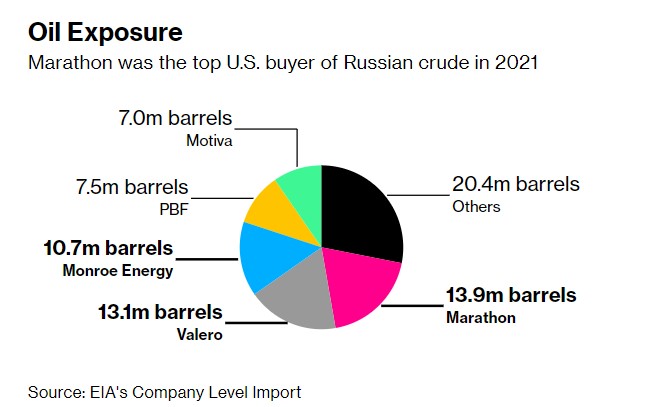
What happened to the trade prospects of all these companies after Americans imposed sanctions on Russian oil? Well, their private trade with Russian oil companies had to be sacrificed because the Biden administration wanted it. Yes, the American government intervened in their day-to-day operations, negatively invoking their profiteering motive. When push came to shove the advocacy of free market died an ignorant death at the hands of American rulers.

Also Read: With booming rise in exports, India gives two hoots to global slowdown

Opportunism is the guiding principle of west

Ofcourse they will tell you that they did it for moral principles and what not. But, even that proves the point that their propagation of the free market is subject to caveats. The caveat is that other countries should adopt the free market in order to give some space for western companies to expand their footprints.

Observers of the west are no longer surprised by this. Other than opportunism, they do not stand for any principle, which is of course not a principle at all. Free market principle is just another casualty of it. Ironically, it’s India which is defamed by the west for protectionism which gives more freedom to its companies.

Support TFI:

Support us to strengthen the ‘Right’ ideology of cultural nationalism by purchasing the best quality garments from TFI-STORE.COM
Also Watch:

Tags: Economyfree marketIndiaModi governmentOilRussiaSupplytradeWest
ShareTweetSend
Previous Post

Collection of 25 Sundar Pichai quotes and captions

Next Post

Ravichandran Ashwin – The man who brought back the Carrom ball and popularized ‘Mankading’

Related Posts

When law becomes an instrument of exclusion, persecution moves far beyond the courtroom.
Geopolitics

Ahmadis in Pakistan: From Faith to Marginalisation Under Law and Society

28 April 2026

The troubles of Ahmadis in Pakistan are not merely those of a religious minority. Their story is about how...

When uranium becomes strategy, India moves first.
Geopolitics

India’s $4 Billion Uranium Coup with Kazakhstan Rewrites the Global Nuclear Balance

28 April 2026

India has secured a landmark uranium supply agreement worth more than US$4 billion with Kazakhstan’s state-run mining giant Kazatomprom....

India–New Zealand FTA signed in New Delhi, marking a “once in a lifetime” moment in trade ties.
Business

India, New Zealand Seal Fast-Tracked Trade Pact to Expand Duty-Free Access, Jobs and $5 Billion Trade Target

27 April 2026

India and New Zealand on Monday signed a Free Trade Agreement in New Delhi, marking a major step in...

Load More

Leave a Reply Cancel reply

Your email address will not be published. Required fields are marked *

I agree to the Terms of use and Privacy Policy.
This site is protected by reCAPTCHA and the Google Privacy Policy and Terms of Service apply.

Currently Playing

From Runways to Warships: India’s Firefighting Warrior Built for Bases & Battles| IAF | VayuShakti

From Runways to Warships: India’s Firefighting Warrior Built for Bases & Battles| IAF | VayuShakti

00:05:40

Ethanol, EVs and Solar- How India’s Energy Game Is Changing | Modi on LPG & Crude Oil | war| Hormuz

00:05:21

Truth of IRIS Dena: 8 Days That Changed Narrative | War zone Reality, Not an Indian Navy Exercise

00:08:02

300 Million Euros for SCALP: Strategic Necessity or Costly Dependency on France300

00:04:06

Tejas Mk1A: 19th aircraft coupled but Not Delivered: What Is Holding Back the IAF Induction?

00:07:21
Facebook Twitter Instagram Youtube
tfipostTfipost.com
Right Wing | News Analysis | Indian Opinion
  • About us
  • Contact Us
  • Careers
  • Brand Partnerships
  • Terms of use
  • Privacy Policy
  • Sitemap

©2026 TFI Media Private Limited

No Result
View All Result
  • Premium
  • Politics
    • Analysis
    • Opinions
    • Trending
  • Economy
    • Business
    • Finance
  • Defense
    • Defence
    • Strategy
    • Weaponry
  • Geopolitics
    • Africa
    • Americas
    • Asia Pacific
    • Europe
    • South Asia
    • West Asia
  • Knowledge
    • Culture
    • History
    • Indology
  • Law
  • Lounge
    • Books
    • Cinema
    • Food
    • Health
    • Sports
    • technology
    • Travel
    • Satire
TFIPOST हिन्दी
TFIPOST Global

©2026 TFI Media Private Limited