





















TFIPOST हिन्दी
TFIPOST Global
Tfipost.com
Tfipost.com
No Result
View All Result
  • Premium
  • Politics
    • All
    • Analysis
    • Opinions
    • Trending
    From pilgrimage to metros, now without the wait

    From Kashi to Mumbai and Ayodhya to Pune: Modi Expands Rail Network with New Amrit Bharat Express Services

    Why is Making a Jet Engine so Hard | The failure of Kaveri

    Why is Making a Jet Engine so Hard | The failure of Kaveri

    Rajnath Singh at SCO, reaffirming India’s zero-tolerance stand on terrorism.

    “No More Double Standards”: Rajnath Singh’s SCO Message Rewrites India’s Terror Response Playbook

    Nepal PM Faces Fresh Controversy as Church Demolition Row Triggers Political Storm

    Nepal PM Faces Fresh Controversy as Church Demolition Row Triggers Political Storm

    • Analysis
    • Opinions
    • Trending
  • Economy
    • All
    • Business
    • Economy1
    • Finance
    India–New Zealand FTA signed in New Delhi, marking a “once in a lifetime” moment in trade ties.

    India, New Zealand Seal Fast-Tracked Trade Pact to Expand Duty-Free Access, Jobs and $5 Billion Trade Target

    Ahmadis in Pakistan: From Faith to Marginalisation Under Law and Society

    Ahmadis in Pakistan: From Faith to Marginalisation Under Law and Society

    Open Demat Account with Zero Annual Maintenance Charges What to Look For

    Open Demat Account with Zero Annual Maintenance Charges What to Look For

    Blood in the Meadows: How the Pahalgam Terror Attack Exposed Calculated Targeting of Civilians in Kashmir

    Blood in the Meadows: How the Pahalgam Terror Attack Exposed Calculated Targeting of Civilians in Kashmir

    • Business
    • Finance
  • Defense
    • All
    • Defence
    • Strategy
    • Weaponry
    Why is Making a Jet Engine so Hard | The failure of Kaveri

    Why is Making a Jet Engine so Hard | The failure of Kaveri

    Rajnath Singh at SCO, reaffirming India’s zero-tolerance stand on terrorism.

    “No More Double Standards”: Rajnath Singh’s SCO Message Rewrites India’s Terror Response Playbook

    Recovered arms and arrests have intensified scrutiny on a suspected cross-border terror network.

    Pakistan’s Proxy War Faces a Setback as Delhi Terror Plot is Crushed, 18 Weapons Seized

    The scars of Pahalgam endure, even as the nation moves forward

    Pahalgam Anniversary: Modi Signals Firm National Stand as India Reasserts Anti-Terror Resolve

    • Defence
    • Strategy
    • Weaponry
  • Geopolitics
    • All
    • Africa
    • Americas
    • Asia Pacific
    • Europe
    • South Asia
    • West Asia
    When law becomes an instrument of exclusion, persecution moves far beyond the courtroom.

    Ahmadis in Pakistan: From Faith to Marginalisation Under Law and Society

    When uranium becomes strategy, India moves first.

    India’s $4 Billion Uranium Coup with Kazakhstan Rewrites the Global Nuclear Balance

    “Fixing the World”: What a Century of Big Ideas Reveals About Us

    “Fixing the World”: What a Century of Big Ideas Reveals About Us

    Pakistan Tried to Bury an NYT Report. It Only Exposed Asim Munir’s Panic

    Pakistan Tried to Bury an NYT Report. It Only Exposed Asim Munir’s Panic

    • Africa
    • Americas
    • Asia Pacific
    • Europe
    • South Asia
    • West Asia
  • Knowledge
    • All
    • Culture
    • Education
    • History
    • Indology
    Chants of ‘Jai Badri Vishal’ Echo as Badrinath Portals Open; All Four Dhams Now Accessible to Pilgrims

    Chants of ‘Jai Badri Vishal’ Echo as Badrinath Portals Open; All Four Dhams Now Accessible to Pilgrims

    Kedarnath Dham Portals Open for Devotees After 181 Days Amid Vedic Chants, Traditional Rituals

    Kedarnath Dham Portals Open for Devotees After 181 Days Amid Vedic Chants, Traditional Rituals

    Sardar Patel and Amit Shah

    Sardar Patel’s 1947 Blueprint on Minority Quotas Resurfaces as Reservation Debate Returns to Centre Stage

    The 1973 Constitution and ‘Bhutto’ the Man Who Made It: What Pakistan Owes and What It Destroyed

    The 1973 Constitution and ‘Bhutto’ the Man Who Made It: What Pakistan Owes and What It Destroyed

    • Culture
    • History
    • Indology
  • Law
  • Lounge
    • All
    • Books
    • Cinema
    • Entertainment
    • Food
    • Games
    • Health
    • Lifestyle
    • Satire
    • Sports
    • technology
    • Travel
    When regulation meets the algorithm

    India Tightens Digital Control as Online Blocking Orders Surge to 24,300 Amid AI Deepfake Trend

    Digital Data Collection In India

    India’s Data Reset Begins: Census 2027 to Become First Fully Digital Population Count

    5 Facilities in Bengaluru Specializing in Mental Health Treatment for Those with Cancer

    5 Facilities in Bengaluru Specializing in Mental Health Treatment for Those with Cancer

    UNESCO World Book Day and Copyright Day

    World Book Day 2026: UNESCO’s Multilingual Push Aligns with India’s Deep Literary Continuum

    • Books
    • Cinema
    • Food
    • Health
    • Sports
    • technology
    • Travel
    • Satire
Tfipost.com
  • Premium
  • Politics
    • All
    • Analysis
    • Opinions
    • Trending
    From pilgrimage to metros, now without the wait

    From Kashi to Mumbai and Ayodhya to Pune: Modi Expands Rail Network with New Amrit Bharat Express Services

    Why is Making a Jet Engine so Hard | The failure of Kaveri

    Why is Making a Jet Engine so Hard | The failure of Kaveri

    Rajnath Singh at SCO, reaffirming India’s zero-tolerance stand on terrorism.

    “No More Double Standards”: Rajnath Singh’s SCO Message Rewrites India’s Terror Response Playbook

    Nepal PM Faces Fresh Controversy as Church Demolition Row Triggers Political Storm

    Nepal PM Faces Fresh Controversy as Church Demolition Row Triggers Political Storm

    • Analysis
    • Opinions
    • Trending
  • Economy
    • All
    • Business
    • Economy1
    • Finance
    India–New Zealand FTA signed in New Delhi, marking a “once in a lifetime” moment in trade ties.

    India, New Zealand Seal Fast-Tracked Trade Pact to Expand Duty-Free Access, Jobs and $5 Billion Trade Target

    Ahmadis in Pakistan: From Faith to Marginalisation Under Law and Society

    Ahmadis in Pakistan: From Faith to Marginalisation Under Law and Society

    Open Demat Account with Zero Annual Maintenance Charges What to Look For

    Open Demat Account with Zero Annual Maintenance Charges What to Look For

    Blood in the Meadows: How the Pahalgam Terror Attack Exposed Calculated Targeting of Civilians in Kashmir

    Blood in the Meadows: How the Pahalgam Terror Attack Exposed Calculated Targeting of Civilians in Kashmir

    • Business
    • Finance
  • Defense
    • All
    • Defence
    • Strategy
    • Weaponry
    Why is Making a Jet Engine so Hard | The failure of Kaveri

    Why is Making a Jet Engine so Hard | The failure of Kaveri

    Rajnath Singh at SCO, reaffirming India’s zero-tolerance stand on terrorism.

    “No More Double Standards”: Rajnath Singh’s SCO Message Rewrites India’s Terror Response Playbook

    Recovered arms and arrests have intensified scrutiny on a suspected cross-border terror network.

    Pakistan’s Proxy War Faces a Setback as Delhi Terror Plot is Crushed, 18 Weapons Seized

    The scars of Pahalgam endure, even as the nation moves forward

    Pahalgam Anniversary: Modi Signals Firm National Stand as India Reasserts Anti-Terror Resolve

    • Defence
    • Strategy
    • Weaponry
  • Geopolitics
    • All
    • Africa
    • Americas
    • Asia Pacific
    • Europe
    • South Asia
    • West Asia
    When law becomes an instrument of exclusion, persecution moves far beyond the courtroom.

    Ahmadis in Pakistan: From Faith to Marginalisation Under Law and Society

    When uranium becomes strategy, India moves first.

    India’s $4 Billion Uranium Coup with Kazakhstan Rewrites the Global Nuclear Balance

    “Fixing the World”: What a Century of Big Ideas Reveals About Us

    “Fixing the World”: What a Century of Big Ideas Reveals About Us

    Pakistan Tried to Bury an NYT Report. It Only Exposed Asim Munir’s Panic

    Pakistan Tried to Bury an NYT Report. It Only Exposed Asim Munir’s Panic

    • Africa
    • Americas
    • Asia Pacific
    • Europe
    • South Asia
    • West Asia
  • Knowledge
    • All
    • Culture
    • Education
    • History
    • Indology
    Chants of ‘Jai Badri Vishal’ Echo as Badrinath Portals Open; All Four Dhams Now Accessible to Pilgrims

    Chants of ‘Jai Badri Vishal’ Echo as Badrinath Portals Open; All Four Dhams Now Accessible to Pilgrims

    Kedarnath Dham Portals Open for Devotees After 181 Days Amid Vedic Chants, Traditional Rituals

    Kedarnath Dham Portals Open for Devotees After 181 Days Amid Vedic Chants, Traditional Rituals

    Sardar Patel and Amit Shah

    Sardar Patel’s 1947 Blueprint on Minority Quotas Resurfaces as Reservation Debate Returns to Centre Stage

    The 1973 Constitution and ‘Bhutto’ the Man Who Made It: What Pakistan Owes and What It Destroyed

    The 1973 Constitution and ‘Bhutto’ the Man Who Made It: What Pakistan Owes and What It Destroyed

    • Culture
    • History
    • Indology
  • Law
  • Lounge
    • All
    • Books
    • Cinema
    • Entertainment
    • Food
    • Games
    • Health
    • Lifestyle
    • Satire
    • Sports
    • technology
    • Travel
    When regulation meets the algorithm

    India Tightens Digital Control as Online Blocking Orders Surge to 24,300 Amid AI Deepfake Trend

    Digital Data Collection In India

    India’s Data Reset Begins: Census 2027 to Become First Fully Digital Population Count

    5 Facilities in Bengaluru Specializing in Mental Health Treatment for Those with Cancer

    5 Facilities in Bengaluru Specializing in Mental Health Treatment for Those with Cancer

    UNESCO World Book Day and Copyright Day

    World Book Day 2026: UNESCO’s Multilingual Push Aligns with India’s Deep Literary Continuum

    • Books
    • Cinema
    • Food
    • Health
    • Sports
    • technology
    • Travel
    • Satire
No Result
View All Result
Tfipost.com
Tfipost.com
No Result
View All Result
  • Premium
  • Politics
  • Economy
  • Defense
  • Geopolitics
  • Knowledge
  • Law
  • Lounge

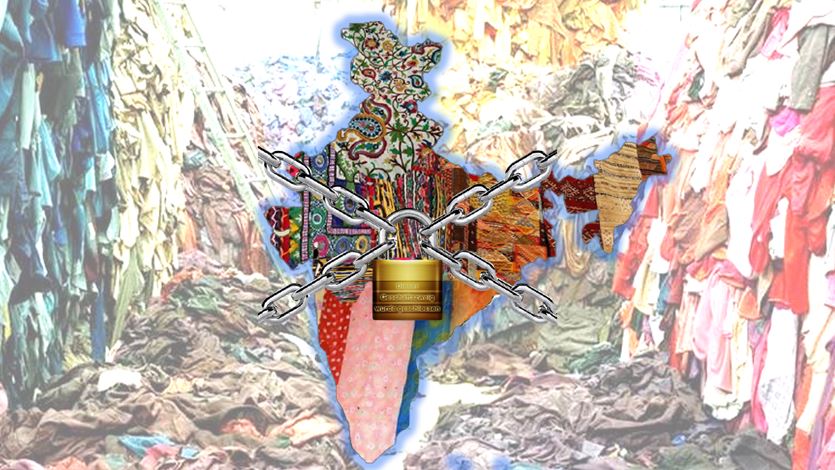
Fast fashion is killing traditional Indian textile industry and making Indians buy more clothes than they need

Abhyoday Sisodia by Abhyoday Sisodia
15 December 2021
in Lifestyle
Fast fashion, India, Textile industry
Share on FacebookShare on X

India ranked sixth in the global textile and garment exports in 2018, after ranking second between 2014 and 2017. Meanwhile, India’s textile and garment imports were on the rise. Indian imports increased by 22.8% between 2015 and 2019. The situation worsened exponentially since the spread of the Covid-19 virus from China, and the Indian textile industry saw a lot of people losing their jobs. Although these numbers tell us the severity of the threat the Indian textile industry faces, they cannot pinpoint the root cause of this slow death of the traditional textile industry, which is the accelerated popularity of fast fashion brands among Generation Z.

Also read: Indian textile exports to US register an exponential growth

RelatedPosts

From Kashi to Mumbai and Ayodhya to Pune: Modi Expands Rail Network with New Amrit Bharat Express Services

Pakistan’s Proxy War Faces a Setback as Delhi Terror Plot is Crushed, 18 Weapons Seized

Modi Unveils Rs 4,000 Crore Sikkim Development Plan, Targets Congress Over Years of Neglect

Load More

The Indian textile and clothing industry is one of the country’s oldest and largest industries, with a wide range of products ranging from hand-spun and hand-woven textiles to capital-intensive complex factory-made products. Every piece of traditional Indian textile has a history of its own and a story to tell; they are crafted, tailored and customised as per the demand of the customers, which is the definition of custom-made clothes. While the world is now talking about a reactionary slow fashion to take on the perils of fast fashion, the Indian traditional textile industry provides an already existing slow fashion.

However, people should understand that the traditional textile industry needs their support to withstand the onslaught of fast fashion companies, and in the process, help India’s Gen Z from needlessly spending on buying more clothes than they need.

Fast fashion and its perils:

Fast fashion is the mass production of low-cost, low-quality, disposable apparel in large quantities. To name a few, H&M, Forever 21, Gap, Zara as well as many new Chinese entrants like Boohoo, Shein and Club store, are the face of the fast fashion industry.

To give you a sense of the magnitude of the problem, the fashion industry produces 80 billion clothes per year. That’s more than ten for each and every individual on the planet. It also produces 400% more than it did 20 years ago. The typical garment is only worn 10 times before being discarded, according to TRAID, a clothing waste organisation.

Also read: Chinese Luxury “Cheap” high fashion brand Shein could come back to India and why it must be boycotted

This devilish throwaway cycle is fueled by the fact that clothing is getting more affordable; as prices fall, so does the quality, and as prices fall, so do fashion trends. This encourages consumers to buy more items in order to stay up with the latest fashion trends. While the Indian Gen Z has become highly invested in it, this has also sucked dry the demand for traditional Indian textile, literally killing the existent slow fashion industry in India.

There is a slew of other difficulties running through huge fast fashion firms’ intricate supply chains, yet the majority of them go unnoticed by the public. Fast fashion has a lot to answer for, from environmental damage to human rights violations. However, it does not appear to be slowing down any time soon.

The humanitarian cost of fast fashion:

In China, fast fashion is linked to forced labour trafficking. Furthermore, in order to sustain a high production rate, China’s fast fashion business employs unlawful child labour. The situation is so unethical that it breaks China’s own labour regulations. Workers in the fast fashion business do not have access to appropriate hygiene, and are subjected to unachievable quotas, putting their health in danger. According to allegations from US officials and human rights organisations, China employs forced labour in the Xinjiang region’s cotton fields and factories, primarily comprising Uyghurs and ethnic Kazakhs imprisoned in the region’s enormous detention camps established in recent years.

Also read: The effect of Piyush Goyal on the textile sector is already here as textile stocks soar, some hit 52 week high

Fast fashion does not provide a stable income for its employees, in addition to risky working circumstances. As a result, quick fashion in China does not alleviate poverty, rather, it exacerbates it. The “race to the bottom” has been coined to describe this behaviour. Textile and apparel behemoths struggle to keep up with rapid fashion trends while keeping costs as low as feasible. As a result, workers must be paid less and less. There are many examples of how fast fashion in China protects and creates poverty.

Fast fashion is leading to the second de-industrialisation of the Indian textile industry:

Since ancient times, the Indian textile industry has been regarded as one of the best in the world. This textile sector is thought to have helped India become the “golden sparrow” in the past. The Romans traded with India and allegedly handed Indians an equal amount of gold coins in exchange for the weight of Indian textiles. Even in the times of Mughals and British, the textile industries of Dhaka, Malwa and Banaras were considered world-class and exported throughout the world. Silk and cotton textiles, as well as gold and silver lining, have been utilised in India in the past.

However, under the British administration, tariffs were imposed, Indian textiles were banned from foreign markets, and British weavers were physically abused, resulting in the death of India’s small-scale textile enterprises. As Indian industries declined, the British flooded the markets with the mass-produced clothes from the satanic cotton mills of Manchester.

Now, the satanic mills of Manchester have been replaced by the factories in Xinjiang and other parts of China, and the East India Company is replaced by numerous fast-fashion brands. These brands flood Indian markets with cheap and low-quality clothes from China. With the help of technology and understanding of trends, Chinese satanic factories are pumping enormous amounts of cheap clothes (both in quality and cost) to India. And by weaponising the addiction of Gen Z for fast fashion, it is bringing the Indian traditional textile industry to a halt.

Indian textile industry is a slow fashion solution to the madness that is fast fashion:

Sites like Shein and Clubfactory are some of the prime examples of fast fashion portals which provide cheap products around the world at the cost of exploited manpower. Unaware that their clothing comes from a factory that exploits human resources, many influencers around the world have begun to reject fast fashion, claiming that the production of such items is inhumane.

India could concentrate on locally created or ethical indigenous clothing labels such as the Urban Monkey, The Purple Sack, The Tassel Life, and Scorpion Scissors, which are a little pricey but ethical and indigenously produced. There are enough good reasons why fast fashion should be avoided at all costs, from low salaries and bad working conditions to the environmental and societal costs involved.

Also read: Piyush Goyal is PM Modi’s very own ‘rainmaker’ – Textile Ministry for him is not a demotion

Before glorifying Chinese luxury yet “cheap” high fashion goods which are literally killing the mature Indian textile industry, Indian youth should be aware that they are simply fostering a worldwide humanitarian catastrophe that should be avoided. Instead, young people should support the plethora of small and medium scale brands that are coming up all over India, and stay away from the fast-fashion brands which are designed to degrade the societal economic health, as well as are in-effect leading to the death of the Indian textile industry, reminiscent of the de-industrialisation of India under the British but with a modern twist.


Tags: ChinafashionFast FashionH&MIndiaIndian Textile IndustryMake In IndiaNarendra ModiUyghur Muslims
Share7TweetSend
Previous Post

Devendra Fadnavis – The god of winning elections 

Next Post

Digvijay invites Kamra and Faruqui to perform in Bhopal. Narottam Mishra says “Aao na”

Related Posts

Digital Data Collection In India
Lifestyle

India’s Data Reset Begins: Census 2027 to Become First Fully Digital Population Count

25 April 2026

India has started for a major transformation in how it records its population. Census 2027 will become the country’s...

Fashion Fusion Accessory Pairings That Modernize Your Look
Lifestyle

Fashion Fusion Accessory Pairings That Modernize Your Look

23 April 2026

In the constantly changing landscape of “fashion”, it’s the little touches that are going to define a person apart....

Aromatic Mood Lifters for Everyday Us
Lifestyle

Aromatic Mood Lifters for Everyday Us

23 April 2026

It will sound crazy, but scent completely matches a person’s “Emotional feeling and memories”. With just a slight spray,...

Load More

Leave a Reply Cancel reply

Your email address will not be published. Required fields are marked *

I agree to the Terms of use and Privacy Policy.
This site is protected by reCAPTCHA and the Google Privacy Policy and Terms of Service apply.

Currently Playing

From Runways to Warships: India’s Firefighting Warrior Built for Bases & Battles| IAF | VayuShakti

From Runways to Warships: India’s Firefighting Warrior Built for Bases & Battles| IAF | VayuShakti

00:05:40

Ethanol, EVs and Solar- How India’s Energy Game Is Changing | Modi on LPG & Crude Oil | war| Hormuz

00:05:21

Truth of IRIS Dena: 8 Days That Changed Narrative | War zone Reality, Not an Indian Navy Exercise

00:08:02

300 Million Euros for SCALP: Strategic Necessity or Costly Dependency on France300

00:04:06

Tejas Mk1A: 19th aircraft coupled but Not Delivered: What Is Holding Back the IAF Induction?

00:07:21
Facebook Twitter Instagram Youtube
tfipostTfipost.com
Right Wing | News Analysis | Indian Opinion
  • About us
  • Contact Us
  • Careers
  • Brand Partnerships
  • Terms of use
  • Privacy Policy
  • Sitemap

©2026 TFI Media Private Limited

No Result
View All Result
  • Premium
  • Politics
    • Analysis
    • Opinions
    • Trending
  • Economy
    • Business
    • Finance
  • Defense
    • Defence
    • Strategy
    • Weaponry
  • Geopolitics
    • Africa
    • Americas
    • Asia Pacific
    • Europe
    • South Asia
    • West Asia
  • Knowledge
    • Culture
    • History
    • Indology
  • Law
  • Lounge
    • Books
    • Cinema
    • Food
    • Health
    • Sports
    • technology
    • Travel
    • Satire
TFIPOST हिन्दी
TFIPOST Global

©2026 TFI Media Private Limited