
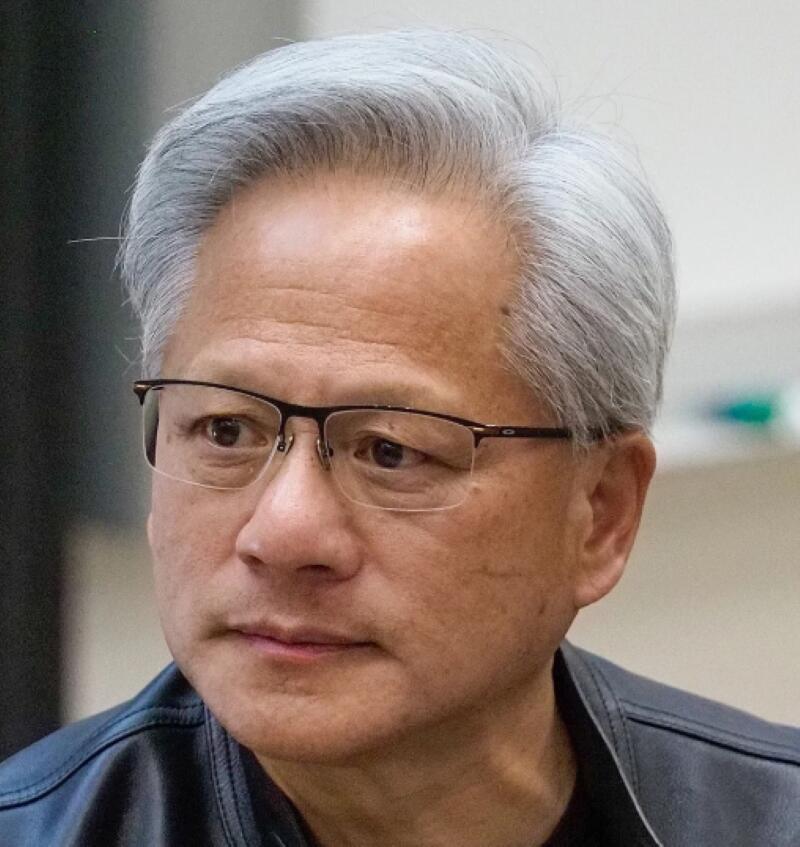
The technology world has been rocked by revelations involving NVIDIA CEO Jensen Huang, who has admitted to being unfaithful to his wife while his reported relationship with a Chinese businesswoman suspected of links to Beijing’s intelligence apparatus is drawing scrutiny. The controversy extends beyond a private matter because Huang leads one of America’s most strategically important technology companies, whose advanced chips are central to the global artificial intelligence race.
In a message to employees, Huang acknowledged his infidelity, apologised to his wife Lori and their children, and accepted responsibility for the hurt caused by his actions. He also apologised to colleagues, saying he had fallen short of his responsibility to earn their trust. He did not publicly identify the woman or directly confirm the espionage allegations surrounding her.
The businesswoman has been identified in media reports as Alice Huang, also known as Huang Le, a Chinese citizen and former senior executive at Megaspeed, a Singapore-based data-centre company and NVIDIA customer. The New York Times reported on October 29 that US intelligence agencies assessed she was working for Chinese intelligence and had cultivated a relationship with Huang to gather information and potentially influence his views on restrictions governing advanced AI chip exports to China. These remain intelligence assessments and allegations, not findings established in court.
The reported connection has placed the NVIDIA CEO at the centre of a national-security debate. NVIDIA’s processors are widely used to develop advanced AI systems, giving the company an important role in the technological competition between Washington and Beijing. US export controls seek to limit China’s access to high-end computing capabilities with potential military, intelligence and economic applications.
NVIDIA’s board has announced an independent investigation into reports that Huang may have been targeted by a foreign intelligence effort. Independent directors, assisted by outside legal counsel, will oversee the inquiry. The company says it has no reason to believe that national security or its confidential information was compromised. Huang supports the review and has promised to cooperate. He will remain chief executive while the investigation proceeds.
The controversy has revived questions about the NVIDIA CEO’s repeated calls for continued business with China. Huang has argued that American companies should not surrender the Chinese market to domestic competitors and warned that strict export restrictions could accelerate the development of alternatives such as Huawei’s AI chips. From a business perspective, his argument reflects the importance of a large market and the risk of losing customers to rival suppliers.
In an October 2026 Bloomberg interview, Huang criticised Washington’s restrictions and argued that the United States and China should continue engaging on artificial intelligence. He said that although the countries compete, they should not regard each other as enemies. His position reflects a belief that cooperation and market access can benefit technology companies despite strategic rivalry.
He made a similar case on the Dwarkesh Patel podcast in April, rejecting comparisons between AI chips and nuclear technology. Huang argued that artificial intelligence is a broad ecosystem involving energy, chips, infrastructure, models and applications. He maintained that excluding NVIDIA from China could strengthen Chinese competitors rather than preserve America’s advantage.
In July, Huang described Chinese open-source AI models as excellent. In a May interview with Channel NewsAsia, he cautioned against the creation of separate American and Chinese AI ecosystems. Such remarks have attracted attention because NVIDIA has substantial commercial interests in China. The affair allegations have now given critics another reason to question whether the NVIDIA CEO’s judgement and possible exposure to foreign influence deserve closer examination.
However, commercial advocacy is not proof of improper influence. There is no publicly established evidence that Alice Huang shaped his policy statements, that he knowingly assisted an intelligence operation, or that he transferred confidential information. NVIDIA has said it has no reason to believe its secrets were compromised. China has rejected the espionage narrative, calling the allegations unfounded.
The issue has also reached Washington. Republican lawmakers have sought a briefing from Huang, citing concerns about the possible exposure of sensitive American technology and information. The questions are serious because NVIDIA’s products support research and infrastructure with applications extending well beyond consumer technology.
For the NVIDIA CEO, the immediate challenge is to restore confidence among employees, investors, policymakers and customers while cooperating with the inquiry. The company must establish whether confidential information was exposed, whether customer-screening procedures were adequate and whether safeguards against foreign influence were sufficient.
Ultimately, investigators must separate evidence from speculation. Huang’s admission of infidelity is a personal matter, but allegations of an intelligence operation involving the head of a strategically vital technology company demand rigorous scrutiny. The findings will determine whether this remains a damaging personal and corporate controversy or becomes a wider national-security concern.