
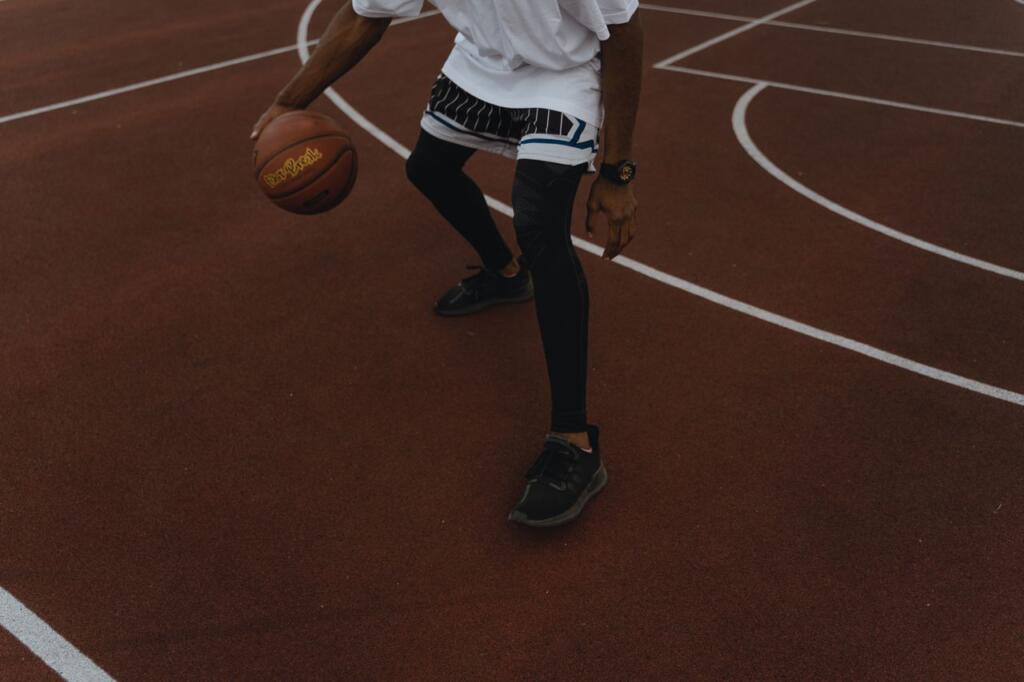
A player steps to the line with two seconds left and a one-point deficit. The crowd goes quiet. Everything practised hundreds of times in an empty gym comes down to this moment. Free throws decide games at every level, from middle school courts to professional arenas, yet most players treat them as an afterthought in practice. That gap between game-day pressure and practice intention is exactly where free throw percentages collapse.
This guide covers the mechanics of proper form, how to build a consistent pre-shot routine, and the drills that translate practice repetitions into real-game results. Getting these fundamentals right starts with using the right basketball, one that matches the player’s age, hand size, and league standard.
Free Throw Form: The Foundation Every Player Needs
Poor free throw form is rarely about nerves. It is almost always about mechanics that were never properly built. When a player consistently misses left, the problem is usually elbow alignment. When shots fall short, the culprit is typically a low release point or not enough leg drive.
The BEEF framework, Balance, Eyes, Elbow, and Follow-through, gives players a simple mental checklist at the line. Balance starts from the feet, not the hands. Eyes should lock on the back of the rim before the motion begins. The elbow stays tucked, never flaring out. Follow-through means holding the wrist down until the ball hits the net.
Players who record their free throw shooting on video often spot flaws they cannot feel in real time. A dipping elbow or a rushed release becomes obvious on film. Reviewing even ten shots per practice session accelerates correction significantly.
Building a Pre-Shot Routine That Holds Under Pressure
A pre-shot routine is not a superstition. It is a performance tool. The brain responds to familiar sequences by reducing decision load and calming stress responses. That is why players who skip their routine in high-pressure moments tend to rush and miss.
Dribble counts matter. Whether a player takes two dribbles or four, the number should never change. Variation in routine is variation in outcome. The physical repetition before the shot primes the muscle memory built during practice. Changing it under pressure is like switching gears in the middle of a highway entrance ramp.
Players should practice their routine in empty gyms, in front of teammates, and in scrimmages. The goal is to make the routine so automatic that crowd noise and scoreboard pressure cannot interrupt it. Routine consistency is a trainable skill, not a personality trait.
Practice Drills That Build Real Free Throw Consistency
Shooting one hundred free throws in a row with no stakes attached does not replicate game conditions. Effective drills build pressure into practice so players are never shocked by it during a game.
The “Make Before You Leave” drill requires players to make a set number of consecutive free throws, say five in a row, before ending practice. Missing resets the count. This builds mental accountability without requiring a coach to manufacture pressure. Players quickly learn to slow down and commit to form when the count is on the line.
The “Fatigue Drill” sends players through a sprint or defensive slide series before stepping to the line. Free throws attempted while breathing hard mirror the conditions of a real game situation. Players who only shoot rested will feel unfamiliar physical sensations when stepping to the line after a fast break or a contested drive.
The “Game Simulation Drill” uses a scoreboard scenario. A player is down two points with thirty seconds left and must make both free throws to tie the game. Partners verbalise the situation before each attempt. Over time, the brain stops treating that scenario as novel and starts treating it as routine.
Conclusion: Repetition With Intention Wins the Line
Free throw improvement comes from building mechanics first, then layering in a reliable routine, then practicing under conditions that mirror real games. Players who follow that sequence consistently see measurable improvement within four to six weeks of focused work.
The first practical step is simple: dedicate fifteen minutes of every practice session exclusively to free throws, using proper form and the same pre-shot routine every time. Progress will follow.